What is Automated Warehouse System at 2026 Canton Fair?
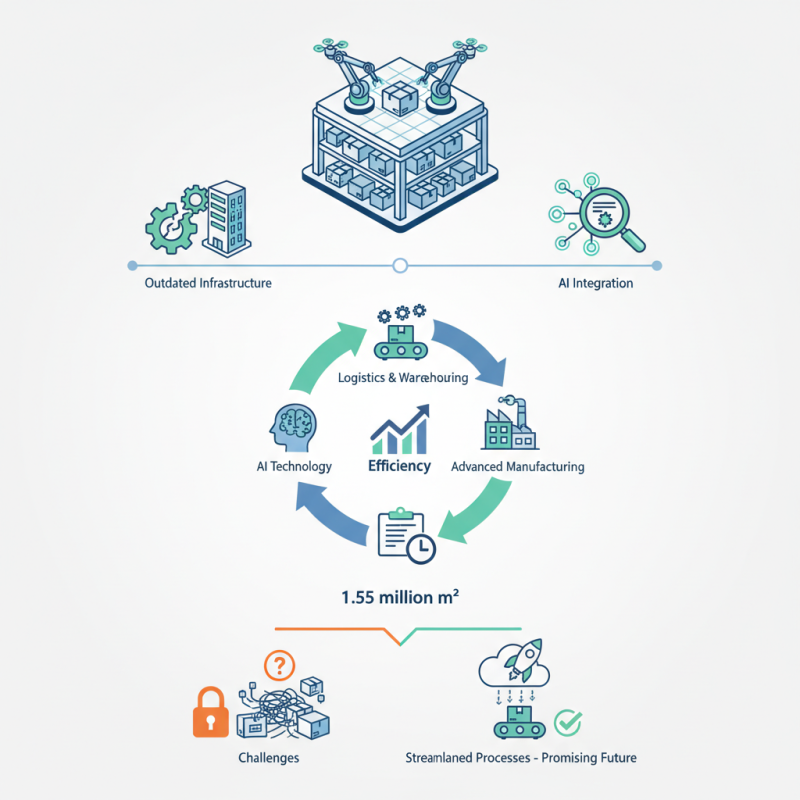
The 2026 Canton Fair highlights the evolution of the Automated Warehouse System. As the largest trade fair in China, it showcases innovation in logistics and warehousing. This year, advanced manufacturing and new materials take center stage.
The introduction of AI technology enhances the experience. Attendees can find suppliers with specific certifications quickly. This improves the efficiency of navigating a vast 1.55 million square meters. However, there are challenges in fully implementing these systems.
Many warehouses struggle with outdated infrastructure. Integration of AI needs careful planning. Solutions must fit diverse operation models. The journey toward automation is complex but essential. By choosing the right technologies, businesses can streamline their processes. The future of logistics looks promising, yet reflection on current practices is crucial.
Overview of Automated Warehouse Systems at the 2026 Canton Fair
Automated warehouse systems are revolutionizing logistics at the 2026 Canton Fair. These systems enhance storage efficiency and reduce operational costs. Attendees witness a remarkable display of advanced robotics and AI. Visualize stacks of goods moved by automated shuttles with precision. It’s a seamless dance of technology optimizing warehouse operations.
However, not everything is flawless. Some systems faced challenges with coordination. Certain robots struggled to navigate crowded aisles. This highlighted the importance of robust programming and real-world testing. Automation can be powerful, yet it demands constant refinement. Observers noted the need for human oversight in complex scenarios.
Attendees explored different automated solutions. Many showcased integration with existing warehouse management systems. The variety is striking, yet some solutions appeared overly complex. Simplicity often drives user adoption and efficiency. The debate on balancing *innovation* and *practicality* is ongoing.
Key Technologies Driving Automated Warehouse Solutions in 2026
The 2026 Canton Fair showcases innovative automated warehouse systems. Key technologies are at the forefront of these advancements. Robotics is a major component. Automated guided vehicles (AGVs) transport goods efficiently. They navigate through complex warehouse layouts, reducing labor-intensive tasks. These vehicles can work side by side with human workers, but collaboration is not always seamless.
Artificial intelligence (AI) plays a crucial role. AI algorithms optimize inventory management. They help predict demand better. However, reliance on AI can lead to unexpected stock discrepancies. Data analytics is also integral to automated systems. Analyzing operational data helps in real-time decision-making. Yet, the challenge lies in the integration of varying data sources.
Another important technology is IoT (Internet of Things). IoT devices monitor equipment status and environmental conditions. This information improves operational efficiency. However, data security remains a concern with increasing connectivity. The integration of these technologies can transform operations. Yet, companies must proceed cautiously. Balancing automation with human oversight is essential for success.
Benefits and Challenges of Implementing Automated Warehousing
Automated warehouse systems are transforming logistics. As per recent studies, over 60% of logistics companies plan to implement these systems by 2026. Major benefits include efficiency and cost reduction. These systems can operate 24/7. They improve order fulfillment speed significantly. For instance, automated picking can reduce the time from order to shipment by up to 30%.
Despite these advantages, challenges exist. The initial investment can be daunting. Companies may need to spend millions to upgrade their infrastructure. Training staff for new technologies poses another hurdle. A report indicates that 40% of employees feel unprepared for automation changes. Inadequate training can lead to errors and decreased productivity.
Moreover, dependence on technology raises concerns. System failures can halt operations entirely. Cybersecurity risks also increase with automation. The logistics industry must weigh these factors carefully. Balancing benefits and risks is essential for successful implementation.
Case Studies: Successful Automated Warehouse Implementations
The automated warehouse system is revolutionizing logistics at the 2026 Canton Fair. Several case studies illustrate its potential. For instance, a recent report by the Warehousing Institute indicates that automated systems can increase efficiency by up to 30%. This means faster processing times and improved inventory management.
One notable implementation involved a mid-sized retailer that adopted robotic systems. Initial costs were high, but within a year, they reported a 25% reduction in labor costs. However, challenges arose with system integration. The technology often required adjustments to fit existing workflows.
Additionally, market analysis suggests that automated warehouses experience a decrease in error rates. One study noted that companies using automated systems saw a 40% drop in picking errors. Yet, not all companies benefit equally. Some struggle with the steep learning curve associated with new tech. As the industry evolves, continual assessment is vital.
What is Automated Warehouse System at 2026 Canton Fair? - Case Studies: Successful Automated Warehouse Implementations
| Implementation Year | Warehouse Size (sq ft) | Automation Technology Used | Efficiency Gain (%) | Cost Reduction (%) | Implementation Time (months) |
| 2023 | 50,000 | Automated Guided Vehicles | 35 | 25 | 12 |
| 2024 | 80,000 | Robotic Picking Systems | 40 | 30 | 16 |
| 2025 | 100,000 | AI-Based Inventory Management | 50 | 20 | 18 |
| 2026 | 120,000 | Automated Storage and Retrieval Systems | 55 | 35 | 14 |
Future Trends in Warehouse Automation Post-2026 Canton Fair
The future of warehouse automation is promising, especially after the 2026 Canton Fair. Experts predict a growth rate of 14.2% annually in warehouse automation technologies from 2026 to 2031. This trend reflects increasing demand for efficiency, accuracy, and cost-effectiveness in logistics.
Smart robots will play a crucial role. They will handle most repetitive tasks, freeing human workers for more complex duties. According to industry reports, over 75% of warehouses will adopt some level of robotics by 2030. However, not all transitions will go smoothly. Companies must train their employees to work alongside these systems. Resistance to change can hinder progress.
Data analytics will change warehousing practices. Automated systems will generate vast amounts of data, enabling firms to optimize inventory management. Despite the benefits, companies may struggle to interpret this data effectively. Investing in training and technology is vital, but many firms find this challenging. The balance between automation and human factor remains delicate but essential for future success.