Discover Exciting Plastic Manufacturing Jobs at Allied Plastics

What Is Automotive Film and How Does It Work?

Automotive Film is a thin, engineered layer applied to vehicle glass or painted surfaces. It can improve appearance, comfort, privacy, and surface protection. However, its performance depends on the film type, installation quality, and vehicle condition.

For windows, the film contains dyes, metal particles, or ceramic compounds. These materials filter selected light wavelengths, reduce glare, and limit solar heat entering the cabin. Some products also help block ultraviolet radiation. Paint protection film works differently. Its clear polyurethane layer absorbs minor impacts from road debris, while its adhesive bonds closely to the paint.

The difference is visible.

On a sunny afternoon, quality window film can make dark seats feel less heated. A properly installed protection film may prevent small stone chips from marking a glossy hood. Experienced installers first clean the surface, measure each panel, and control dust during application. Small particles can create bubbles, weak edges, or uneven reflections.

Installation matters greatly.

Reliable information should include measurable details, such as visible light transmission, heat rejection, and warranty coverage. Marketing claims can sound impressive, yet results vary between vehicles and climates. Even expensive film cannot repair damaged glass or replace careful maintenance. That limitation deserves attention.

This article explains how Automotive Film works, where it performs well, and what buyers should examine before choosing a product. It also considers durability, maintenance, installation standards, and practical trade-offs. The best decision is not always the darkest or most expensive option. It is the one that matches the vehicle, driving conditions, local requirements, and realistic expectations.

What Is Automotive Film and How Does It Work?

Definition and Purpose of Automotive Film

Automotive film is a thin, flexible layer applied to a vehicle’s glass or painted surfaces. Its purpose depends on the film type. Window film can reduce glare and limit some solar heat entering the cabin, while paint protection film helps shield vulnerable panels from minor chips and scuffs. Decorative films can also change a vehicle’s color or finish without repainting it.

Different films use different materials and construction. Some window films rely on tinted or treated layers; paint protection films are usually clear and designed to absorb small impacts. They are not armor. A sharp object or strong collision can still damage the surface beneath. Choose based on the area you want to protect, your comfort needs, and how the vehicle is used.

Installation matters. Dust trapped under a film may appear as tiny specks, and poorly fitted edges can lift over time. The surface should be clean and dry before application, with careful trimming around curves and seams. I’ve seen people expect film to hide existing scratches; it usually does not. In fact, a clear layer can make flaws easier to notice. A small test area can help set realistic expectations.

What Is Automotive Film and How Does It Work?

Automotive film is a thin layer applied to vehicle glass. It can reduce incoming ultraviolet and infrared radiation, while its visible light transmission (VLT) determines how much visible light passes through. The ranges below are approximate examples found across film specifications, not guaranteed values or a universal standard.

Performance varies by film construction, glass, and measurement method. Check the specification for the specific film and vehicle.

Main Types and Materials Used in Automotive Film

Automotive film is a thin engineered layer applied to glass, painted panels, or trim. It works by controlling light, heat, scratches, and surface exposure. Window film can reduce glare and infrared heat inside the cabin. Paint protection film helps absorb small stone impacts and light abrasions. Vinyl wrap film mainly changes appearance while adding limited surface protection.

Different films use different materials. Dyed polyester film is affordable, but its color may fade over time. Metalized film reflects heat effectively, though it can affect some electronic signals. Carbon film offers a darker appearance with more stable color performance. Ceramic film uses microscopic ceramic particles for strong heat rejection without a metallic look. It often costs more. Paint protection film commonly uses thermoplastic polyurethane, known as TPU, because it remains flexible and clear. Vinyl wraps usually use PVC, which forms well around curves but can become brittle when poorly maintained.

Material choice should match the vehicle’s paint, climate, and daily use. On a dusty road, thicker TPU may matter more than a dramatic finish. A skilled installer measures edges carefully and controls dust inside the work area. Tiny particles can create visible bumps. Poor surface preparation remains a common failure point. Even good film can lift around sharp corners. Performance also varies with thickness, adhesive quality, sunlight, cleaning habits, and installation temperature. Rechecking the film after several weeks can reveal weak edges or trapped moisture.

How Automotive Film Is Applied to a Vehicle

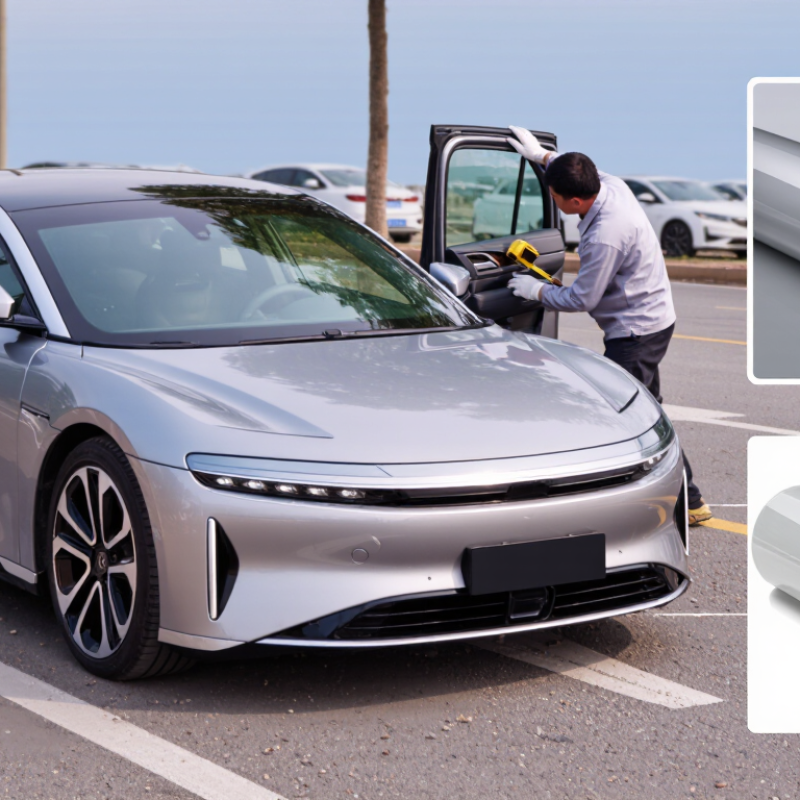
Automotive film is a thin, flexible layer applied to selected vehicle surfaces. It may protect paint, change the vehicle’s appearance, or reduce sunlight inside the cabin. The application process demands more than simply placing a sheet on the body.

The vehicle must be washed and dried carefully before installation. Dirt near an edge can create a visible bump. Installers inspect the paint for chips, scratches, and loose trim. They then measure each panel and cut the film slightly larger than the target area. A clean work bay matters. Dust is the quiet problem.

A slip solution helps the film move across the panel without sticking too early. The installer positions the material, then uses a soft squeegee to push out water and air. Curved areas require controlled stretching and gentle heat. Too much heat may distort the film. Too little may leave lifting edges. Experienced technicians work slowly around mirrors, handles, and body seams.

The edges are wrapped or trimmed with care. Blades must avoid damaging the paint. After fitting, the film needs time to bond and cure. The vehicle should remain clean and dry during this period. Small bubbles may disappear, but large wrinkles usually indicate poor installation. Even skilled installers can miss a narrow edge, especially on complex panels. A final inspection under bright lighting often reveals what normal daylight hides.

What Is Automotive Film and How Does It Work? — How Automotive Film Is Applied to a Vehicle

Category Film Type or Stage Primary Material or Method Main Function Typical Vehicle Areas Important Facts
Automotive Film Types
Protective film Paint protection film Usually a transparent thermoplastic polyurethane or similar flexible polymer construction Helps reduce damage from stone chips, road debris, minor scratches, and surface contamination Front bumper, hood, fenders, mirrors, door edges, and rocker panels It protects the film-covered surface, but it cannot prevent every type of impact or body damage.
Decorative film Vehicle wrap film Flexible polymer film with a colored, patterned, or textured surface and pressure-sensitive adhesive Changes the vehicle’s appearance while helping shield the original paint from light surface exposure Full body panels, roofs, hoods, doors, and trim sections It is generally removable, but removal condition depends on film age, paint quality, heat, and installation conditions.
Solar-control film Automotive window tint Thin polyester-based film containing dyes, pigments, or reflective and infrared-control layers Reduces glare, visible light transmission, and solar heat entering through the glass Side windows, rear window, and sometimes the upper windshield area where legally permitted Visible light transmission limits and windshield placement are regulated differently by location.
Surface protection Interior protection film Clear or lightly textured polymer film with an adhesive backing Helps resist scuffs, stains, fingerprints, and light abrasion on frequently touched surfaces Door sills, center consoles, screens, piano-black trim, and loading areas The correct film must be selected for the surface texture, finish, and expected heat exposure.
How Automotive Film Works
Adhesion Pressure-sensitive adhesive layer Adhesive bonds the film to a clean, smooth surface when pressure is applied Keeps the film positioned during normal use without requiring permanent chemical bonding Painted panels, glass, plastic trim, and selected interior surfaces Dust, wax, oil, silicone, and moisture can weaken adhesion and create visible defects.
Protection Flexible film surface The film absorbs or distributes some minor abrasion and contact before the underlying surface is affected Provides a sacrificial layer over paint, glass, or interior trim High-contact or high-impact areas Film thickness, material construction, surface hardness, and installation quality influence performance.
Heat response Conformable polymer layer Controlled heat softens many films, allowing them to stretch or conform around curves Helps the installer cover shaped panels with fewer wrinkles and air pockets Curved bumpers, mirrors, door handles, and contoured body panels Excessive heat can distort the film, damage adhesive, or affect the vehicle surface.
Optical control Window-film coating or dyed layer Film selectively absorbs, reflects, or blocks portions of incoming solar energy Controls visible light, ultraviolet radiation, glare, and some infrared energy Vehicle glazing The final result depends on the film construction, glass type, installation quality, and local regulations.
Application Process
1 Vehicle inspection Installer checks paint condition, existing repairs, trim, glass, and surface defects Identifies risks that may affect appearance, adhesion, or safe removal All areas scheduled for film installation Deep scratches, loose paint, rust, and poorly repaired panels may require correction before application.
2 Thorough cleaning Surface is washed, degreased, and cleaned with suitable lint-free materials Removes contamination that could become trapped beneath the film Paint, glass, plastic trim, and installation edges Clean conditions are essential because even small particles can create bumps or reduce bonding.
3 Film measurement and cutting Film is measured, templated, or digitally plotted to match the selected panel Creates a controlled fit and reduces unnecessary seams or excess material Individual vehicle panels or glass sections Cutting should be controlled carefully to avoid marking the underlying paint or trim.
4 Positioning Installer places the film using alignment points and, for some films, a compatible slip solution Allows the material to be aligned before final adhesion Flat, curved, or contoured surfaces The method varies by film type; window film and protective body film are not installed identically.
5 Squeegeeing A soft-edged squeegee moves liquid and air toward the edges while pressure activates the adhesive Creates close contact between the film and the vehicle surface Entire covered area Incorrect pressure or tool angle can cause scratches, stretch marks, trapped moisture, or air channels.
6 Edge finishing Edges are trimmed, wrapped, or tucked where appropriate, then checked for lifting Improves appearance and helps prevent contamination from reaching the adhesive edge Panel edges, seams, corners, handles, and trim transitions Not every edge can be wrapped; panel design and clearance determine the safest finish.
7 Curing and final inspection Film is allowed to settle under controlled conditions before the surface is rechecked Gives the adhesive time to establish contact and allows minor installation moisture to dissipate All installed sections Avoid aggressive washing, high-pressure water, or unnecessary edge contact until the installer’s recommended cure period has passed.
Key Factors Affecting Results
Surface condition Paint and substrate quality Clean, firmly bonded, smooth surfaces generally provide more consistent adhesion Influences finish quality, durability, and removal behavior Painted panels, glass, plastics, and trim Film does not correct dents, corrosion, peeling paint, or major surface defects.
Environment Temperature, humidity, and cleanliness Installation conditions affect adhesive behavior, stretch, curing, and contamination control Influences how easily the film can be positioned and finished Workshop or controlled installation area Extreme cold, heat, dust, or moisture can increase installation difficulty and reduce consistency.
Maintenance Cleaning and washing practices Gentle washing with suitable products reduces stress on film edges and surfaces Helps preserve appearance and adhesion All film-covered areas Avoid abrasive tools, harsh solvents, sharp scrapers, and directing high-pressure water at exposed edges.
Legal compliance Window-film light transmission and placement rules Local regulations may limit tint darkness, reflectivity, color, and windshield coverage Ensures the vehicle remains road-legal and maintains required visibility Windshield and side or rear windows Always verify the rules applicable to the vehicle’s registration location before installing window film.

How Automotive Film Protects and Changes Vehicle Surfaces

What Is Automotive Film and How Does It Work?

How Automotive Film Protects and Changes Vehicle Surfaces

Automotive film is a thin, engineered layer applied to painted panels, windows, or interior trim. It uses pressure-sensitive adhesive to bond closely with the surface. Depending on its construction, the film can reduce scratches, soften stone-chip damage, filter light, or change a vehicle’s visible finish. It does not make paint indestructible.

The protection comes from controlled separation. Road grit contacts the film before reaching the paint. A quality exterior film may stretch slightly around a small impact, while its top layer resists staining and everyday abrasion. On glass, specialized film can reduce glare and solar heat. Interior film helps limit scuffs around door handles and storage areas.

Clean preparation matters most. Dust trapped underneath becomes a permanent-looking flaw. Installation experience shows that temperature, panel shape, and surface condition affect the result. Curved edges need careful heating and tension control. Too much stretch can create lifting later.

Poorly cured paint may also react badly, so a trained installer should inspect it first. Film can be removed, but removal is not always perfectly harmless. Old adhesive, weak paint, or rushed tools may leave marks.

I once saw a nearly invisible edge collect wax and turn dark after several washes. That detail is easy to miss.

Film changes appearance, yet maintenance still matters. Gentle washing and timely inspection usually protect both the layer and the surface beneath it.

Factors Affecting Automotive Film Performance and Lifespan

Automotive film is a thin engineered layer applied to vehicle glass or painted surfaces. It can reduce glare, filter ultraviolet radiation, protect against light abrasion, or change appearance. Its performance depends less on appearance alone and more on material structure, adhesive quality, and installation accuracy.

Film exposed to strong sunlight may age faster, especially in hot climates. Heat accelerates damage. UV exposure can cause fading, brittleness, or adhesive discoloration over time. Frequent washing, rough brushes, road grit, and sharp tools also shorten its useful life. Film installed on a dusty or oily surface may develop bubbles, lifting edges, or weak bonding. Small errors matter.

Vehicle storage makes a noticeable difference. Covered parking can reduce heat cycles and surface contamination. Gentle cleaning with a soft cloth helps preserve the film’s finish. Harsh chemicals may weaken some protective layers, although product formulas vary. Temperature changes can also stress the film and the vehicle surface differently. In field inspections, edge lifting often points to poor preparation rather than old age.

A precise lifespan is difficult to promise. It depends on film thickness, exposure, maintenance, installation skill, and daily driving conditions. A well-maintained film may remain clear for years, but no material stays perfect forever. Even experienced technicians must reassess unusual fading, peeling, or cracking instead of assuming one cause. The most reliable evaluation includes close inspection, surface testing, and the film’s care history.