Best Handheld Fiber Laser Marking Machine for Your Needs?
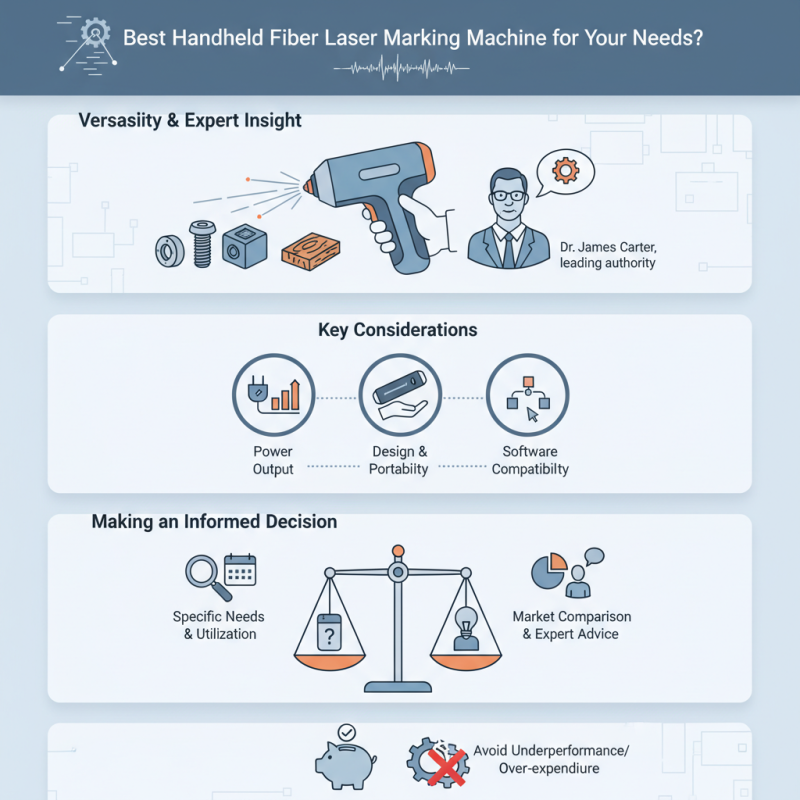
In the world of industrial marking, the Handheld Fiber Laser Marking Machine stands out for its versatility. Experts like Dr. James Carter, a leading authority in laser technology, have emphasized its impact on manufacturing. He once stated, "The Handheld Fiber Laser Marking Machine revolutionizes how we think about precise and efficient marking."
Choosing the right device can be overwhelming. These machines cater to various materials and applications, from metals to plastics. Their portability allows users to mark items on-site, enhancing productivity. However, not all handheld lasers are created equal. Factors like power output, design, and software compatibility matter.
Investing in a Handheld Fiber Laser Marking Machine requires careful consideration. Users should evaluate their specific needs and how often they will utilize the device. Mistakes can lead to underperformance or over-expenditure. A thorough market comparison and expert advice are essential in making a sound decision.
Factors to Consider When Choosing a Handheld Fiber Laser Marking Machine
Choosing the right handheld fiber laser marking machine can be tricky. Consider the weight and design of the machine. A lightweight model is easier to maneuver, especially for long hours of work. The ergonomic design is crucial for comfort. Test various models to see which feels right in your hands.
The power output of the laser is another vital factor. A higher wattage allows for faster marking on tougher materials. Check the machine's speed and efficiency in completing tasks. This will save you time, but efficiency can come at a higher cost. Don’t overlook the maintenance requirements. Some machines may need more frequent upkeep than others.
**Tip:** Research the longevity of components. Look for machines with durable parts to minimize service interruptions.
Consider the software compatibility as well. The best machines should work with various marking software. Speak with users to get firsthand feedback on usability and performance. Always ask about warranties and customer support options. This can save you headaches later.
Top Brands in the Handheld Fiber Laser Marking Industry and Their Features
The handheld fiber laser marking machine industry is booming. According to industry reports, the market is expected to grow at a CAGR of around 10% by 2027. Key factors driving this growth include versatility and precision. Different brands offer unique features that cater to varying user needs.
One significant player focuses on lightweight design. Machines weighing less than 5 kg provide portability. This eases operations in tight workspaces. Another brand emphasizes user-friendly interfaces. Touchscreen controls simplify learning curves for beginners. Advanced models also offer multiple marking depths. This can enhance product customization options, meeting specific client demands.
Tip: Be aware of maintenance requirements. More power generally means more upkeep. Regular cleaning and checks can prevent downtime. Consider models with built-in diagnostic features. They help track machine performance over time, offering valuable insights into usage patterns and potential issues. Ultimately, choosing the right brand can elevate your production capabilities.
Comparative Analysis of Handheld Fiber Laser Marking Machines' Performance
Handheld fiber laser marking machines have gained traction in various industries due to their portability and efficiency. A report by Research and Markets shows that the global market for laser marking systems is projected to reach approximately $3.2 billion by 2027, driven by the increasing demand for precision marking. Performance analysis reveals that these machines can achieve marking speeds of over 7000 mm per second, providing a competitive edge in time-sensitive environments.
When comparing handheld models, one must consider factors like pulse width, marking depth, and energy consumption. Data suggests that machines with adjustable pulse widths can significantly improve engraving quality on different materials. In practical settings, users often report that while most machines perform well, certain models struggle with consistency, leading to uneven marks, especially on reflective surfaces. Feedback from operators indicates that despite the initial high cost, the long-term savings on consumables make these machines worthwhile.
Reliability is another key consideration. Some models may exhibit overheating issues during extensive use, which can hinder productivity. It's essential to weigh these drawbacks against the benefits. The choice should align with your specific marking needs, material types, and operational scale. Users recommend hands-on testing to find the right fit, as experiences can vary widely.
Cost-Effectiveness and Return on Investment for Laser Marking Solutions
When considering a handheld fiber laser marking machine, understanding cost-effectiveness is crucial. These machines can significantly reduce operational costs. They require less maintenance than traditional marking systems. Businesses often see a rapid return on investment due to their efficiency and minimal downtime.
A quality laser marking solution can last many years. This longevity enhances the overall value. However, initial costs can be daunting for some. Investing wisely means evaluating your specific needs carefully. While cheaper options exist, they may lack reliability. Researching different machines can reveal hidden costs in consumables or repairs.
The versatility of laser marking technology is noteworthy. It can mark various materials with precision. This capability opens new avenues for businesses. An informed decision involves assessing both short and long-term benefits. Reflecting on past experiences with equipment can guide future purchases. Balancing cost and quality ensures lasting value.
Safety Standards and Compliance in Handheld Fiber Laser Marking Equipment
When considering a handheld fiber laser marking machine, safety standards are paramount. According to a report from the International Electrotechnical Commission (IEC), compliance with safety regulations reduces workplace accidents by up to 40%. These standards address risks associated with laser exposure and ensure that equipment has proper safety features, such as emergency stops and protective housing.
The American National Standards Institute (ANSI) emphasizes that adequate training is essential for operators. Only with proper understanding of potential hazards can users effectively avoid risks. Many operators neglect routine maintenance checks, which can lead to malfunctions. Regular inspections align with safety standards, enhancing reliability and reducing downtime.
Moreover, integrating features such as adjustable power settings can minimize exposure risks. A study from the Occupational Safety and Health Administration (OSHA) highlights the correlation between adjustable settings and injury prevention. Many overlooked factors contribute to incidents. Continuous education and adherence to established guidelines cultivate a safer working environment.
Best Handheld Fiber Laser Marking Machine for Your Needs? - Safety Standards and Compliance in Handheld Fiber Laser Marking Equipment
| Model | Laser Power (W) | Marking Speed (mm/s) | Min Line Width (mm) | Weight (kg) | Safety Standards |
| Model A | 20 | 6000 | 0.1 | 2.5 | CE, ISO |
| Model B | 30 | 8000 | 0.05 | 3.0 | FDA, CSA |
| Model C | 50 | 10000 | 0.03 | 4.0 | RoHS, IEC |
| Model D | 100 | 12000 | 0.02 | 5.0 | ISO, UL |