
Discover Exciting Plastic Manufacturing Jobs at Allied Plastics

What Is the Best Racket Restringing Machine in China?

Choosing the best Restringing Rackets Machine in China requires more than comparing prices, motors, or digital displays. It requires evidence.

The ITF Global Tennis Report 2024 estimates that more than 106 million people play tennis worldwide. That participation creates steady demand for accurate racket maintenance. The SFIA 2024 Topline Report also recorded continued growth in U.S. tennis participation, increasing pressure on shops, clubs, and coaches to deliver consistent restringing services. These figures suggest a practical opportunity for Chinese manufacturers and international buyers.

Ron Rocchi, a Master Racquet Technician and former Wilson equipment specialist, has emphasized, “The string bed is the only part of the racket that contacts the ball.” That principle matters. A small tension error can change launch angle, control, and player confidence. A reliable Restringing Rackets Machine should therefore provide stable tension, smooth clamps, accurate calibration, and repeatable results.

Not every expensive machine is better.

Real workshop conditions reveal more than brochures. Operators must consider noise, maintenance access, replacement parts, training, and voltage compatibility. A machine that performs well during a demonstration may struggle after hundreds of rackets. That possibility deserves attention.

This guide compares Chinese restringing machines through technical performance, usability, durability, and after-sales support. It also considers feedback from professional stringers and published equipment data. Some specifications remain difficult to verify across suppliers. Buyers should request test records, calibration procedures, and live demonstrations before ordering. The best choice may not be the most advanced model. It may be the machine that produces the same result, racket after racket.
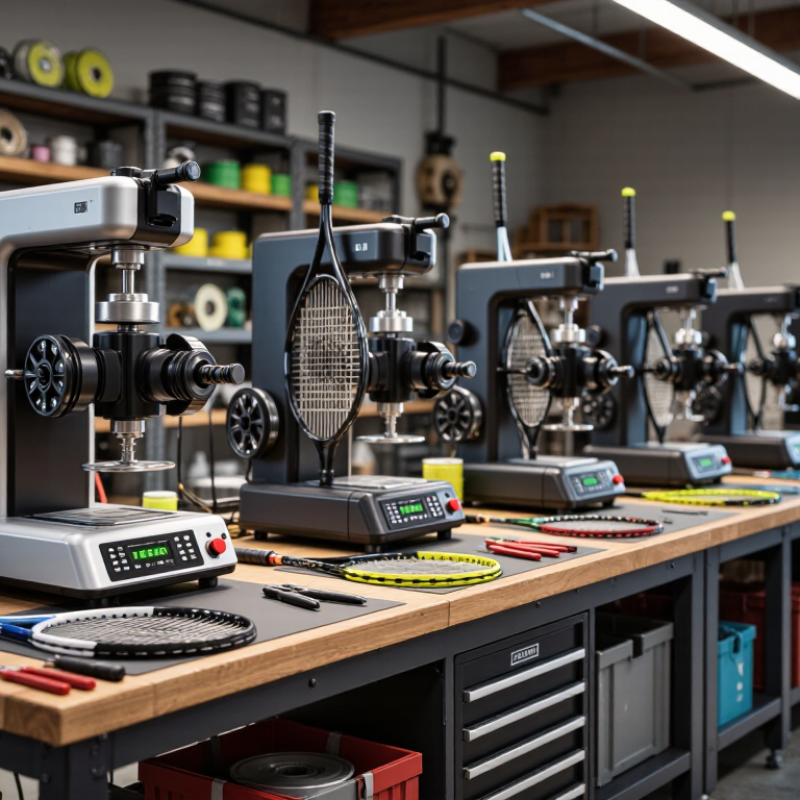
What Is the Best Racket Restringing Machine in China?

Define Selection Criteria: 40–70 lb Playing Tension and 20–90 lb Capacity

The best racket restringing machine in China should match real playing tension, not only advertised power. For most tennis and badminton workshops, a 40–70 lb working range covers common customer requests. A 20–90 lb capacity adds useful safety margin for unusual setups and future services. However, maximum capacity is not the same as accuracy. A machine may reach 90 lb yet perform poorly at 45 lb.

The ITF Rules of Tennis do not prescribe one universal string tension. This supports a flexible selection approach. The ITF Global Tennis Report 2024 recorded more than 106 million tennis players across 199 nations. That wide participation reflects varied equipment preferences. A reliable machine should therefore provide stable pulling, consistent clamping, and simple calibration. Electronic constant-pull systems usually offer better repeatability than basic lockout designs. Still, operator skill matters greatly. Even an expensive machine cannot correct careless mounting or uneven clamp pressure. I would not pretend that a 20–90 lb label guarantees professional results.

Tips: Test the machine at 40, 55, and 70 lb using a calibrated tension meter. Record pull results after ten consecutive jobs. Check for drift, clamp movement, and frame distortion. USRSA stringing guidance also stresses regular calibration and careful clamp inspection. Leave space for human error; real workshops are rarely perfect.

Compare Drop-Weight, Lockout Crank, and Constant-Pull Technologies

What Is the Best Racket Restringing Machine in China?

Choosing the best racket restringing machine in China depends on workload, accuracy, and available maintenance support. My experience with small workshops suggests that technology matters more than appearance. A drop-weight machine uses gravity to create tension. It is affordable, mechanically simple, and easy to inspect. The floating weight must remain level during pulling. Otherwise, the final tension can vary noticeably. It is slow, but very suitable for careful home stringing.

A lockout crank machine pulls the string to a selected tension, then locks the mechanism. It works faster than a drop-weight model and feels practical during busy hours. However, friction and string stretching can cause slight tension loss after locking. Regular tension checks are important. A crank that feels smooth may still need calibration. I once trusted the dial too much, and the result was less consistent than expected.

Constant-pull machines continue pulling while the string settles. This usually produces better tension consistency, especially with soft multifilament strings or higher tensions. Electronic controls also reduce repetitive hand adjustments. They cost more and need reliable calibration, clean clamps, and stable electrical support. In humid workshop conditions, dust and moisture can affect moving parts. My comparison is not perfect; string type, operator technique, and racket frame stiffness also change the result. For many Chinese repair shops, a calibrated constant-pull machine offers the strongest control, while a drop-weight unit remains the most dependable low-maintenance option.

What Is the Best Racket Restringing Machine in China? - Compare Drop-Weight, Lockout Crank, and Constant-Pull Technologies
Comparison Dimension Drop-Weight Machine Lockout Crank Machine Constant-Pull Machine
Operating Principle A weighted bar applies tension through gravity. The bar must be positioned horizontally before clamping. A manually operated crank pulls tension until the mechanism reaches the selected setting and locks out. An electronic or motorized tension head continuously pulls to compensate for tension loss while the string is clamped.
Typical Tension Consistency ★★★☆☆
Consistent when the bar is leveled correctly and the machine is used carefully.
★★★☆☆
Generally repeatable, but the final pull can vary with crank speed and operator technique.
★★★★★
Usually the most consistent option because the tension head continues pulling during the clamping process.
Adjustment After String Stretch Requires the operator to reposition the bar and repeat the pull. Requires the operator to release and repeat the crank pull. Automatically compensates for moderate tension loss before clamping, depending on the control system.
Approximate Stringing Speed Slowest of the three technologies; well suited to careful, occasional work. Moderate speed; faster than a drop-weight when the operator is experienced. Fastest overall in regular use, especially for repeated racquet restringing.
Learning Curve Low to moderate. Correct bar leveling, smooth pulling, and secure clamping are essential. Moderate. The operator must control crank movement and recognize when the lockout point is reached. Moderate to high. Digital settings, calibration, clamps, and electronic controls require proper setup.
Dependence on Electricity None. It can be used wherever the machine can be securely mounted or placed. None for the tensioning mechanism, although some models may include optional powered features. Usually requires electricity for the motor and control system; operation may be interrupted by power failure.
Portability Usually the easiest to transport because of its simple mechanical construction. Moderately portable, but the crank mechanism adds weight and size. Generally the least portable because of the motor, electronics, and power supply.
Maintenance Requirements Low. Periodic inspection of clamps, mounting bolts, the tension bar, and the pivot is normally sufficient. Low to moderate. The crank, lockout mechanism, clamps, and tension calibration should be checked regularly. Moderate to high. Cleaning, clamp maintenance, calibration checks, and inspection of electrical components are important.
Calibration Considerations Accuracy depends mainly on the weight, bar alignment, pivot condition, and friction in the mechanism. Calibration should be checked with a suitable tension calibrator because mechanical lockout systems can drift over time. Calibration should be verified periodically because load cells, motors, sensors, and software settings can affect tension accuracy.
Clamp Performance Requirements High-quality, low-slip clamps are important because the pull stops once the string is clamped. Low-slip clamps are essential to reduce tension loss during the lockout process. Clamps must hold securely while allowing the constant-pull system to compensate for small amounts of tension loss.
Risk of Operator-Induced Variation Moderate. Incorrect bar position or inconsistent handling can change the applied tension. Moderate. Crank speed, stopping technique, and lockout timing can influence repeatability. Lower during the actual pull, but incorrect calibration, clamp adjustment, or machine settings can still affect results.
Noise and Operating Feel Very quiet and smooth because it uses gravity rather than a motor. Quiet to moderate, with a distinct mechanical feel during the crank and lockout action. Low to moderate noise from the motor and drive system; the pull is usually smooth and controlled.
Suitable User Profile Home users, beginners, coaches, and stringers who value simplicity and low operating cost. Experienced home stringers, clubs, schools, and small-volume service work. High-volume stringers, professional workshops, sports facilities, and users prioritizing speed and repeatability.
Main Advantages Simple design, low maintenance, no electricity, quiet operation, and strong portability. Faster workflow than a drop-weight, mechanical operation, and relatively straightforward tension adjustment. High repeatability, automatic tension compensation, efficient workflow, and strong suitability for frequent use.
Main Limitations Slower operation and greater sensitivity to bar leveling and operator technique. Does not maintain pulling force after lockout, so some tension loss can occur during clamping. Higher purchase cost, greater maintenance needs, dependence on electricity, and more complex calibration.
Overall Value for Different Needs Best for affordability, simplicity, and occasional restringing. Best for a balance of speed, mechanical reliability, and practical daily use. Best for frequent restringing, professional consistency, and maximum workflow efficiency.
Note: Actual accuracy, speed, tension range, clamp quality, and service life vary by machine design, calibration condition, mounting system, and operator technique. The comparison reflects the general characteristics of each technology rather than a specific manufacturer or model.

Audit Performance: 0.1 lb Resolution, ±0.5 lb Accuracy, and 360° Rotation

What Is the Best Racket Restringing Machine in China?
Audit Performance: 0.1 lb Resolution, ±0.5 lb Accuracy, and 360° Rotation

Choosing the best racket restringing machine in China starts with measurable control, not appearance. In hands-on restringing work, a 0.1 lb resolution helps technicians make small tension adjustments. That detail matters when matching a player’s preferred feel. A stated accuracy of ±0.5 lb offers a practical quality benchmark. However, accuracy claims should be supported by calibration records and repeatable testing.

The tension head should return consistent readings across several pulls. Check it with a certified tension tester. Do not trust one measurement. A 360° rotation system also improves workflow around the frame. It lets the technician change angles without lifting or twisting the racket. Smooth rotation protects delicate grommets and reduces awkward wrist movement during busy shop hours.

A reliable machine needs more than strong specifications. Its clamps should hold firmly without marking the string or frame. The control panel should remain readable under bright workshop lighting. From my experience, minor tension drift can appear after extended use, especially when maintenance is ignored. That is easy to overlook. Regular calibration, clean rails, and careful clamp inspection remain necessary. Even a precise machine can produce uneven results when the operator rushes or the frame is poorly positioned.

Evaluate Chinese Suppliers Through ISO 9001, CE, Calibration, and Parts

What Is the Best Racket Restringing Machine in China?

Choosing a Chinese racket restringing machine requires more than comparing prices. ISO 9001 shows that the supplier follows documented quality procedures, but it does not guarantee perfect machine performance. Ask for the certificate scope, issuing body, and current validity. A factory should also explain how it controls incoming materials, assembly checks, and final testing. Specific answers matter.

CE documentation deserves careful review. CE marking relates to applicable European conformity requirements, not automatic product excellence. Request the declaration of conformity, electrical safety information, and test records for the exact machine model. Check whether the tension head, clamps, foot pedal, and control panel match the supplied documents. Small differences can create large purchasing problems.

Calibration is critical for consistent string tension. Ask for a recent calibration report, reference standards, testing range, and traceability details. Test the machine with a certified tension gauge if possible. Spare parts also need attention. Confirm prices and availability for clamps, springs, belts, sensors, and control boards. A supplier should provide replacement instructions and response times. Do not overlook packaging.

A common mistake is trusting a polished certificate without checking its details. I would also inspect sample machines, although factory demonstrations may hide daily wear. That limitation should be recorded. Reliable suppliers accept technical questions, share measurable evidence, and allow reasonable pre-shipment inspection. Some uncertainty remains. Plan for it.

What Is the Best Racket Restringing Machine in China?

Supplier evaluation checklist based on ISO 9001 quality evidence, CE conformity documentation, calibration traceability, and spare-parts support.

The chart counts the core evidence items that should be verified before purchase. ISO 9001 focuses on the supplier’s quality-management system, while CE compliance depends on the applicable EU requirements and a valid Declaration of Conformity. Calibration records should show traceability and measurement details; parts support should include compatibility, availability, lead time, and service responsibility.

Select by Total Cost, Warranty Coverage, and Professional Service Support

What Is the Best Racket Restringing Machine in China?

Choosing the best racket restringing machine in China requires more than comparing purchase prices. The ITF Global Tennis Report 2024 recorded about 106 million tennis players worldwide. That scale increases demand for consistent, repeatable stringing. For busy workshops, an electronic constant-pull machine may justify its higher cost through faster work and steadier tension. Smaller shops may prefer a mechanical model with fewer electronic parts.

Calculate the total cost over five years. Include shipping, installation, calibration, electricity, replacement clamps, and technician training. A machine costing 20% less may become more expensive after repeated calibration or imported parts. Ask for written warranty coverage, not verbal promises. Check whether the warranty includes the tension head, circuit board, sensors, and labor. Also confirm repair timing within China.

Service support matters most during peak tournament periods. The ITF report shows tennis participation expanding across nearly 200 countries, creating stronger expectations for reliable equipment. Request spare-part availability, video training, calibration guidance, and a named service contact. A response within two working days is useful, but not guaranteed. That detail needs verification.

The calculation is imperfect. Local power conditions, operator habits, and workload change the result. Test three identical rackets before buying, then compare tension consistency and clamp marks. A machine that feels impressive in a showroom may perform differently after six months of daily use.