
Choosing the best Water Based Polyurethane Resin from China requires more than comparing price per kilogram. The decision involves performance, consistency, documentation, and technical support. A resin may look attractive in a sample test, yet fail after drying on a humid production line. Small details matter.
Industry data supports this growing focus. Grand View Research identifies water-based coatings as a major expanding segment, driven by lower volatile organic compound emissions and stricter environmental expectations. MarketsandMarkets also forecasts continued growth for the global waterborne coatings market through the coming years. These reports indicate strong demand, but market growth does not prove that every Chinese supplier offers equal quality. That assumption needs challenging.
This article examines how to evaluate Chinese polyurethane resin manufacturers using practical and measurable criteria. Important points include solid content, viscosity stability, adhesion, abrasion resistance, yellowing resistance, drying time, and film flexibility. Technical data sheets should be checked against laboratory results. Factory samples should also be tested on the actual substrate, not only on glass panels. A good resin should form a smooth film, resist whitening, and maintain performance after repeated rubbing.
Supplier reliability deserves equal attention. ISO-certified production, batch traceability, independent testing, and responsive application support can reduce production risk. Certifications may help, but they should not replace performance testing. Sometimes, the cheapest option becomes costly after rework, rejected batches, or delayed deliveries. The best choice is rarely the most impressive brochure. It is the supplier that delivers stable chemistry, transparent evidence, and consistent results under real manufacturing conditions.
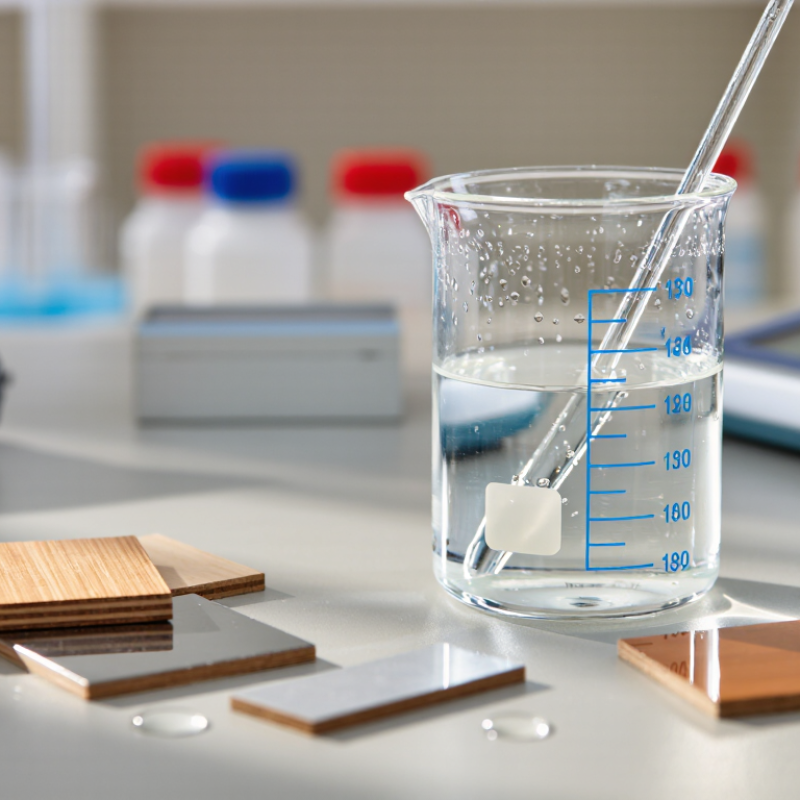
Water-based polyurethane resin uses water as its primary dispersion medium instead of most organic solvents. After application, water evaporates and the polymer particles form a continuous protective film. The result can be flexible, abrasion-resistant, and comparatively low in volatile organic compounds (VOCs). It is not automatically harmless.
Grand View Research has reported that the global water-based polyurethane market was valued at over USD 2 billion in recent years, with continued growth expected through the decade. MarketsandMarkets also identifies coatings, adhesives, and synthetic leather as major demand areas. These figures show market momentum, not product quality. A reliable Chinese resin should be assessed through solids content, viscosity, pH, particle size, tensile strength, elongation, hardness, and drying time. Small changes can affect spray stability and surface feel.
Testing matters most. In practical trials, I would compare the same resin on identical fabric, wood, or metal panels. Check gloss after seven days, not only after one hour. Measure abrasion resistance and water whitening under controlled conditions. A resin with 35–45% solids may improve transport efficiency, but higher solids can increase viscosity and complicate application. That trade-off is easy to overlook. ISO or ASTM test methods can improve comparability, although laboratory results may not match every factory line. The “best” water-based polyurethane resin from China is therefore the one whose technical data, batch consistency, documentation, and tested performance fit the intended application.
The best water-based polyurethane resin depends on the required balance of hardness, flexibility, chemical resistance, appearance, curing speed, and application method. The figures below are typical technical ranges for commonly used resin categories and should be confirmed by the supplier’s technical data sheet.
| Resin Category | Typical Solid Content | Typical pH | Typical Viscosity at 25°C | Film Characteristics | Key Performance Properties | Limitations to Consider | Best-Fit Applications | Overall Selection Priority |
|---|---|---|---|---|---|---|---|---|
| Aliphatic Water-Based PUD | 30–45% | 7.0–9.0 | 50–1,000 mPa·s | Clear, non-yellowing, flexible to moderately hard | Excellent light stability, good abrasion resistance, good outdoor appearance, strong adhesion to many substrates | Usually more expensive than aromatic grades; may require additional crosslinking for maximum chemical resistance | Wood coatings, leather finishes, textile coatings, automotive interiors, clear topcoats | ★★★★★ |
| Aromatic Water-Based PUD | 30–50% | 7.0–9.0 | 50–1,500 mPa·s | Hard or flexible films with good mechanical strength | Good hardness, tensile strength, adhesion, and cost efficiency | More likely to yellow under UV exposure; less suitable for clear exterior finishes | Industrial primers, textile binders, adhesives, indoor coatings, synthetic leather | ★★★★☆ |
| Self-Crosslinking Water-Based PUD | 30–45% | 7.0–9.0 | 100–2,000 mPa·s | Durable film with improved hardness after drying or heat treatment | Enhanced water resistance, solvent resistance, blocking resistance, and abrasion resistance | Pot life, storage stability, and curing conditions must be carefully controlled | Protective coatings, packaging coatings, demanding textile finishes, industrial surfaces | ★★★★★ |
| Two-Component Water-Based PU | 35–60% after mixing | 7.0–9.0 before mixing | 100–3,000 mPa·s after mixing | Hard, tough, and highly crosslinked film | Very high chemical resistance, water resistance, abrasion resistance, and durability | Limited pot life; requires accurate mixing, application control, and appropriate curing | Industrial flooring, heavy-duty wood coatings, machinery, metal, and high-performance protective finishes | ★★★★★ |
| Polycarbonate-Based Water-Based PUD | 30–45% | 7.0–9.0 | 100–2,000 mPa·s | Tough, flexible, clear, and highly durable | Excellent hydrolysis resistance, good weathering resistance, strong abrasion resistance, and long service life | Typically higher cost and may require optimized drying conditions | Premium leather, automotive, electronics, outdoor coatings, and high-durability finishes | ★★★★★ |
| Polyether-Based Water-Based PUD | 30–45% | 7.0–9.0 | 50–1,500 mPa·s | Soft, elastic, and flexible film | Good low-temperature flexibility, hydrolysis resistance, and elongation | May provide lower hardness, gloss, and solvent resistance than polyester- or polycarbonate-based systems | Flexible films, textiles, soft-touch coatings, elastomeric materials, and flexible adhesives | ★★★★☆ |
| Polyester-Based Water-Based PUD | 30–45% | 7.0–9.0 | 100–2,000 mPa·s | Balanced hardness, flexibility, and surface smoothness | Good adhesion, gloss, printability, and mechanical strength | Hydrolysis resistance can be lower than that of polyether- or polycarbonate-based systems unless specially designed | Wood, plastic, leather, metal primers, packaging, and general industrial coatings | ★★★★☆ |
| Water-Based PU-Acrylic Hybrid | 35–55% | 7.0–9.0 | 100–3,000 mPa·s | Good hardness, gloss, adhesion, and surface appearance | Balanced cost-performance ratio, good weathering potential, and easy formulation flexibility | Ultimate flexibility and chemical resistance may be lower than those of specialized pure PU systems | Decorative coatings, wood finishes, general industrial coatings, and architectural applications | ★★★★☆ |
| High-Solid Water-Based PU Dispersion | 45–60% | 7.0–9.0 | 500–5,000 mPa·s | Higher build, faster film formation, and reduced drying load | Lower water usage per unit of coating, improved productivity, and good final-film performance | Higher viscosity can make spraying, leveling, and storage stability more challenging | Industrial coatings, thick-film applications, flooring, and high-productivity production lines | ★★★★☆ |
| Selection note: For outdoor clear coatings, an aliphatic or polycarbonate-based dispersion is generally preferred. For maximum chemical and abrasion resistance, a two-component or self-crosslinking system is usually more suitable. For flexible substrates, polyether-based or soft aliphatic polyurethane dispersions are often the better choice. Actual performance depends on resin chemistry, additives, substrate preparation, coating thickness, drying conditions, and final formulation. | ||||||||