Why Choose an Extrusion Machine for Your Manufacturing Needs?
In today's competitive manufacturing landscape, choosing the right equipment is crucial. An extrusion machine stands out as a top choice for many manufacturers. Renowned industry expert, Dr. Emily Tran, emphasizes its significance, stating, "An extrusion machine combines efficiency with versatility, making it indispensable for modern production." This powerful machinery can produce everything from plastic components to food products, adapting to various materials.
The efficiency of an extrusion machine lies in its ability to continuously process materials. This feature not only accelerates production rates but also reduces labor costs significantly. Think about how quickly you could scale up your operations. However, not all extrusion machines are created equal, and factors like maintenance can become challenging. Manufacturers must carefully evaluate their options to ensure lasting reliability.
Moreover, while extrusion machines are highly effective, they may require a substantial upfront investment. Understanding the long-term benefits is key. As manufacturers navigate this choice, a guided approach, considering both financial and operational aspects, proves essential. Balancing immediate costs with future production needs often sparks critical discussions in the industry.
Benefits of Using Extrusion Machines in Manufacturing
When considering manufacturing needs, extrusion machines offer significant advantages.
These machines shape materials by forcing them through a die. This process is
efficient and cost-effective. With extrusion, manufacturers can create
complex profiles that would be challenging with other methods.
One major benefit is versatility. Extrusion machines can handle various materials,
from plastics to metals. This adaptability allows for diverse applications across different industries.
Reduced waste is another critical factor. The extrusion process can produce
near-net shapes, leading to less raw material waste.
However, it's essential to acknowledge some challenges.
Not every company has the expertise required to operate such machinery effectively.
Training can be time-consuming. Additionally, initial investments in extrusion equipment can be substantial.
Despite these hurdles, the long-term benefits in productivity and
material efficiency often outweigh the drawbacks.
Key Applications of Extrusion Machines Across Industries
Extrusion machines play a vital role across various industries, from food processing to plastics.
In the food sector, these machines help in producing snacks and pasta.
A report by Markets and Markets reveals that the global food extrusion market is projected to reach $7.6 billion by 2026.
Significant growth is expected due to increasing consumer demand for convenient and nutritious food options.
In the plastics industry, extrusion machines are critical for manufacturing pipes, films, and sheets.
According to a study by Research and Markets, the global plastic extrusion market will exceed $6.5 billion by 2023.
These machines enable high efficiency and precision, minimizing waste and enhancing product quality.
The versatility in materials used—such as thermoplastics and composites—allows manufacturers to explore innovative applications.
However, the integration of extrusion machines is not without challenges.
Maintaining consistent quality and managing operational costs can hinder progress.
Companies must invest in training and technology upgrades to ensure optimal performance.
By fostering a culture of quality control, manufacturers can address these issues while maximizing the benefits of extrusion technology.
Types of Extrusion Processes and Their Suitability
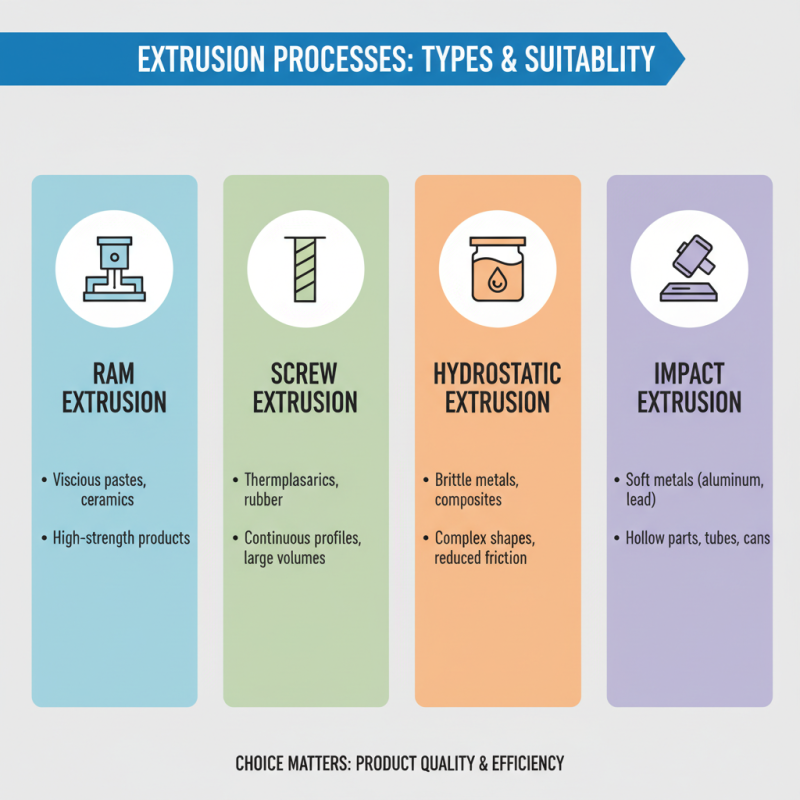
Extrusion processes play a crucial role in modern manufacturing. They are widely used to shape materials like plastics and metals. With various types of extrusion, each method suits specific applications. The choice of process can significantly affect product quality and production efficiency.
The two primary types of extrusion processes are hot and cold extrusion. Hot extrusion involves heating the material, making it pliable. This method is ideal for metals, yielding excellent mechanical properties. Cold extrusion, on the other hand, does not use heat. It helps maintain material strength and is suitable for producing precision parts. According to a recent market report, the global extrusion market is projected to grow by 5.4% from 2023 to 2030. This growth highlights the importance of choosing the right extrusion method.
Another aspect worth considering is the impact of materials on the extrusion process. Different polymers and alloys require distinct conditions. For instance, thermoplastics are ideal for continuous processes but can be challenging with additives. Decisions made at this stage affect not only quality but also production costs. Understanding the nuances of each process is essential for optimizing manufacturing operations.
Factors to Consider When Selecting an Extrusion Machine
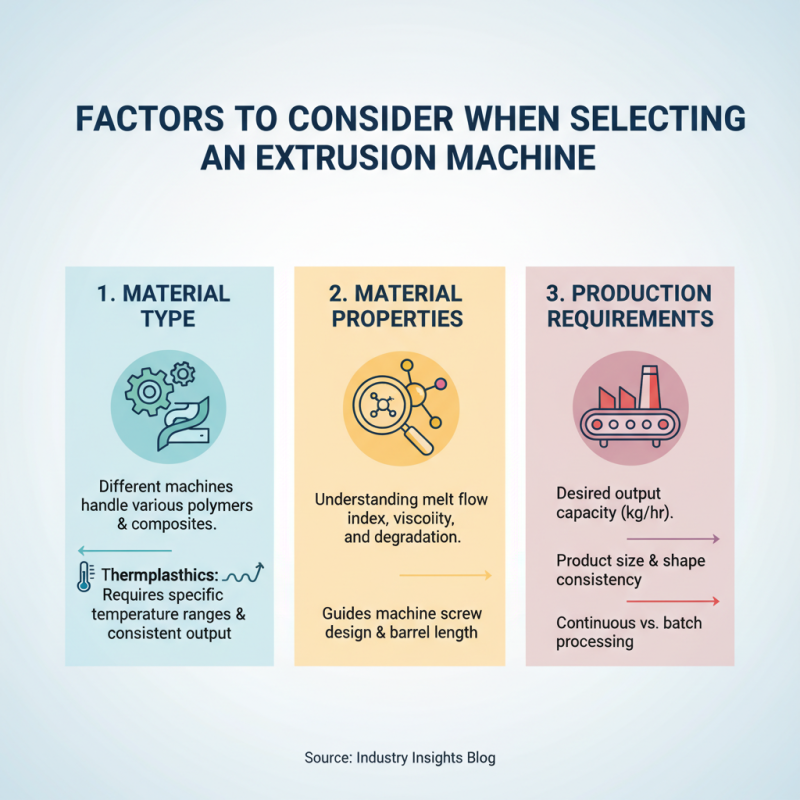
When selecting an extrusion machine, several factors come into play. The type of materials you plan to work with is crucial. Different machines handle various polymers and composites differently. Understanding the material properties will guide your choice. For instance, if you're focusing on thermoplastics, ensure the machine can reach required temperature ranges and maintain consistent output.
The machine's capacity is another important consideration. Think about your production volume needs and how quickly the machine can operate. Some machines may offer faster throughput but at the cost of precision. It's essential to balance speed with quality. If your specifications demand high precision, investing in a machine that prioritizes accuracy might pay off in the long run.
Energy efficiency is an aspect that needs reflection. Some models might consume more energy than others. Over time, this can significantly impact operational costs. Evaluate your budget and whether the initial investment will lead to savings later. Analyze your production process to see how an extrusion machine can integrate well and meet sustainability goals.
Advantages of Automation in Extrusion Manufacturing
Automation in extrusion manufacturing offers significant benefits that can enhance production efficiency. Reports indicate that automated processes can increase output by up to 30%. This increased efficiency is often attributed to reduced cycle times and minimized human error. Manual operations can be inconsistent and prone to mistakes. Automation ensures that processes are uniform, leading to better quality control and reduced waste.
Moreover, the integration of advanced technology in extrusion machines allows for real-time monitoring. This capability enables manufacturers to predict potential issues before they escalate. According to a study by the International Society of Automation, companies utilizing automated systems saw a 20% reduction in downtime. Employers benefit from higher precision and reliability in operations, translating into cost savings.
However, transitioning to automation isn't without challenges. Initial investment costs can be high. Training employees on new systems is necessary but often overlooked. Implementing automation requires careful planning and adaptation. Many companies discover that while automation can improve efficiency, it necessitates a cultural shift in the workforce. This transition can cause resistance and requires ongoing support and communication.