Discover Exciting Plastic Manufacturing Jobs at Allied Plastics

China Top NBR Seal Kit Manufacturer How to Choose?

Choosing a China Nbr Seal Kit manufacturer requires more than comparing online prices. The right supplier should understand hydraulic, pneumatic, automotive, and industrial sealing requirements. Material selection matters. NBR performs well against mineral oils, fuels, and moderate temperatures, but it is not suitable for every chemical or operating condition. A professional manufacturer should explain these limits clearly.

Look for evidence of real production experience. Review mold capability, compound formulation, dimensional control, and batch traceability. Ask whether the factory can provide material certificates, inspection records, and practical test data. Compression set, hardness, tensile strength, and resistance testing can reveal quality differences that photographs cannot show. Clear drawings and samples should come before large orders.

Small details often prevent expensive failures. Check the kit’s part numbers, seal profiles, packaging, and labeling. Confirm whether the manufacturer supports OEM dimensions and consistent replacement supply. Communication also matters, especially when drawings change or field feedback appears. A reliable supplier should answer technical questions without vague promises. No supplier is perfect. I would not rely on price alone. Some low-cost kits may use unstable compounds or inconsistent sizes, while expensive offers may lack meaningful verification. Compare evidence, not claims. A careful audit, sample evaluation, and trial order can reduce risk. The best choice is a manufacturer that combines suitable NBR materials, controlled production, honest documentation, and responsive technical support.
China Top NBR Seal Kit Manufacturer How to Choose?

What Is an NBR Seal Kit and Where Is It Used?

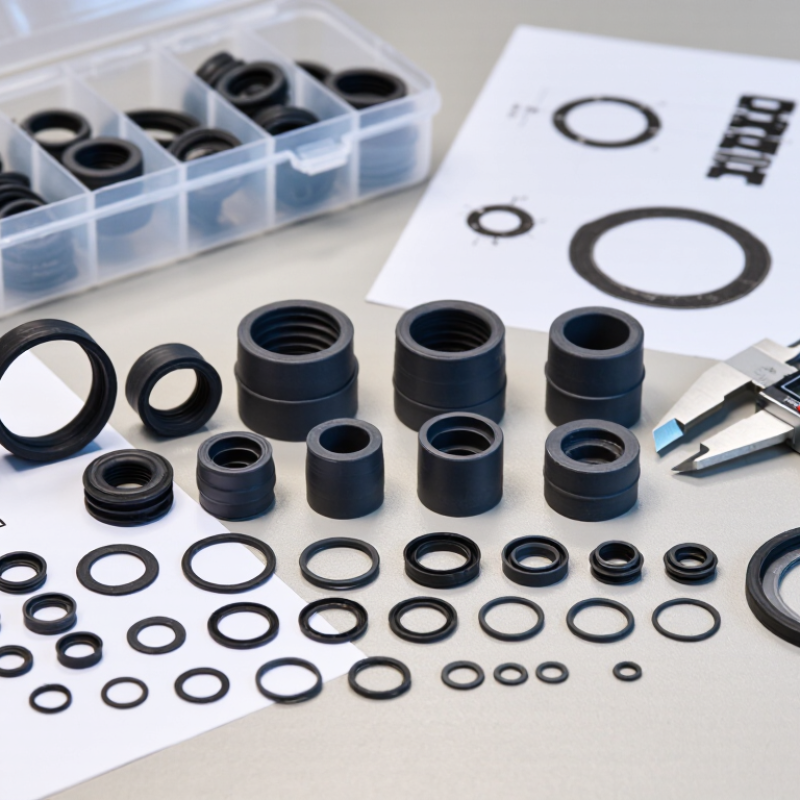
An NBR seal kit contains replacement O-rings, hydraulic seals, backup rings, scrapers, and sometimes guide rings. NBR means nitrile butadiene rubber. It resists mineral oils, diesel, grease, and many hydraulic fluids. Common working temperatures range from about -30°C to 100°C, depending on the compound and pressure. It performs poorly against ozone, sunlight, and some aggressive chemicals.

Small details matter. These kits are used in excavator cylinders, agricultural machinery, pneumatic valves, pumps, compressors, and automotive systems. A damaged seal can leave a thin oil trail on a piston rod, followed by pressure loss and slower movement. The U.S. Department of Energy’s Compressed Air Sourcebook reports that system leaks can waste 20–30% of compressor output. Correct sealing therefore affects energy use, not only maintenance cost. Field inspections also show a recurring mistake: technicians replace the visible O-ring but ignore a hardened backup ring.

When choosing a China-based NBR seal kit manufacturer, request compound data, hardness results, dimensional inspection records, and batch traceability. ISO 3601 dimensional compliance is useful for standard O-rings, but custom hydraulic profiles need separate testing. Ask for compatibility testing with your actual fluid, pressure, speed, and temperature. A capable supplier should explain limitations clearly, even when the answer delays an order. I would also compare compression set, tensile strength, and aging results from independent or controlled laboratory tests. The cheapest kit may fit today and fail after a few operating cycles. That is an uncomfortable cost.

Which NBR Seal Kit Specifications Should You Compare?

When choosing a China top NBR seal kit manufacturer, compare specifications before comparing prices. NBR compounds differ in acrylonitrile content, hardness, and resistance. These details affect sealing performance in oil, fuel, and hydraulic applications. A common hardness range is 70 Shore A, but softer or harder grades may suit different pressures. Do not guess.

Check the actual operating temperature, pressure, and movement conditions. Many NBR seals work around -30°C to 100°C, but the compound and design can change this range. Compare resistance to mineral oils, grease, water, ozone, and cleaning fluids. Chemical compatibility charts are useful, although field conditions can be less predictable. I have seen seals fail because a fluid mixture was ignored. Small details matter.

Dimensions require equal attention. Compare inner diameter, outer diameter, cross-section, tolerances, groove fit, and relevant international standards. Ask whether each kit includes inspection records, material certificates, batch numbers, and hardness test results. Reliable manufacturers should explain sampling methods and aging tests clearly. Packaging also matters, since heat, sunlight, and compression can damage unused seals. A clear label should show size, material, quantity, and production date. I would also request a sample kit before placing a large order. One specification may look perfect on paper, yet installation feedback can reveal an uncomfortable weakness.

China Top NBR Seal Kit Manufacturer How to Choose? - Which NBR Seal Kit Specifications Should You Compare?

Specification to Compare Typical NBR Seal Kit Range or Option Why It Matters Recommended Selection Guidance
Elastomer Material Nitrile rubber (NBR), commonly identified by ASTM D1418 as NBR NBR provides good resistance to petroleum-based oils, hydraulic fluids, fuels, and grease. Confirm the exact fluid, additives, concentration, and exposure time before approval. Consider FKM, EPDM, or PTFE when NBR is chemically unsuitable.
Acrylonitrile Content Approximately 18%–50% acrylonitrile, depending on compound formulation Higher acrylonitrile content generally improves oil and fuel resistance but can reduce flexibility and low-temperature performance. Use lower-ACN grades for improved flexibility at low temperatures and higher-ACN grades for stronger oil and fuel resistance.
Hardness Typically 70–90 Shore A for industrial seal applications; softer grades may also be available Hardness affects extrusion resistance, installation force, sealing contact, and compatibility with surface irregularities. Choose hardness according to pressure, clearance gap, surface finish, and installation conditions. Do not select hardness alone.
Working Temperature Commonly about −30°C to +100°C; some specially formulated compounds may reach approximately +120°C Temperature influences elasticity, compression set, aging rate, and long-term sealing reliability. Compare the continuous operating temperature and peak temperature separately. Verify the compound manufacturer's tested limits.
Pressure Capability Application-dependent; often specified from low pressure to several hundred bar for hydraulic seal designs The seal profile, extrusion gap, backup ring, speed, temperature, and housing design determine actual pressure capability. Request pressure ratings for the complete seal design, not only the NBR material. Check static and dynamic pressure separately.
Fluid Compatibility Generally suitable for mineral oils, many hydraulic oils, fuels, and lubricating greases Compatibility varies with fluid type, temperature, pressure, and compound formulation. Use caution with ozone, weathering, aromatic solvents, ketones, esters, strong acids, and many glycol-based fluids.
Compression Set Compare test results using the same method, temperature, and test duration; lower values generally indicate better elastic recovery High compression set can cause leakage after prolonged compression or elevated-temperature exposure. For static seals, prioritize low compression set at the actual operating temperature and service duration.
Tensile Strength Often approximately 10–25 MPa for many molded NBR compounds Tensile strength indicates resistance to mechanical damage and stretching during installation or service. Compare results tested to the same standard, such as ISO 37 or ASTM D412, because test methods affect reported values.
Elongation at Break Commonly about 150%–500%, depending on hardness and formulation Adequate elongation helps prevent tearing during assembly and accommodates limited movement. Balance elongation with hardness, tensile strength, wear resistance, and dimensional stability.
Seal Profile O-ring, U-cup, rod seal, piston seal, wiper, scraper, rotary shaft seal, or custom profile Profile geometry controls leakage prevention, friction, pressure response, and suitability for static or dynamic movement. Match the profile to motion type, shaft or bore geometry, pressure direction, and installation space.
Dimensional Standard AS568, ISO 3601, DIN 3771, ISO 6194, or application-specific dimensions Standard dimensions improve interchangeability and simplify replacement and inventory management. Provide groove dimensions, seal cross-section, inside diameter, outside diameter, and tolerance requirements.
Dimensional Tolerance Compare with the applicable ISO, AS, DIN, or customer drawing tolerance class Incorrect dimensions or excessive variation can create leakage, excessive friction, or installation damage. Review inspection records and verify critical dimensions by sampling or 100% inspection where required.
Wear and Abrasion Resistance Good for many general industrial applications; actual performance depends on compound and counter-surface Wear can lead to leakage in reciprocating or rotary applications. Evaluate shaft speed, stroke rate, lubrication, surface roughness, hardness, and contamination level.
Ozone and Weather Resistance Limited compared with EPDM or FKM unless protected or specially compounded Outdoor exposure, sunlight, and ozone can cause surface cracking and premature failure. Use protective packaging and avoid direct outdoor storage. Consider another elastomer for continuous outdoor exposure.
Low-Temperature Flexibility Standard NBR commonly performs around −30°C; low-temperature grades may perform below this range Loss of flexibility may reduce contact pressure and cause leakage during cold starts. Specify the minimum start-up temperature, not only the normal operating temperature.
Color and Identification Black is common; other colors may be used for identification or application requirements Color alone does not reliably identify material, hardness, or chemical compatibility. Require material documentation and hardness records rather than approving a kit by color only.
Quality Documentation Certificate of conformity, material specification, inspection report, batch traceability, and applicable test results Documentation supports consistency, regulatory review, root-cause analysis, and repeat purchasing. Request batch number, production date, test standards, acceptance criteria, and storage information.
Storage Life and Packaging Store in sealed packaging away from heat, sunlight, ozone, moisture, and chemicals; follow applicable storage standards Improper storage can age NBR seals before installation. Check manufacturing date, packaging condition, storage temperature, and first-in-first-out inventory control.
Selection note: Actual NBR seal performance depends on the complete combination of material compound, seal profile, dimensions, pressure, temperature, fluid, movement, surface finish, installation method, and storage conditions. Always validate the selected seal kit under the intended service conditions.

How to Evaluate China-Based NBR Seal Kit Manufacturers?

China Top NBR Seal Kit Manufacturer: How to Choose?

Evaluating a China-based NBR seal kit manufacturer requires more than checking price. Ask for NBR compound data, hardness ranges, temperature limits, and oil resistance results. A reliable supplier should explain its material selection clearly. Request dimensional drawings and sample kits before placing a large order. Measure inner diameters, cross-sections, and groove fit during testing. Small differences can cause leakage after installation.

Tips: Check production equipment, mold maintenance, inspection tools, and batch traceability. Ask how workers control flash, surface defects, and compression set. Review test reports, but verify key results with independent samples when possible. Confirm whether the factory can maintain consistent quality across repeated orders. Certificates matter, yet practical evidence matters more. Speak with the technical team, not only a sales representative.

A professional manufacturer should provide clear lead times and realistic capacity information. It should also protect drawings, specifications, and order records. During factory communication, notice how quickly problems receive technical answers. Vague replies may indicate weak process control. My own evaluation experience shows that attractive samples can hide unstable mass production. That is easy to miss. Therefore, inspect a pilot batch before approving regular production. Also discuss packaging, storage conditions, replacement procedures, and documented corrective actions. A capable supplier welcomes reasonable questions, although no factory is perfect. Reliability appears through consistent records, honest limitations, and measurable improvements.

What Quality Standards and Testing Should You Require?

China Top NBR Seal Kit Manufacturer: How to Choose?

What Quality Standards and Testing Should You Require?

A dependable NBR seal kit needs more than a polished certificate. Ask for compound identification, batch traceability, and test records. ISO 3601-3 provides visual and surface-quality acceptance criteria for O-rings. ASTM D2000 helps classify rubber performance by temperature, hardness, and chemical resistance. These standards create a useful baseline, not a complete purchasing decision.

Specify hardness, usually around 70 Shore A for many hydraulic applications. Require hardness testing under ASTM D2240, tensile strength and elongation testing under ASTM D412, and compression-set testing under ASTM D395. For oil exposure, request ISO 1817 results, including volume change, hardness change, and tensile retention. A practical test report should show test temperature, exposure time, sample size, and actual results. “Pass” alone is weak evidence.

For production control, require first-article inspection and batch sampling. Check dimensions against ISO 3601-1, especially diameter, cross-section, and tolerance. Ask for accelerated aging data, often at 100°C for 22 or 70 hours, depending on the application. Independent laboratory verification adds confidence. However, certificates can still hide inconsistent sampling. I have seen acceptable samples fail after storage. Seal kits should therefore include packaging dates, storage guidance, and a documented retest plan. The 2024 Smithers rubber-industry outlook also highlights traceability and consistency as growing supply-chain priorities. No test plan is flawless. Review failures honestly.

How to Select the Right Supplier for Your Application?

When selecting an NBR seal kit supplier, begin with your application details.

Identify the fluid, operating temperature, pressure, shaft speed, and installation space.

NBR performs well with many mineral oils and fuels, but it is not suitable for every chemical environment.

Check the required hardness, inner diameter, outer diameter, and cross-section against your equipment drawings.

Measure twice. Small dimensional errors can cause leakage after installation.

Ask the supplier for material specifications, batch traceability, inspection records, and sample seals before placing a large order.

A reliable manufacturer should explain its compound selection instead of offering one standard formula.

Request testing data for compression set, tensile strength, hardness, and temperature resistance.

Review how the kits are packed and stored, because heat, ozone, and sunlight can age rubber before use.

Fit matters.

I have seen technically sound seals fail because the groove was damaged or the wrong lubricant was used.

A spreadsheet can still miss practical assembly problems.

Test the kit under real operating conditions, including start-up and pressure changes.

Discuss corrective actions openly when samples show defects.

The best supplier is not simply the lowest-priced factory; it is the one that documents limits, responds clearly, and improves when evidence proves its first choice was imperfect.