Choosing heavy plastic sheeting starts with the job, not the product label. Will it cover a damp crawl space, protect equipment outdoors, or contain debris during renovation? Each use brings different demands. A sheet that works well indoors may become brittle under sunlight or tear when dragged across rough concrete.
Polymer scientist Dr. Ramani Narayan’s work offers a useful reminder: material properties should suit the conditions of use. No verified direct quotation from him on heavy plastic sheeting was provided, so the following is an editorial rule, not his verbatim statement: “Choose for the exposure, not thickness alone.” It is a small distinction, but an important one.
Thickness, often listed in mils, can help estimate durability, but it does not tell the whole story. Resin type, reinforcement, UV resistance, temperature range, and puncture strength also matter. Check the product specification against the actual task. A clear sheet may admit light; an opaque one can provide more screening. A reinforced sheet may handle repeated movement better, though it can cost more and feel less flexible.
This guide will explain how to compare those details without getting lost in marketing claims. Look closely. Ask what the sheet must withstand, how long it must last, and whether it will be reused. Even careful selection has limits: sharp edges and strong wind can damage a thick sheet. That deserves attention, too.
Before choosing heavy plastic sheeting, define exactly what it must do. A temporary floor cover faces different demands than a moisture barrier beneath stored materials. List the contact surfaces, expected duration, and likely movement around the sheet. Concrete can abrade film; sharp gravel may puncture it quickly. For a crawl space, vapor control may matter more than appearance. For a renovation, foot traffic and spilled paint may matter more. Small differences matter.
Then assess the actual environment, not just the forecast. Outdoor sheets may face sunlight, wind, rain, and daily temperature swings. Check whether the material is rated for UV exposure and the temperatures it will encounter. Indoors, humidity, condensation, and nearby heat sources can affect suitability. Conditions change. Measure the area and allow enough overlap or fastening edge, without leaving loose flaps for wind to catch. A thicker sheet is not automatically more tear-resistant; material type and reinforcement count too. Compare specifications with the job conditions, then inspect a sample for flexibility and pinholes. That check can reveal problems early. Plans are rarely perfect, so reassess if the site changes.
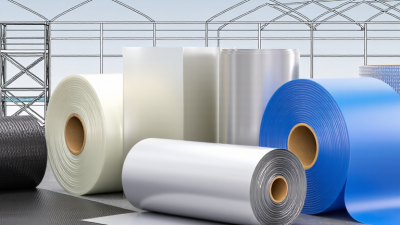
Heavy plastic sheeting is not one material with one set of properties. Polyethylene is common, but its grades behave differently. Low-density polyethylene (LDPE) bends easily and suits covers that must fold around corners. Linear low-density polyethylene (LLDPE) often offers better puncture and tear resistance than LDPE at similar thickness. High-density polyethylene (HDPE) is stiffer, which helps when a sheet needs to hold its shape. But it can feel less forgiving during installation.
Density can help explain weight, but it does not predict strength by itself. ASM International’s Polymer Data Handbook lists typical densities around 0.91–0.94 g/cm³ for LDPE, 0.94–0.97 for HDPE, and 0.90–0.91 for polypropylene. Polyvinyl chloride is substantially denser, commonly around 1.3–1.45 g/cm³. Numbers vary. For a damp crawl space, flexibility and moisture resistance may matter more than stiffness; for a work surface, abrasion and puncture resistance may matter more. Check test data for the actual sheet, not just its material name. ASTM D882 measures tensile properties of thin plastic films, while ASTM D1004 measures tear resistance. I still find thickness labels easy to overtrust: a thicker sheet is not automatically tougher if its formulation or construction differs.
Material performance depends on sheet thickness, manufacturing method, additives, and construction. The comparisons below are general; check the product specification for the exact grade and intended use.
| Material or construction | Strength and tear behavior | Flexibility | Water and chemical resistance | Outdoor considerations | Common applications | Main trade-off |
|---|---|---|---|---|---|---|
| LDPE film Low-density polyethylene |
Good impact resistance and flexibility; performance against punctures and tears depends strongly on thickness. | Very flexible and easy to fold or drape. | Water-resistant; generally resists many dilute acids, alkalis, and salts. Some oils and solvents can affect it. | Unstabilized film can degrade with prolonged sunlight exposure; outdoor grades may include UV stabilizers. | Covering, damp-proof layers, temporary protection, and general-purpose heavy film. | Less rigid and typically lower in tensile stiffness than HDPE film. |
| LLDPE film Linear low-density polyethylene |
Often offers strong puncture and tear resistance for its thickness, with good stretch before failure. | Flexible and stretchable. | Water-resistant and broadly similar to other polyethylene films in chemical resistance. | UV life depends on the grade and stabilizers; confirm suitability for the expected exposure period. | Heavy-duty liners, protective covers, and applications where puncture resistance and stretch are useful. | Can stretch under sustained load; compare the specified properties rather than relying on resin name alone. |
| HDPE film High-density polyethylene |
Good tensile strength and stiffness; a thinner sheet may be less forgiving when sharply creased or punctured. | Less pliable and more rigid than LDPE or LLDPE film. | Water-resistant and generally resistant to many acids, alkalis, and salts. | Sunlight resistance varies by formulation; UV-stabilized grades are preferable for extended outdoor exposure. | Ground covers, protective barriers, and liners where stiffness and chemical resistance are useful. | May be harder to drape around irregular shapes and can be vulnerable to damage at folds or sharp edges. |
| Reinforced polyethylene PE film with a reinforcing scrim |
The embedded mesh helps limit tear propagation and improves strength, especially in the reinforcement directions. | Flexible, though generally less conformable than plain film of similar thickness. | Typically water-resistant when the film layers fully cover the scrim; seams and damaged areas can leak. | Outdoor durability depends on the film, scrim, edge construction, and UV stabilization. | Tarpaulins, temporary enclosures, construction covers, and reusable protective barriers. | More durable than plain film in many tear-prone uses, but cuts or worn seams can still compromise the sheet. |
| Woven polypropylene Often laminated or coated |
Strong along the woven yarn directions; coating or lamination can improve resistance to abrasion and moisture. | Flexible but has a woven fabric-like feel; may crease rather than drape smoothly. | Polypropylene itself resists water absorption. Uncoated woven fabric may allow water through openings; laminated versions are more water-resistant. | UV resistance depends on stabilizers and construction; untreated material can weaken with prolonged sunlight. | Woven ground covers, sacks, and coated tarps or protective sheets. | Uncoated versions are not necessarily waterproof, and cut edges may fray. |
| Flexible PVC sheeting Plasticized polyvinyl chloride |
Can provide good abrasion resistance and tear strength, depending on thickness and reinforcement. | Highly flexible; flexibility can change with temperature and formulation. | Water-resistant and resistant to many aqueous chemicals, but compatibility with oils, solvents, and specific chemicals should be checked. | Outdoor performance varies by formulation; plasticizer and UV-related aging can affect long-term flexibility. | Reusable curtains, covers, and heavy-duty sheets requiring a supple, durable surface. | Usually heavier than comparable PE film and may be incompatible with some chemicals or temperatures. |
Choosing heavy plastic sheeting starts with the job, not the thickest roll on the shelf. Thickness is often listed in mils; one mil equals 0.001 inch. A thicker sheet generally resists tearing and punctures better, but it can be heavier and harder to fold. For covering rough lumber or a dusty work area, check the surface for sharp edges and consider extra thickness. No sheet is puncture-proof.
Width affects how many seams you will need. Measure the widest span, then allow enough material to overlap edges or secure the sheet around corners. A narrow roll may seem easier to handle, yet several seams can create more places for wind or moisture to get through. That detail is easy to miss. For long, open areas, a wider sheet can simplify installation, provided you can manage it safely.
Measure the full length and width of the area, including material that must wrap over a stack or hang down a wall. Add a practical allowance for folds, fastening, and overlap; a few inches may not be enough around bulky objects. For example, a covered pallet needs extra sheet on all sides, not just a top measurement. Measure twice. I still find that irregular corners make neat estimates look optimistic, so leave room to trim rather than buying a sheet that barely fits.
How to Choose the Right Heavy Plastic Sheeting?
Evaluate Durability, Reinforcement, and Special Features
Durability depends on more than thickness. Check the product’s stated thickness and material, then match them to the job. A sheet covering a woodpile outdoors needs different protection than one lining a clean indoor work area. For outdoor use, look for UV resistance and consider how long the sheeting will stay exposed. Wind, sharp edges, and repeated handling can wear it down quickly. Feel the material if you can. A sample stretched over a rough corner may reveal weaknesses that a product description won’t.
Reinforcement matters when the sheet must span a wide area or resist tearing around fasteners. Mesh reinforcement can help limit tear growth, while reinforced edges or grommets may make secure installation easier. Check grommet spacing and edge strength rather than assuming every reinforced sheet is equally robust. I’ve seen people focus on thickness and overlook how the sheet will be attached. That detail can make a sturdy material fail at the corners.
Consider special features in relation to actual conditions. Flame-retardant, anti-static, or chemical-resistant properties may be useful, but verify the product documentation and compatibility for your specific application. Don’t assume a feature covers every exposure. Measure the area, allow extra material for overlap, and test a small section before installing the full sheet. A little inconvenient, perhaps. But replacing a torn cover halfway through a rainy week is worse.
Nominal thickness comparison: mil converted to millimeters
One mil equals 0.001 inch, or exactly 0.0254 millimeters. Greater thickness can contribute to durability, but it does not guarantee performance: compare reinforcement, material, UV protection, and the demands of your application when choosing sheeting.
Before buying heavy plastic sheeting, check the jobsite and the installation method. Measure the area, allow enough material for overlaps, and confirm that the chosen thickness suits expected abrasion, moisture, and exposure. A thick sheet can still tear at a sharp corner. Plan how edges will be secured, and keep fasteners from creating new puncture points.
Handling deserves equal attention. The NIOSH Applications Manual for the Revised Lifting Equation sets a 51-pound load constant for ideal two-handed lifting; the recommended limit falls when reach, twisting, or other risk factors increase. That figure is not a safe-weight limit for every roll. A wide, awkward roll may be harder to control than its weight suggests. Use a cart or team lift when needed, and keep the route clear before moving it.
During installation, secure loose corners and overlaps so wind cannot lift the sheet or turn it into a trip hazard. Keep walkways visible, especially when clear film covers uneven ground. Check the product’s handling guidance for temperature and chemical exposure, and avoid trapping heat or fumes in enclosed spaces. It is easy to overlook ventilation when work seems brief. Inspect the installed sheet after the first shift; a rushed edge repair may need rethinking.