
Discover Exciting Plastic Manufacturing Jobs at Allied Plastics

What Is Natural Alpha Arbutin Powder Used For?

Natural Alpha Arbutin Powder is commonly used in skincare formulations designed to improve the appearance of uneven skin tone, post-blemish marks, and visible dark spots. It is a naturally derived form of alpha arbutin, often sourced from bearberry, pear, or related botanical materials. In a properly prepared formula, it may help reduce the appearance of excess pigmentation by supporting the regulation of tyrosinase activity, an enzyme linked to melanin production. It does not bleach the skin. That distinction matters.

Cosmetic chemist and educator Perry Romanowski has stated, “Natural does not mean safer or more effective.” This reminder fits Natural Alpha Arbutin Powder especially well. Botanical origin can sound reassuring, but quality still depends on purity, processing, concentration, packaging, and storage. A pale powder exposed to moisture may lose performance. Reliable suppliers should provide identity testing, batch documentation, and stability information. Practical details matter.

This ingredient is usually added to serums, creams, lotions, and spot-care products. Results are gradual, not dramatic overnight. Daily sunscreen remains essential, because ultraviolet exposure can deepen discoloration and weaken visible progress. The final effect also depends on skin type, formula design, and consistent use. Sensitive skin may react to the complete product, even when alpha arbutin itself is well tolerated. Patch testing is sensible.

The answer is not perfectly simple. “Natural” describes origin, not guaranteed performance. Consumers and formulators should examine evidence, labeling, and realistic claims before choosing Natural Alpha Arbutin Powder for a brightening formulation.
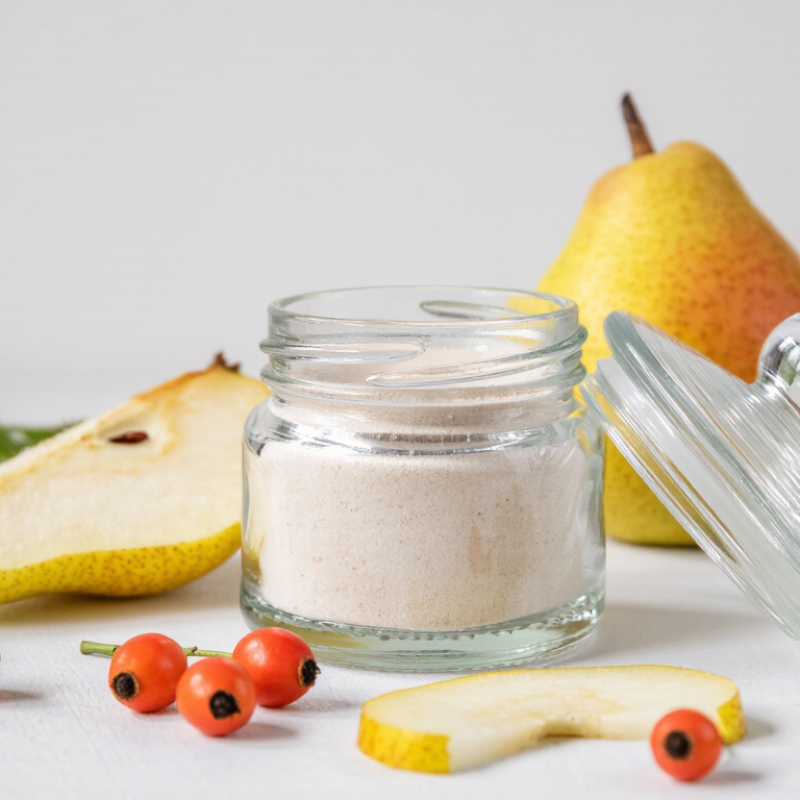
What Is Natural Alpha Arbutin Powder Used For?

What Is Natural Alpha Arbutin Powder?

Natural alpha arbutin powder is a plant-derived cosmetic ingredient used in brightening formulations. It is a glycosylated form of hydroquinone, naturally found in bearberry and related plants. Chemically, it can help reduce tyrosinase activity, an enzyme involved in melanin production. This makes it relevant for uneven tone, post-blemish marks, and visible dullness.

It is usually dissolved into serums, creams, or masks at carefully measured levels. The powder is fine and white, but it should not be sprinkled directly onto skin. Formulation accuracy matters. Poor dispersion may create uneven exposure or reduce product stability. Research published in the Journal of Dermatological Science has reported reduced pigment formation in laboratory and clinical settings, although results vary between individuals. Evidence is promising, not magical.

Market data also explains its popularity. Grand View Research estimated the global skin-lightening products market at about USD 10 billion in 2023, with continued annual growth. That figure reflects broad product demand, not proof that every brightening ingredient works equally well. Natural origin also does not guarantee superior safety. Ingredient identity, purity, pH, packaging, and testing remain essential. Independent laboratory reports should confirm the botanical source and alpha-arbutin content. I would question any powder sold without batch documentation. Skin can react unexpectedly. Patch testing remains sensible.

Natural alpha arbutin powder is primarily used in cosmetic formulations designed to help reduce the appearance of uneven skin tone and dark spots by inhibiting tyrosinase activity. The chart shows the maximum concentrations assessed as safe by the European Scientific Committee on Consumer Safety for different leave-on product types: up to 2% in face creams and up to 0.5% in body lotions.

Source: European Commission Scientific Committee on Consumer Safety (SCCS), safety assessment of alpha-arbutin in cosmetic products.

How Does Natural Alpha Arbutin Work on Skin?

What Is Natural Alpha Arbutin Powder Used For?

Natural alpha arbutin powder is mainly used in skincare formulas targeting uneven tone and visible dark spots. It is commonly derived from botanical sources, including bearberry leaves and certain fruit tissues. Its value comes from alpha arbutin’s ability to influence melanin production rather than simply bleaching the skin.

How Does Natural Alpha Arbutin Work on Skin?

Alpha arbutin helps inhibit tyrosinase, an enzyme involved in melanin formation. Think of tyrosinase as a switch in pigment production. When its activity decreases, skin cells may produce less excess pigment over time. This process is gradual, not instant. Clinical observations suggest that consistent topical use can improve the appearance of post-blemish marks and sun-related discoloration.

The Scientific Committee on Consumer Safety reported that alpha arbutin is considered safe at concentrations up to 2% in facial products, when properly formulated (SCCS Opinion, 2015). A peer-reviewed review in the International Journal of Molecular Sciences also describes arbutin as a tyrosinase inhibitor with potential skin-brightening activity. However, laboratory results do not always mirror real skin. That matters.

In practical use, a serum may be applied to clean, dry skin before moisturizer. Daily sunscreen remains essential because ultraviolet exposure can reactivate pigmentation. Some users notice mild dryness or irritation, especially when combining multiple active ingredients. Natural does not automatically mean gentle. Patch testing is sensible, although it is not perfect. Temperature, pH, packaging, and storage can also affect powder stability, so formulation quality deserves careful attention.

What Are the Main Uses of Alpha Arbutin Powder?

Natural alpha arbutin powder is a cosmetic ingredient used mainly in brightening skincare formulas. It helps reduce the appearance of uneven tone by moderating melanin formation in the skin. This makes it useful for dark spots, post-blemish marks, and sun-related discoloration. It does not bleach skin. It supports a more even-looking complexion over time.

Formulators commonly add alpha arbutin powder to water-based serums, creams, and lotions. The powder must be measured accurately and dissolved according to reliable formulation guidance. Poor mixing can create uneven application. Gentle routines are often easier to maintain than aggressive ones. Visible changes may take several weeks. Results vary with skin type, sun exposure, and the cause of discoloration. It is not a magic eraser.

Tips: Choose cosmetic-grade powder with clear testing information. Follow the recommended usage level. Use sunscreen daily, because ultraviolet exposure can darken marks again. Patch test the finished product first. Stop if burning or persistent redness occurs. Finished products also need suitable preservation, packaging, and stability checks. This step is often underestimated.

What Is Natural Alpha Arbutin Powder Used For? - What Are the Main Uses of Alpha Arbutin Powder?

Use or Data Dimension What Alpha Arbutin Powder Is Used For How It Works Practical Notes Evidence and Safety Considerations
Uneven Skin Tone Used in cosmetic products designed to improve the appearance of uneven pigmentation and promote a more uniform-looking complexion. Alpha arbutin is a glycosylated hydroquinone derivative that can reduce tyrosinase activity, an enzyme involved in melanin production. It is commonly added to water-based serums, lotions, creams, and emulsions after suitable dissolution and formulation testing. The cosmetic effect is gradual rather than immediate. Daily broad-spectrum sunscreen is important because ultraviolet exposure can worsen pigmentation.
Post-Inflammatory Hyperpigmentation Used in brightening formulations for the appearance of dark marks that may remain after acne, irritation, insect bites, or minor skin inflammation. By moderating melanin synthesis, it may help reduce the visual contrast between pigmented marks and surrounding skin over time. Results depend on the cause, depth, age, and repeated exposure of the pigmentation, as well as the overall skincare routine. It should not be applied to broken or actively irritated skin. Persistent or changing pigmentation should be assessed by a qualified healthcare professional.
Sun-Related Dark Spots Used as a cosmetic ingredient in products intended to improve the appearance of sun-induced spots and areas of excess pigmentation. It targets the melanin-forming pathway rather than physically removing pigmented skin. Consistent use and protection from ultraviolet radiation are necessary to help prevent spots from becoming darker or reappearing. Alpha arbutin is a cosmetic brightening ingredient and should not be presented as a guaranteed treatment for dermatological disorders.
Melasma Support May be included in a supportive skincare routine for the appearance of melasma-related discoloration. Its tyrosinase-modulating activity may help reduce the formation of new melanin, but it does not address every biological factor involved in melasma. A gentle routine and high-level, broad-spectrum sun protection are especially important because melasma can be persistent and recurrent. Melasma may require professional diagnosis and treatment. Alpha arbutin should be considered an adjunctive cosmetic ingredient, not a stand-alone medical therapy.
Brightening Serum Formulation Used as an active powder ingredient in facial serums, spot treatments, moisturizers, masks, and other leave-on cosmetic products. The ingredient is generally selected for its ability to influence the appearance of pigmentation without relying on abrasive skin exfoliation. The powder must be evenly dispersed or dissolved, and the finished formula should be checked for pH compatibility, stability, color change, and preservative performance. The appropriate concentration depends on local regulations, product type, raw-material specifications, and safety assessment. Follow qualified formulation guidance.
Natural-Origin Positioning May be described as natural-origin when the raw material is obtained from suitable botanical sources or meets a recognized natural-cosmetic standard. The cosmetic function is determined by the alpha-arbutin molecule itself, regardless of whether the source is botanical or manufactured. Source, purity, manufacturing method, residual solvents, contaminants, and certification status should be verified from technical documentation. “Natural” is not automatically equivalent to “safer.” Product safety depends on identity, purity, concentration, exposure, and the complete formulation.
General Skin Compatibility Used in routines seeking a potentially gentler alternative to stronger pigment-targeting ingredients. Alpha arbutin does not primarily work by exfoliating the skin, so it may be suitable for formulations that aim to minimize unnecessary surface irritation. A patch test is advisable before wider use. Avoid combining multiple potentially irritating actives without professional guidance. Stop use if marked redness, burning, swelling, or rash develops. Cosmetic ingredients should be used according to the finished product’s directions.

Key point: Alpha arbutin powder is primarily used in cosmetic brightening products to help improve the appearance of uneven pigmentation, dark spots, and post-inflammatory marks by moderating melanin production. Visible results vary, and consistent sun protection remains essential.

Which Skin Types Can Use Natural Alpha Arbutin?

Natural alpha arbutin powder

Natural alpha arbutin powder is commonly used in skincare formulations for uneven-looking skin tone and visible dark spots. It works by slowing tyrosinase activity, an enzyme involved in melanin production. Results usually develop gradually, not overnight. In practice, consistent use matters more than using a strong concentration.

Most skin types

Most skin types can use alpha arbutin when it is properly diluted in a finished product. Normal, dry, oily, combination, and acne-prone skin may tolerate it well. Lightweight formulas often suit oily skin. Moisturizing formulas may feel better on dry skin. Sensitive skin needs more care. Patch testing is sensible, especially when the powder is freshly formulated or mixed with other active ingredients. Start slowly.

Be cautious with damaged, peeling, or inflamed skin

Be cautious with damaged, peeling, or inflamed skin. Natural does not always mean irritation-free. That assumption is easy to make, but it is not reliable. People with eczema, persistent redness, or unexplained pigmentation should seek professional advice. Sunscreen remains essential because ultraviolet exposure can deepen discoloration and reduce visible progress. Alpha arbutin may support a clearer-looking complexion, but it cannot correct every cause of pigmentation. Personal response also varies. A small test area can reveal problems before applying it widely.

How Should Alpha Arbutin Powder Be Used Safely?

Alpha arbutin powder is mainly used in cosmetic formulations targeting uneven tone, sun spots, and post-acne marks. It gradually reduces melanin formation by inhibiting tyrosinase activity. However, powder is a concentrated raw material, not a ready-to-apply skincare product. Direct application can cause irritation, especially around the nose, eyes, or damaged skin.

Safe use requires accurate weighing and proper formulation. The European Commission’s Scientific Committee on Consumer Safety, in Opinion SCCS/1642/22, considered alpha-arbutin safe up to 2% in face creams and 0.5% in body lotions, when formulated correctly. These limits matter. More powder does not guarantee faster results. It may increase irritation and formulation instability.

Avoid inhaling the powder, mixing it casually with acids, or applying homemade solutions without suitable preservation. Keep the container dry, sealed, and away from heat and light. I would not use it on broken skin.

Tips: Patch-test the finished product on a small area for 24–48 hours. Stop if burning, swelling, or persistent redness develops. Use sunscreen daily, because ultraviolet exposure can maintain pigmentation. Introduce one active ingredient at a time. That makes reactions easier to identify.

A qualified cosmetic chemist or dermatologist should assess concentration, pH, purity, and hydroquinone impurities. Results also vary. My own cautious view is simple: controlled formulation is safer than kitchen experimentation.