Top 10 Glass Fiber Felt Aerogel Pack Insulation Sheets
Choosing a Glass Fiber Felt Aerogel Pack Insulation Sheet is not just a search for the lowest thermal conductivity. Buyers also need to consider thickness, flexibility, moisture resistance, compression, and installation conditions. Small differences matter when sheets wrap pipes, fit equipment housings, or line a narrow enclosure. A neat laboratory result may not translate perfectly to a cramped job site.
The International Energy Agency’s 2023 buildings analysis reports that buildings account for about 30% of global energy consumption and 26% of energy-related emissions. That context makes insulation performance worth examining carefully, though building figures do not directly predict results in industrial systems. For comparable conductivity data, ASTM C518 provides a recognized steady-state heat-flow test method. Yet a test value alone cannot establish durability, fire behavior, or performance after repeated compression. Check current technical datasheets and test conditions.
This Top 10 guide compares available sheets by practical criteria: reported thermal conductivity, dimensions, density, surface construction, handling, and supporting documentation. It also distinguishes supplier claims from independently tested values where information is available. Some listings may lack complete test reports; that is a real limitation, not a detail to gloss over. Use the comparisons to shortlist options, then confirm specifications with manufacturers for your temperature range and installation design.
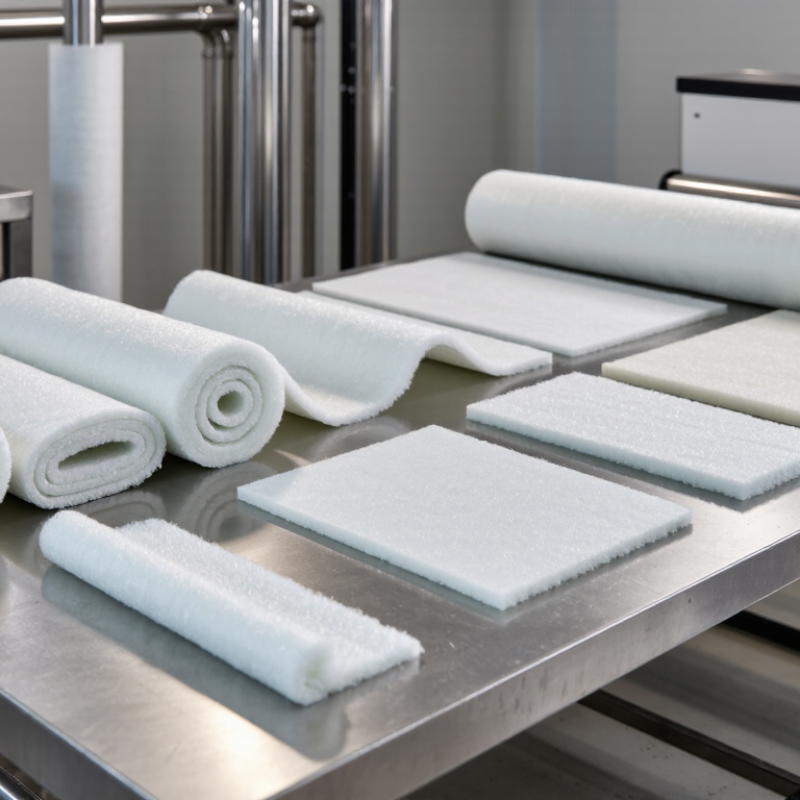
What Defines Glass-Fiber-Felt Aerogel Pack Insulation Sheets?
Top 10 Glass Fiber Felt Aerogel Pack Insulation Sheets
What Defines Glass-Fiber-Felt Aerogel Pack Insulation Sheets?
These sheets combine silica aerogel with a glass-fiber felt carrier. Aerogel’s tiny pores slow heat movement, while the felt gives the fragile material more structure for cutting and installation. The result is a thin, flexible insulation layer suited to tight spaces, equipment enclosures, and pack assemblies. Typical silica-aerogel blanket data report thermal conductivity around 0.015–0.020 W/m·K, but values depend on temperature, density, and test method. Compare products under matching conditions, such as ASTM C518. Numbers can mislead.
The felt is not just packaging. It helps limit dusting and supports the sheet during handling, though edges and seams still need careful fitting. Compression can change thickness and thermal performance; moisture, damaged surfaces, and uneven joints can also undermine a neat installation. The weak point may be the joint, not the core. The Global Alliance for Buildings and Construction’s 2023 Global Status Report estimates buildings accounted for 34% of global energy demand and 37% of energy- and process-related carbon emissions in 2022. That context makes insulation relevant, but it does not prove that one sheet will deliver a specific energy saving. Real performance depends on the full assembly, workmanship, and operating conditions. Some details are easy to overlook.
How Silica Aerogel and Glass-Fiber Felt Form a Flexible Insulation Sheet
Silica aerogel’s tiny pores trap still air, slowing heat transfer through the sheet. A technical review by Baetens, Jelle, and Gustavsen in Energy and Buildings reports silica-aerogel thermal conductivity around 0.013–0.020 W/(m·K), depending on material and test conditions. That is a material-level range, not a guaranteed value for a finished insulation sheet. Details matter.
Glass-fiber felt gives the brittle aerogel structure a flexible framework. In production, silica particles form a porous network within or around the felt; the fibers help the sheet bend and resist handling damage. The result can be cut to fit a pipe elbow or pressed around a compact enclosure. A dense binder or heavy compression may reduce flexibility and affect insulation performance. Moisture and edge gaps matter, too. A small seam can become a clear path for heat. Baetens and colleagues’ review also notes that aerogel properties vary with composition and processing, so buyers should check tested sheet data, thickness, and measurement method—not rely on aerogel figures alone. It sounds simple. It isn’t.
Thermal Conductivity Benchmarks: Commonly 0.018–0.023 W/(m·K)
Top 10 Glass Fiber Felt Aerogel Pack Insulation Sheets
Thermal conductivity is often the first figure buyers compare. Glass fiber felt aerogel pack sheets commonly report values around 0.018–0.023 W/(m·K). A lower number may suggest better insulation, but it does not tell the whole story. Test temperature, sample thickness, density, and conditioning can all affect the result. Always check whether the value comes from a recognized test method and matches the conditions of your application.
On a workbench, a thin sheet may feel light and flexible, yet compression can change its installed thickness and thermal performance. Moisture exposure and rough cutting edges deserve attention, too. Small details matter. Compare technical data sheets using the same units and test conditions, then confirm required thickness against the available space.
For a pipe enclosure or equipment panel, seams and fasteners can create heat paths that a lab sample does not capture. I would treat the benchmark as a useful screening range, not a guaranteed field result. That distinction is easy to overlook. Ask for test documentation, and consider a trial installation when fit, handling, or repeated removal could affect performance.
Top 10 Sheet Types Compared by Thickness, Density, and Pack Application
Glass fiber felt aerogel sheets differ in thickness, density, flexibility, and surface treatment. A useful comparison starts with the pack’s available space and heat exposure. Thin, low-density sheets suit tight clearances, but offer less insulation per layer. Medium-density sheets balance fit and thermal resistance. Thicker, denser sheets can help where space allows, though they may add weight and resist bending. Check measured values, not appearance alone.
For pack applications, flexible plain-felt sheets fit curved walls and narrow gaps. Foil-faced sheets can reduce radiant heat transfer when installed with suitable clearances. Scrim-faced sheets resist handling damage. Adhesive-backed sheets simplify placement, but the adhesive must tolerate operating temperatures. Hydrophobic grades may be preferable where moisture exposure is possible. Rigid or high-density sheets suit flatter surfaces needing shape retention. Multilayer sheets can combine a protective facing with an insulating core. These are ten useful types to compare, not a universal ranking. That matters. Measure the installed thickness, including facings, and compare density using the same test basis. Supplier data can vary. I would verify compression and edge fit on a small section before specifying a full pack; that step is easy to overlook.
Top 10 Glass Fiber Felt Aerogel Pack Insulation Sheets - Top 10 Sheet Types Compared by Thickness, Density, and Pack Application
The figures below are representative design ranges for silica-aerogel sheets reinforced with glass-fiber felt. They are not universal standardized grades; actual thickness and bulk density vary with construction and supplier specifications.
| Sheet type | Typical thickness | Indicative bulk density | Pack application | Practical consideration |
| Ultra-thin glass-felt aerogel sheet | 1–2 mm | 180–250 kg/m³ | Tight clearances between battery modules or around pack components | Low profile; limited insulation thickness compared with thicker sheets. |
| Thin separator sheet | 3 mm | 160–220 kg/m³ | Thermal barrier between adjacent cells or modules | Useful where space is constrained; confirm compression and fit in the assembly. |
| Standard single-layer sheet | 5 mm | 150–200 kg/m³ | General-purpose insulation between pack modules and enclosure sections | A common sheet format; performance depends on the complete pack design. |
| Medium-thickness barrier sheet | 6 mm | 150–200 kg/m³ | Module-to-module barriers where additional thickness is available | Check edge coverage and fastening so gaps do not compromise the barrier. |
| Thick single-layer sheet | 10 mm | 140–190 kg/m³ | Larger thermal separation zones within a battery pack | Requires adequate clearance and a suitable retention method. |
| Heavy-duty felt-reinforced sheet | 12 mm | 150–210 kg/m³ | Pack partitions or enclosure areas needing a thicker insulation layer | Verify bend radius and cut-edge durability for the intended installation. |
| Extra-thick insulation sheet | 15 mm | 140–200 kg/m³ | Localized pack zones with greater available space for a thermal barrier | Account for added volume and ensure the sheet is not excessively compressed. |
| Thick panel-style sheet | 20 mm | 140–200 kg/m³ | Pack perimeter or dedicated barrier locations with generous clearance | Usually suited to larger spaces; check the finished assembly dimensions. |
| Laminated two-layer sheet assembly | 2 × 5 mm (about 10 mm total) | 140–210 kg/m³ per layer | Pack layouts requiring layered coverage or separately fitted sections | Seams and interfaces need careful fitting; total density is not obtained by adding layer densities. |
| Die-cut or shaped aerogel sheet | 3–10 mm | 150–220 kg/m³ | Custom-fit coverage around module edges, corners, and pack features | Specify cut dimensions and tolerances; avoid uncovered gaps in the installed assembly. |
Density is shown as an indicative bulk-density range in kg/m³. For selection, request the supplier’s current technical data and assess thermal, mechanical, electrical, flammability, and pack-level safety requirements.
How to Check Temperature Limits, Compression, and Fire-Test Ratings
When comparing glass fiber felt aerogel pack insulation sheets, check the temperature range in the technical data sheet. Confirm whether the stated limit applies to continuous service or short-term exposure. These are not interchangeable. Also check the test conditions, including the substrate, humidity, and whether joints or protective facings were included. A sheet rated for a dry, flat panel may behave differently around a curved pipe or a damp enclosure. Record the actual operating temperature and expected hot spots before selecting a product. Numbers need context.
Compression matters because pack insulation can be squeezed during installation. Ask for thickness under a stated pressure, then check recovery after that pressure is removed. If the sheet will sit beneath straps or inside a tight casing, compare test conditions with the real installation. Small differences add up. For fire performance, look for the report’s exact test method and rating, not just a broad “fire resistant” claim. Confirm whether results apply to the sheet alone or the complete assembly, including facing and seams. A tidy laboratory result is useful, but it is not a field guarantee; that distinction is easy to overlook.
Top 10 Glass Fiber Felt Aerogel Pack Insulation Sheets: Fire-Test Reference
The curve shows the ISO 834-1 standard furnace temperature-time exposure, calculated as T = 20 + 345 log10(8t + 1), where t is time in minutes and T is temperature in °C. It describes the test exposure, not an insulation sheet’s pass rating or maximum service temperature. Check each product’s declared continuous-use temperature, compression data measured under a stated method such as ASTM C165, and applicable fire-test classification separately.