Top 10 Clear PVC Sheet Types for Global Buyers?
Clear PVC sheet remains a practical choice for global buyers seeking visibility, impact resistance, and cost control. It appears in machine guards, warehouse partitions, packaging windows, greenhouse panels, and indoor signage. The material can feel different in hand: rigid sheets stay firm, while flexible grades bend around a roll.
Market estimates vary. Grand View Research reports continued growth in the global PVC market, driven by construction, packaging, and industrial applications. Fortune Business Insights also identifies building products and flexible materials as important PVC demand segments. These reports use different boundaries, currencies, and forecasting methods. The numbers should be compared carefully.
That matters during purchasing. A low-cost clear PVC sheet may haze under sunlight, curl after heating, or crack around drilled holes. Better selection depends on thickness, plasticizer content, clarity, surface finish, temperature range, and certification requirements. For overseas orders, buyers should also confirm packing methods, test reports, and batch consistency.
Dr. Chris DeArmitt, a recognized plastics design expert, has stated, “There is no such thing as a plastic problem, only a design problem.” His point fits this market. Sheet performance often depends on specification and use conditions, not only the polymer name. This guide examines ten clear PVC sheet types, including rigid, flexible, embossed, frosted, UV-resistant, anti-static, and specialty grades. Some categories overlap. That is intentional, because product names are not always standardized across suppliers.
A transparent sheet is not automatically a suitable sheet. Real performance deserves testing.
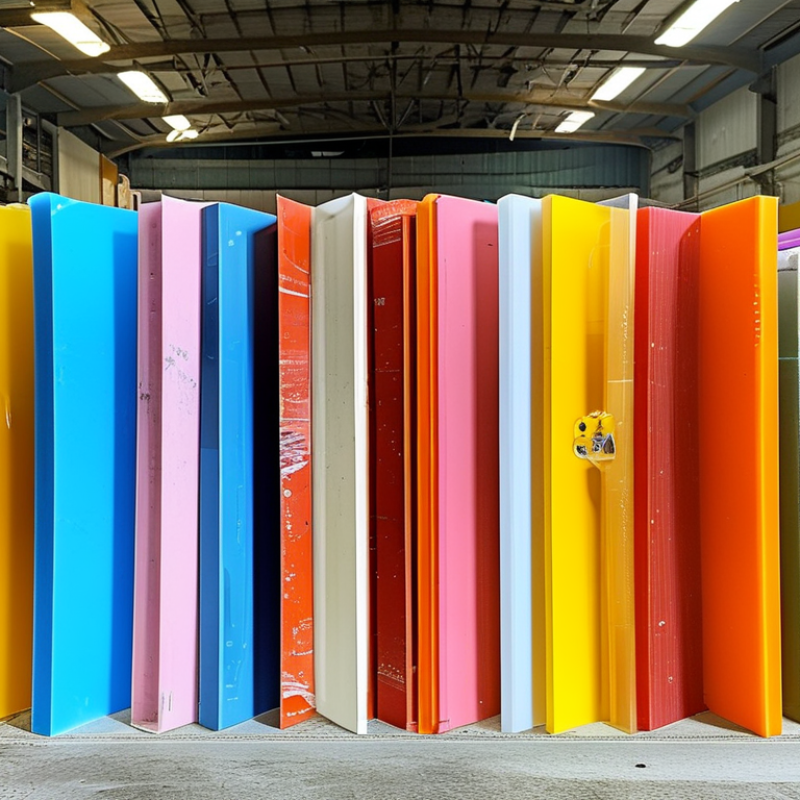
Clear PVC Sheet Classification: ASTM D1593 and 0.05–12 mm Thickness Ranges
Top 10 Clear PVC Sheet Types for Global Buyers
Clear PVC sheets are often classified by thickness, flexibility, clarity, and intended use. ASTM D1593 provides a useful reference for nonrigid vinyl chloride plastic film and sheeting. However, it should not replace project-specific specifications or current test requirements.
The 0.05–0.20 mm range suits lightweight covers, packaging layers, and transparent protective films. Sheets from 0.25–0.80 mm offer better handling and moderate tear resistance.
The 1–3 mm range is common for curtains, partitions, and machine guards. Thicker sheets from 4–12 mm provide greater stiffness and impact protection, but they may need mechanical support.
Thickness is only one factor. Check nominal caliper, tolerance, tensile strength, elongation, tear resistance, surface finish, and light transmission. Use a calibrated micrometer at several points, not just the center. Inspect clarity against a bright panel. Small haze or uneven edges can become obvious after installation.
A clean sample can mislead.
For outdoor applications, ask about plasticizer migration, low-temperature flexibility, and resistance to sunlight. For forming or welding, confirm the sheet’s softness and thermal behavior before ordering.
ASTM D1593 may help structure the inquiry, yet buyers should also request inspection records and representative samples. In practice, the thinnest acceptable sheet often reduces cost, but it may wrinkle, stretch, or fail sooner than expected.
Top 10 Types by Flexibility, Clarity, Thickness, and PVC Formulation
Top 10 Clear PVC Sheet Types for Global Buyers
Top 10 Types by Flexibility, Clarity, Thickness, and PVC Formulation
Clear PVC sheets differ in flexibility, light transmission, thickness, and formulation. Global buyers should match the sheet with its working environment. The ten common types include flexible film, soft sheet, semi-rigid sheet, rigid sheet, ultra-clear sheet, transparent sheet, matte-clear sheet, thin-gauge sheet, medium-gauge sheet, and thick impact-modified sheet.
Flexible film bends easily around rounded surfaces and folds without immediate cracking. Soft sheets often contain plasticizers for improved handling. Semi-rigid sheets provide moderate support for covers and dividers. Rigid sheets suit guards, windows, and formed panels. Ultra-clear grades prioritize visual appearance. Standard transparent grades balance clarity and cost. Matte-clear surfaces reduce glare, although they scatter more light. Thin gauges save weight but may wrinkle during installation. Medium gauges offer practical balance. Thick impact-modified sheets provide stronger resistance to knocks.
A reliable purchase specification should state thickness tolerance, haze, light transmission, hardness, and plasticizer content. Ask for test data, not only a product photograph. A 0.5 millimeter sheet may feel flexible, while a 3 millimeter sheet can remain self-supporting. Formulation also affects odor, aging, welding, and cold-temperature performance. In practical conversion work, clarity can change after cutting or thermoforming. That detail is easy to overlook. A perfectly clear sheet is not always the best choice. Consider storage temperature, surface cleaning, and installation stress before approval. Some specifications still need revision after sampling.
Top 10 Clear PVC Sheet Types for Global Buyers
Comparative view by typical flexibility and optical clarity. Scores are indicative industry-reference indices from 0 to 100; thickness ranges and PVC formulations are shown in the chart tooltips.
Rigid and high-clarity PVC sheets generally provide the best transparency, while plasticized films and flexible sheets offer greater conformability. Actual performance depends on resin grade, plasticizer content, stabilizers, processing method, and surface finish.
Rigid PVC Sheet: 1–12 mm with ASTM D1784 and ISO 527 Test Criteria
Clear PVC sheet selection starts with thickness, not appearance alone. Rigid sheets from 1–12 mm support covers, guards, partitions, signage, and fabricated housings. Common types include standard clear, super-clear, UV-resistant, impact-modified, chemical-resistant, matte, embossed, anti-static, fire-performance, and recycled-content grades. Each type changes transparency, stiffness, processing, or service life.
ASTM D1784 helps buyers evaluate rigid PVC compound classification and material properties. ISO 527 provides tensile testing criteria, including tensile strength, elongation, and modulus. These results should match the intended thickness and production batch. A 1 mm sheet may bend easily, while a 12 mm panel behaves more like a structural board. Ask for test reports, thickness tolerance data, and retained samples. Do not rely on a polished surface alone. Optical clarity can hide internal stress, weak edges, or inconsistent formulation.
Tips: Check both sides under angled light. Compare an unused sample with a drilled or heat-formed sample. Confirm whether testing covers the supplied grade, not only a similar formulation. Chemical exposure and outdoor weathering still need practical trials. One limitation matters: ASTM D1784 and ISO 527 do not prove every application claim. I would also review impact performance, dimensional stability, and joining methods before approval. The most transparent sheet may be the wrong choice.
Global Buyer Checklist: UV, Food-Contact, RoHS, REACH, and ISO 9001 Compliance
Global buyers often compare ten clear PVC sheet types by thickness, flexibility, surface finish, and service temperature. Yet compliance can matter more than appearance. In warehouse trials, a sheet may look crystal clear under lamps but yellow after months of sunlight. Ask for UV test data, including exposure method, duration, and retained clarity. Outdoor covers need more than a vague “UV resistant” claim. Check whether stabilizers affect recycling or contact suitability. For food-contact use, request declarations for the target market and exact formulation. Migration results should match thickness, temperature, food type, and contact time. “Food grade” alone is too weak. Inspect batch identification too.
For electronics, packaging, and industrial screens, request current RoHS and REACH declarations. Confirm restricted substances, candidate-list communication, and document revision dates. A generic certificate may not cover every additive or colorant. ISO 9001 certification supports controlled purchasing, traceability, corrective action, and complaint handling. It does not prove that every sheet is safe for food or durable outdoors. I would compare certificates with test reports and production records. Ask for samples from the intended batch. Measure haze, thickness, tensile behavior, and odor before approval. Small gaps matter. Suppliers should explain storage limits, edge protection, and shipment conditions. My checklist is not flawless; test methods can be misunderstood. Independent verification remains sensible for high-risk applications. Good paperwork helps, but physical performance decides the purchase.