Discover Exciting Plastic Manufacturing Jobs at Allied Plastics

Top 10 Types of Thermoplastic Sheets for Global Buyers

Global buyers rarely choose a plastic sheet by appearance alone. They evaluate performance, processing needs, documentation, and supply reliability. This guide examines the top 10 types of thermoplastic sheets used across construction, packaging, transportation, medical equipment, and industrial manufacturing.

Each material behaves differently under heat, pressure, chemicals, sunlight, and impact. Polycarbonate may suit protective glazing, while polypropylene can support lightweight chemical-resistant components. Acrylic offers visual clarity, but it may not withstand every demanding environment. Fit matters. Thickness, surface finish, temperature range, and forming method can change the final result.

Practical purchasing decisions require more than a product catalogue. Buyers should review technical data sheets, request samples, and confirm test results before approving large orders. Production experience also shows where problems appear: warped edges after thermoforming, scratches during shipping, or unexpected brittleness in cold storage. Small details matter. Supplier traceability, packaging quality, lead times, and consistent batch performance deserve equal attention.

No single sheet works everywhere. Some grades overlap. That creates confusion. This article compares their strengths, limitations, typical applications, and selection considerations for international procurement teams. It also encourages buyers to question attractive claims and verify current regional requirements with qualified specialists. The information is designed to support informed evaluation, although real-world testing remains essential before full-scale production. Test before scale. Reliability is earned through evidence, not promises.

Top 10 Types of Thermoplastic Sheets for Global Buyers

Thermoplastic Sheet Basics: Structure, Properties, and Common Uses

Thermoplastic sheets are flat polymer structures that soften when heated and harden when cooled. Their chains may be randomly arranged or partly ordered. Amorphous sheets usually offer clarity and stable dimensions. Semi-crystalline sheets often provide stronger chemical resistance and better fatigue performance. Additives can change color, flexibility, flame behavior, and ultraviolet resistance.

The global scale is significant. PlasticsEurope reported 400.3 million tonnes of plastics production worldwide in 2022. The OECD recorded 460 million tonnes in 2019, including packaging, construction, transport, and consumer products. These figures do not describe sheet demand alone. They still show why material selection requires evidence, not habit. A transparent sheet for machine guarding needs different performance from one used in a chemical tray.

Buyers should check polymer type, thickness tolerance, density, impact strength, and service temperature. Surface texture also matters. A glossy surface can reveal scratches quickly, while a textured finish may hide them. ASTM and ISO test methods help compare results, but laboratory values may not match cutting, drilling, or outdoor exposure. That distinction matters. Measure twice.

In practice, polycarbonate suits impact-sensitive glazing, while acrylic supports optical clarity and weather-resistant displays. Polyethylene and polypropylene sheets are useful for liners, tanks, and fabricated components. PVC can support corrosion-resistant construction applications when the formulation fits the service conditions. I would not choose from a datasheet alone. Moisture, edge quality, fastening stress, and long-term heat can change the outcome. Mistakes often begin with ignoring one “minor” operating detail.
Acrylic, Polycarbonate, and PETG Sheets for Clarity and Impact Resistance

Top 10 Types of Thermoplastic Sheets for Global Buyers

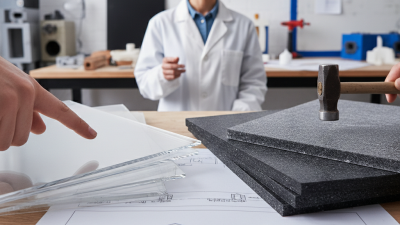
Acrylic, polycarbonate, and PETG sheets are popular choices when clarity matters. Each material responds differently to impact, heat, and fabrication.

Acrylic offers glass-like transparency and a clean surface for displays, covers, and light panels. However, it can crack when drilled without proper support.

Polycarbonate provides stronger impact resistance for machine guards, safety screens, and demanding enclosures. Its clarity is excellent, though some grades may show more surface scratching.

PETG sits between them, combining useful transparency with easy forming. It is often practical for trays, retail fixtures, and protective covers.

In fabrication work, thickness selection matters as much as material selection. A thin sheet may flex around fasteners or vibrate under airflow. A thicker panel adds stiffness but increases weight and cutting costs.

I have seen clear panels fail because installers ignored edge distance. Small details matter. Acrylic usually machines cleanly with sharp tools and controlled speed. Polycarbonate can melt around poorly adjusted cutters. PETG forms easily, but excessive heat may create cloudy areas or uneven bends. These weaknesses deserve attention before production begins.

Tips: Check the datasheet for impact values, light transmission, temperature limits, and forming guidance. Request a sample before placing a large order. Test drilling, bending, cleaning, and mounting on that sample. Do not assume maximum clarity means maximum durability. A clear panel still needs suitable supports, compatible cleaners, and careful handling. Local climate can also change performance, especially under strong sunlight or repeated temperature swings.

ABS, PVC, and HDPE Sheets for Industrial and Chemical Applications

Thermoplastic sheets serve different industrial needs, and material selection should follow the process, not appearance. ABS sheets offer impact resistance, easy machining, and a smooth surface for equipment covers, housings, and guards. They suit moderate temperatures, but prolonged chemical exposure can cause swelling or cracking. That limitation is easy to miss.

PVC sheets are widely used in tanks, ducts, liners, and chemical handling areas. Rigid PVC resists many acids, alkalis, and salts at controlled temperatures. However, compatibility depends on concentration, heat, stress, and exposure time. A small sample test is wiser than relying on a general resistance chart.

HDPE sheets provide low moisture absorption, strong impact performance, and reliable resistance to many industrial chemicals. Fabricators often use them for storage tanks, cutting surfaces, wear liners, and secondary containment. PP sheets can handle higher temperatures than HDPE in some applications. PVDF and PTFE offer stronger resistance for demanding chemical service, while POM, nylon, polycarbonate, and acrylic support precision, strength, clarity, or visual inspection needs.

Real projects need more than a datasheet. Check thickness tolerance, operating temperature, UV exposure, weldability, and load conditions. Ask for batch documentation and independent test data when failure would be costly. Do not assume a thicker sheet solves compatibility problems. It may not. Practical judgment still matters, and early testing can reveal an uncomfortable design mistake.

PP, PTFE, and Nylon Sheets for Heat, Friction, and Chemical Control

Top 10 Types of Thermoplastic Sheets for Global Buyers

PP, PTFE, and nylon sheets solve different engineering problems. Polypropylene sheets offer low moisture absorption and strong resistance to many common chemicals. They suit tanks, liners, partitions, and lightweight fabrication. PTFE sheets handle demanding chemical contact and very low-friction movement. They perform well around pumps, seals, sliding parts, and heated equipment. Nylon sheets provide useful strength, wear resistance, and impact tolerance. They are often selected for gears, guides, rollers, and bushings.

Temperature changes the decision. PP can soften under sustained heat, even when short exposure seems acceptable. PTFE tolerates higher temperatures, but it has lower mechanical stiffness. Nylon carries loads effectively, yet moisture can change its dimensions and performance. Details matter. In practical purchasing, buyers should compare operating temperature, pressure, friction speed, chemical concentration, and sheet thickness. A material that works in a dry warehouse may behave differently near steam or saltwater.

Tips: Request technical data, test samples, and certificates before approving a large shipment. Check tolerance, surface finish, color consistency, packaging, and cutting accuracy. Ask for actual test conditions, not only attractive headline values. One overlooked factor is expansion around bolts and edges. Allowing no movement can cause warping or cracking. Material selection is rarely perfect on the first attempt. Recheck the design after installation, especially when heat, friction, and chemicals act together.

How Global Buyers Compare Thermoplastic Sheets for Their Projects

Global buyers compare thermoplastic sheets by performance, not by polymer names alone. Common options include ABS, acrylic, polycarbonate, PVC, HDPE, UHMW-PE, PP, PETG, nylon, and PEEK. Each responds differently to heat, impact, chemicals, moisture, and machining. A sheet for a warehouse guard may need impact resistance and easy drilling. A transparent machine cover needs optical clarity, stiffness, and stable dimensions. Ask for the actual service conditions.

Start with temperature. Check continuous-use temperature and short exposure peaks. Then review thickness tolerance, surface finish, color consistency, and flatness. A 6 mm sheet that varies across the panel can create fitting problems. Impact data also needs context. Izod values from different test methods are not directly comparable. Request the testing standard, sample conditioning, test direction, and report date. Reliable suppliers provide traceable batch documents and practical processing guidance.

Global projects add shipping and compliance concerns. Confirm sheet dimensions, packing protection, moisture control, and export documents before ordering. For outdoor use, ask about UV stability instead of trusting a general “weather-resistant” claim. For food, medical, or electrical applications, verify local approvals for the finished application. Cost deserves a wider lens. Cutting waste, replacement frequency, and installation time can outweigh a lower purchase price. Even careful buyers can miss these losses. A small pilot cut is often wiser, though it may delay procurement. That delay can reveal warping, brittle edges, or poor print adhesion before a full shipment.

Top 10 Types of Thermoplastic Sheets for Global Buyers - How Global Buyers Compare Thermoplastic Sheets for Their Projects

Rank Thermoplastic Sheet Type Typical Density
(g/cm³)
Typical Continuous
Service Temperature
Impact Resistance Transparency / Appearance Chemical Resistance Fabrication Suitability Common Project Uses Typical Relative Cost Main Buyer Consideration
1 Polycarbonate (PC) 1.20–1.22 −40 to 115°C Very high Clear, translucent, or opaque Moderate; sensitive to some solvents and alkalis Excellent for sawing, drilling, machining, and thermoforming Safety glazing, machine guards, protective covers, lighting panels, transport interiors High Strong impact performance and optical clarity, but surface scratching and chemical compatibility must be checked.
2 Acrylic (PMMA) 1.17–1.20 −30 to 80°C Moderate Excellent clarity, gloss, and color range Moderate; vulnerable to certain solvents and stress cracking Very good for laser cutting, routing, machining, and thermoforming Displays, signs, interior panels, light diffusers, architectural glazing Medium Provides better weatherability and scratch resistance than many clear plastics, but it is more brittle than PC.
3 Polyvinyl Chloride, Rigid (PVC) 1.35–1.45 −10 to 60°C Moderate Opaque, white, colored, or translucent Very good against many acids, alkalis, salts, and moisture Good for cutting, drilling, routing, welding, and bonding Industrial linings, tanks, ducting, partitions, signage, fabricated enclosures Low to medium Offers economical chemical resistance; temperature limits and plasticizer-free material selection are important.
4 Polypropylene (PP) 0.90–0.91 0 to 100°C Good Opaque or translucent; naturally low gloss Excellent against many acids, alkalis, and aqueous chemicals Good for cutting, machining, heat welding, and thermoforming Chemical tanks, laboratory equipment, process ducts, packaging, food-contact components Low to medium Very low density and strong chemical resistance are advantages; bonding and low-temperature impact require attention.
5 High-Density Polyethylene (HDPE) 0.94–0.97 −50 to 80°C High Opaque or translucent; matte to semi-gloss Excellent against moisture, many acids, alkalis, and salts Good for machining, cutting, welding, and thermoforming Water tanks, liners, marine components, cutting boards, wear strips, chemical handling systems Low Durable and cost-effective, but its low surface energy makes painting, printing, and adhesive bonding difficult.
6 Acrylonitrile Butadiene Styrene (ABS) 1.03–1.07 −20 to 80°C High Opaque; smooth, textured, or colored Moderate; affected by some aromatic solvents and strong chemicals Excellent for machining, routing, drilling, thermoforming, and fabrication Equipment housings, automotive trim, instrument panels, prototypes, luggage components Low to medium Balances toughness, stiffness, appearance, and cost, but outdoor exposure usually requires stabilization or protection.
7 Polyethylene Terephthalate Glycol (PETG) 1.27–1.30 −40 to 70°C High Clear, translucent, or colored Good against diluted acids, alcohols, and many detergents Excellent for thermoforming, die cutting, routing, and fabrication Point-of-sale displays, machine guards, packaging, medical trays, protective screens Medium Easy forming and good impact resistance make it practical for clear fabricated parts; heat resistance is limited.
8 Polyamide (PA / Nylon) 1.12–1.15 −40 to 100°C High Opaque, usually natural or colored Good against oils and fuels; moisture absorption affects dimensions Good for machining; thermoforming is less common than machining Gears, wear pads, rollers, bearings, guides, structural machine components Medium to high Suitable for wear and friction applications, but moisture uptake and dimensional change must be included in design calculations.
9 Low-Density Polyethylene (LDPE) 0.91–0.94 −50 to 60°C Good flexibility Translucent, opaque, or colored Very good against moisture and many mild chemicals Good for cutting, heat sealing, welding, and forming Flexible liners, covers, packaging components, protective sheets, agricultural and construction films Low Useful where flexibility and moisture resistance matter; it has lower stiffness and load-bearing capacity than HDPE.
10 Polyether Ether Ketone (PEEK) 1.30–1.32 −60 to 250°C High Opaque, usually natural or colored Excellent against many chemicals, fuels, and solvents Good for precision machining; processing requires controlled conditions Aerospace parts, semiconductor equipment, high-temperature seals, electrical components, medical devices Very high Chosen for demanding thermal, chemical, and mechanical conditions; its premium cost requires a performance-based justification.

Note: Values are typical ranges for unfilled sheet grades at room temperature. Actual performance varies with grade, additives, reinforcement, thickness, processing method, loading, temperature, and exposure conditions. Buyers should confirm the supplier’s technical data sheet and applicable regulatory requirements before specification.