Discover Exciting Plastic Manufacturing Jobs at Allied Plastics

2026 Top Types of Polypropylene Plastic Sheets?

Polypropylene plastic sheets are moving from basic packaging into demanding industrial environments. Their low density, chemical resistance, weldability, and moisture tolerance support applications in tanks, partitions, ducts, pallets, and protective liners.

The OECD Global Plastics Outlook reports that global plastics production reached 460 million tonnes in 2019. It also shows that plastic use doubled between 2000 and 2019. PlasticsEurope reported approximately 400.3 million tonnes of global production in 2022. These figures indicate continuing material demand, but they also expose a serious responsibility. Sheet selection must consider service life, repairability, and end-of-use recovery.

As Steve Russell, former vice president of the American Chemistry Council’s Plastics Division, stated, “Plastics deliver value when their performance and responsible management are considered together.” That principle is useful when comparing polypropylene sheet types. Homopolymer sheets offer strong chemical resistance and stiffness. Copolymer grades provide improved impact performance, especially in colder workshops. Corrugated polypropylene sheets reduce weight while protecting signs, partitions, and packaging inserts. Glass-filled, antistatic, UV-stabilized, and recycled-content options serve more specialized needs.

Performance depends on details. A tank liner may face acids, heat, and repeated welding. An outdoor panel may need ultraviolet protection. A thin sheet can look economical, yet warp under uneven heating. This is where many comparisons become too simple.

The following guide examines the top types of polypropylene plastic sheets for 2026. It compares structure, practical performance, fabrication behavior, cost factors, and sustainability considerations. The market will not stay perfectly predictable. Specifications should be verified against current technical datasheets and site conditions.
2026 Top Types of Polypropylene Plastic Sheets?

What Are Polypropylene Plastic Sheets?

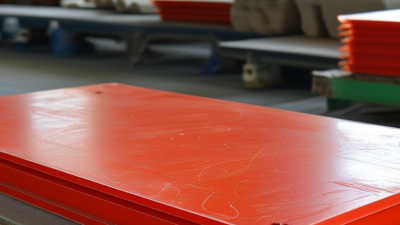
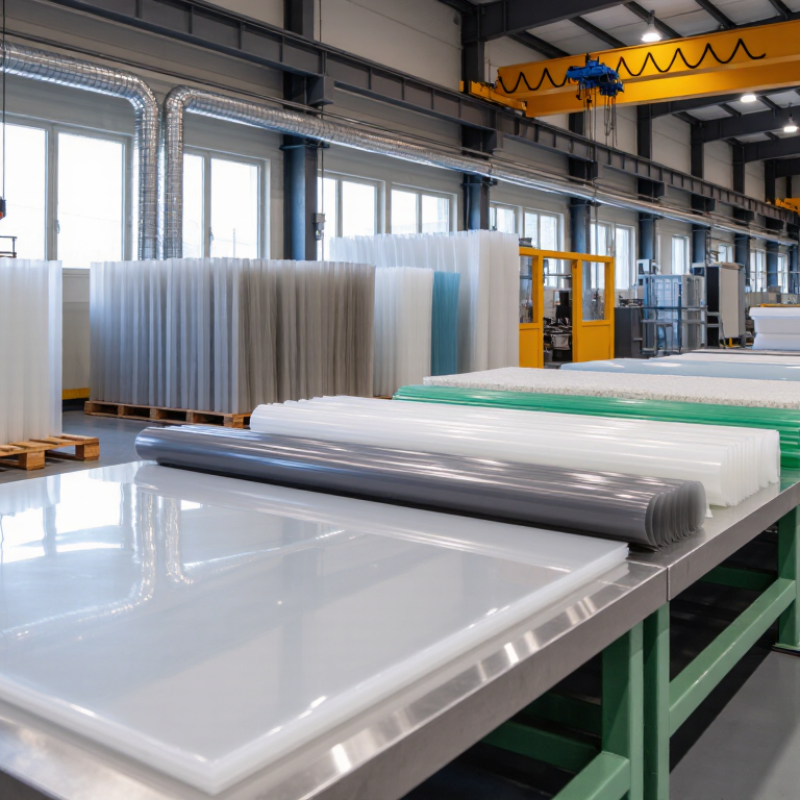
Polypropylene plastic sheets are flat, rigid panels made from polypropylene, a thermoplastic polymer. Heat allows the material to soften, form, and cool into a stable shape. These sheets resist moisture, many chemicals, and repeated handling. They also have a low density, so a panel can feel surprisingly light in the hand. Surface texture may be smooth, matte, embossed, or corrugated.

The main types include homopolymer, copolymer, and reinforced polypropylene sheets. Homopolymer sheets usually offer higher stiffness for dividers, tanks, and fabricated parts. Copolymer grades handle impact better, especially in colder work areas. Corrugated sheets contain internal flutes, which reduce weight while adding useful rigidity. UV-stabilized sheets suit outdoor exposure, but their service life still depends on sunlight, temperature, and installation quality.

Thickness matters more than many buyers expect. A thin sheet can bend around a tight curve, while a thicker panel supports heavier loads. In practical fabrication, clean cuts and properly matched welding methods reduce weak edges. However, polypropylene does not bond easily with ordinary adhesives. Mechanical fasteners or compatible thermal welding are often more reliable. Food-contact or medical applications require documented compliance for the exact grade, not a general claim about polypropylene. A sheet may look suitable and still fail after heat, impact, or chemical exposure. Small trials are sensible. My own selection rule would be simple: test the real thickness, surface finish, and working environment before ordering large quantities.


2026 Top Types of Polypropylene Plastic Sheets

Polypropylene plastic sheets are commonly produced from homopolymer, random copolymer, and impact copolymer grades. The chart compares representative melting-point midpoints based on commonly published engineering ranges; exact values vary with formulation and additives.

How to read the chart: Homopolymer and impact copolymer polypropylene generally provide higher heat resistance, while random copolymer polypropylene offers improved clarity and flexibility with a lower typical melting range.

How Are Polypropylene Sheet Types Classified?

2026 Top Types of Polypropylene Plastic Sheets?

How Are Polypropylene Sheet Types Classified?

Polypropylene sheets are classified by resin structure, manufacturing method, surface design, and intended use. The resin may be homopolymer, random copolymer, or impact copolymer. Homopolymer sheets offer higher stiffness and resistance to many chemicals. Copolymer grades usually provide better impact performance in colder environments. That difference matters.

Manufacturers also classify sheets by construction. Solid sheets have a dense, smooth cross-section and suit tanks, machine guards, and fabrication projects. Corrugated sheets contain internal flutes, reducing weight while maintaining useful rigidity. Multiwall structures provide improved stiffness-to-weight performance, but their edges need protection from moisture and debris. Thickness, width, color, and surface texture create further categories.

Additives form another practical classification. UV-stabilized sheets are selected for outdoor exposure, while antistatic grades help reduce dust attraction. Flame-retardant or mineral-filled formulations may serve specialized industrial conditions. Always verify the technical data sheet. Terms such as “chemical resistant” are not universal guarantees. Temperature, concentration, stress, and exposure time can change performance. In workshop inspections, a glossy surface may look durable but reveal poor rigidity when unsupported. A small sample test is wiser than relying on appearance alone. Classification can feel overly technical, yet choosing the wrong grade often causes warping, cracking, or unexpected fastening problems.

What Are the Top Polypropylene Sheet Types in 2026?

In 2026, the top polypropylene sheet types are homopolymer, copolymer, and corrugated PP sheets. Each suits different working conditions. Homopolymer sheets offer high stiffness, chemical resistance, and clean machining. They fit tanks, laboratory panels, and fabricated guards. Copolymer sheets absorb impact better, especially in cold workshops or transport interiors. That toughness often matters more than maximum rigidity.

Corrugated polypropylene sheets remain practical for signs, packaging dividers, temporary floor protection, and lightweight partitions. Their twin-wall structure reduces weight while preserving useful bending strength. According to PlasticsEurope’s Plastics—The Fast Facts 2024, polypropylene represents roughly one-fifth of European plastics demand. Grand View Research’s 2024 polypropylene market analysis also projects continued global growth through 2030, near four percent annually. These figures support steady sheet demand, but they do not prove every application will expand equally.

Material selection needs real testing. A homopolymer sheet may crack under sudden impact, despite looking stronger on paper. Copolymer can deform more under sustained loads. That is an overlooked trade-off. For outdoor use, UV-stabilized grades are safer choices, while food-contact projects require documented compliance and migration testing. Thickness, rib design, temperature, and fastening method can change performance sharply. In practice, a small sample trial often reveals weaknesses that a specification sheet misses.

Which Properties and Applications Define Each Type?

2026 Top Types of Polypropylene Plastic Sheets?
Which Properties and Applications Define Each Type?

Polypropylene homopolymer sheets offer low density, strong chemical resistance, and reliable stiffness. They perform well around detergents, acids, and many industrial fluids. Fabricators often choose them for tank linings, laboratory benches, and lightweight machine guards. Their smooth surface wipes clean easily. However, they become less impact-resistant in cold environments.

Block copolymer sheets add rubber-like segments to improve toughness and impact strength. They suit transport bins, protective panels, and equipment covers that may receive sudden blows. These sheets can tolerate rough handling better than standard homopolymer grades. The trade-off is slightly lower rigidity. In practice, designers should check temperature, thickness, and fastening methods before selecting them.

Random copolymer sheets provide better clarity and improved flexibility than many standard polypropylene sheets. They are useful for display panels, packaging components, and applications requiring a softer visual finish. Their balanced performance supports light fabrication and formed parts. Reinforced polypropylene sheets, including mineral-filled or glass-fiber grades, provide greater stiffness and reduced dimensional movement. They fit structural covers, platforms, and precision panels. Yet reinforcement can complicate cutting and welding. No type is perfect. A small sample test often reveals warping, surface changes, or weak joints before production begins.

2026 Top Types of Polypropylene Plastic Sheets? - Which Properties and Applications Define Each Type?

Polypropylene Sheet Type Typical Composition or Structure Typical Density Key Mechanical Properties Temperature Characteristics Main Advantages Typical Limitations Common Applications Suitable Fabrication Methods
PP Homopolymer (PP-H) Polypropylene made primarily from propylene units with a relatively uniform molecular structure. Approximately 0.90–0.91 g/cm³ High stiffness and tensile strength; typical tensile strength is about 30–40 MPa. Good fatigue resistance and hinge performance. Melting range is generally about 160–165°C. Continuous-use temperatures are commonly around 80–100°C, depending on load and design. Low density, good chemical resistance, good rigidity, and strong resistance to repeated flexing. Impact resistance decreases at low temperatures; susceptible to ultraviolet degradation without stabilization. Chemical tanks, laboratory equipment, processing trays, piping components, separators, machine guards, and fabricated containers. Thermoforming, CNC machining, hot-gas welding, extrusion welding, heat bending, and compression or extrusion processing.
PP Random Copolymer (PP-R) Propylene combined with a small amount of ethylene distributed randomly through the polymer chain. Approximately 0.90–0.91 g/cm³ Typical tensile strength is about 25–35 MPa. Lower stiffness than PP-H, with improved toughness and better resistance to cracking. Melting range is commonly about 140–160°C. Long-term performance is often favored in warm fluid-handling environments when properly designed. Improved impact resistance, lower brittleness, good weldability, and better stress-crack resistance than many homopolymer grades. Usually less rigid and less heat-resistant under load than PP-H; clarity varies by formulation and processing conditions. Thermoformed containers, protective covers, fluid-handling components, plumbing-related sheet products, and reusable packaging. Thermoforming, heat welding, extrusion welding, machining, and hot bending.
PP Impact Copolymer (Block Copolymer) Polypropylene matrix containing an elastomeric ethylene-propylene phase to improve impact performance. Approximately 0.90–0.91 g/cm³ Typical tensile strength is about 20–35 MPa. Offers substantially higher impact toughness than standard PP-H, particularly in demanding handling conditions. Melting behavior is generally within approximately 155–165°C. Low-temperature impact performance is better than PP-H, while heat performance remains polypropylene-like. Excellent resistance to shock, drops, vibration, and rough handling; useful where toughness is more important than maximum stiffness. Usually opaque or translucent rather than highly clear; lower rigidity and possible reduction in surface hardness. Reusable transport sheets, automotive protection panels, industrial bins, packaging inserts, tool cases, and impact-resistant guards. Thermoforming, CNC routing, sawing, drilling, welding, and extrusion-based sheet production.
Mineral-Filled PP Sheet Polypropylene compounded with mineral fillers such as calcium carbonate or talc. Typically about 1.00–1.30 g/cm³, depending on filler loading Higher stiffness and dimensional stability than unfilled PP. Tensile strength and impact performance depend strongly on filler type, content, and orientation. Similar melting behavior to PP, but the filler can reduce thermal shrinkage and improve dimensional stability during service. Improved rigidity, reduced shrinkage, better surface stability, and potentially lower material cost per volume. Higher weight, reduced ductility, and often lower impact resistance than unfilled PP; cutting tools may wear faster. Automotive interior panels, appliance components, rigid covers, construction liners, pallets, and dimensionally stable thermoformed parts. Thermoforming, sawing, milling, drilling, CNC routing, and mechanical fastening.
Glass-Fiber-Reinforced PP Sheet Polypropylene reinforced with short or continuous glass fibers, usually with a coupling system to improve fiber–polymer bonding. Approximately 1.00–1.20 g/cm³, depending on fiber content High stiffness-to-weight ratio; tensile strength can commonly range from about 60–100 MPa in suitable compounds. Properties are often direction-dependent. Better dimensional stability and creep resistance than unreinforced PP. The polymer matrix still limits maximum continuous-use temperature. High rigidity, improved load-bearing capability, lower thermal expansion, and improved resistance to deformation under load. More difficult to thermoform and machine; can be abrasive, less impact-tolerant in some grades, and more expensive than standard PP. Structural panels, transportation components, equipment housings, industrial covers, support plates, and lightweight reinforcement panels. CNC machining, sawing, drilling, compression molding, hot pressing, and specialized thermoforming.
Flame-Retardant PP Sheet Polypropylene containing flame-retardant additives or a flame-retardant compound formulation. Typically about 0.90–1.30 g/cm³, depending on additive package Mechanical properties vary widely. Additives may increase stiffness or hardness but can reduce elongation and impact performance. Polypropylene melting behavior remains generally within about 140–170°C, depending on formulation. Fire performance must be verified for the specific grade and thickness. Can provide improved resistance to ignition and flame spread when tested to a specified standard. Not automatically fireproof; performance depends on thickness, color, additives, processing, and test method. Some additives can increase density or reduce toughness. Electrical enclosures, equipment barriers, transportation interiors, industrial guards, and panels requiring a defined flammability rating. CNC machining, drilling, sawing, thermoforming, hot welding, and fabrication methods approved for the specific formulation.
Corrugated or Twin-Wall PP Sheet Two flat PP skins joined by internal ribs or flutes, creating a lightweight hollow-core sheet structure. Bulk density varies with design; commonly about 0.35–0.70 g/cm³ for the finished sheet High stiffness relative to weight, good bending performance across the flute direction, and good resistance to impact and moisture. Softening and dimensional limitations are similar to polypropylene, with practical use commonly below about 80–100°C depending on load and construction. Very lightweight, water-resistant, reusable, easy to print and convert, and economical for temporary or semi-rigid products. Lower load capacity than solid PP sheet of the same outside thickness; edges and flute geometry can be vulnerable to crushing. Packaging partitions, signage, floor protection, agricultural boxes, reusable shipping containers, document cases, and temporary barriers. Die cutting, creasing, drilling, riveting, ultrasonic welding, heat welding, printing, and edge sealing.

Note: Property ranges are typical engineering values for comparison only. Actual performance depends on grade, additives, sheet thickness, processing direction, temperature, load duration, and the applicable testing standard.

How Should You Choose the Right Polypropylene Sheet?

Choosing polypropylene sheet starts with working conditions, not color or advertised thickness. Ask what the sheet must resist: moisture, chemicals, impact, heat, or repeated bending. Homopolymer sheets offer useful stiffness and clean machining. Copolymer sheets usually handle impact better, especially in colder workshops. Filled or reinforced grades may improve rigidity, but they can be harder to cut and less forgiving during fabrication. Start with the job. Not appearance.

For tanks, liners, and wash areas, chemical resistance and weldability deserve close attention. For cutting boards, partitions, or protective covers, surface texture and scratch behavior matter more. Choose thickness after checking load, span, fastening method, and temperature. A thin panel may flex like a ruler across a wide opening. A thicker panel may solve that problem, yet add unnecessary weight and cost. Measure the actual span. Do not guess.

Inspect technical data for operating temperature, density, tensile strength, impact performance, and chemical compatibility. Request a sample when the sheet will contact oils, cleaners, or hot liquids. Test a small drilled edge and a real fastening point. I have seen projects fail because the material was suitable, but the joint design was weak. This rule is not perfect. Outdoor exposure, ultraviolet light, and thermal expansion can change the decision. Discuss the application with a qualified fabricator, and record test conditions before ordering.