
Discover Exciting Plastic Manufacturing Jobs at Allied Plastics

What Are the Top Types of Smart Water Flow Meters?

Choosing a Smart Water Flow Meter starts with a practical question: what must the system measure, and how will staff use that information? A building manager may need to spot a small overnight leak. A utility may need dependable readings across thousands of service connections. The right meter depends on flow range, pipe size, water quality, installation conditions, and data requirements. No single design suits every site.

Common options include mechanical meters, such as positive-displacement and turbine models, alongside ultrasonic and electromagnetic meters. Multi-jet meters are often used in smaller service lines, while ultrasonic designs measure flow without moving internal parts. Each type has trade-offs. Mechanical meters can be familiar and cost-effective, but debris and wear may affect performance. Ultrasonic meters avoid a moving measuring element, yet installation and signal conditions matter. Electromagnetic meters suit some larger applications, but require conductive fluid and careful setup. Details count.

Water-distribution researcher Dr. Steven Buchberger’s work supports a useful principle, paraphrased here: “Measurements matter when they improve an operating decision.” That is a helpful lens for comparing meter types, not a guarantee of performance. Connectivity also deserves attention. Some meters send readings remotely; others need nearby gateways or manual collection. A dashboard full of numbers is not automatically useful. Teams should check calibration needs, battery life, communication coverage, and how alerts fit existing workflows. It is easy to overvalue a long feature list. The less glamorous question—will this meter stay accurate in this pipe, at this flow, over time?—often deserves more weight. The sections ahead compare the leading types and where each may fit.
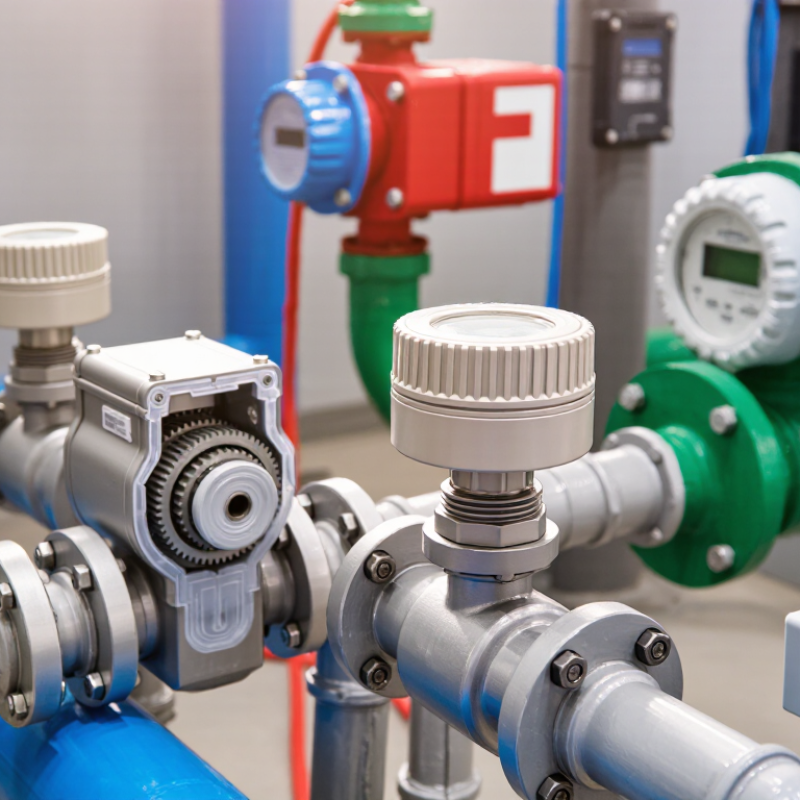
What Are the Top Types of Smart Water Flow Meters?

How Smart Water Flow Meters Measure and Transmit Data

Smart water flow meters turn moving water into measured data through different sensing methods. A turbine meter uses a small rotor; faster flow spins it more quickly. A sensor converts those rotations into pulses, which the meter counts to estimate volume. This design is practical, though grit or wear can affect moving parts. Small details matter.

Ultrasonic meters send sound through the pipe and compare travel times in both directions. Flow changes that timing, allowing the meter to calculate speed without a rotor. Electromagnetic meters measure voltage created as conductive water moves through a magnetic field. Both can report flow and accumulated volume, but correct pipe sizing and installation remain important. Even a good sensor can mislead if fitted poorly.

Inside a smart meter, electronics time-stamp readings and may flag unusual flow, such as a steady overnight draw. Data can travel through a wired connection or a wireless network to a building system or utility platform. Transmission intervals vary: frequent updates provide quicker alerts, while less frequent ones can conserve battery power. Walls, distance, and network congestion may delay a message. The reading is useful, but it is not always instant. A clear record of units, timestamps, and communication gaps helps users interpret what arrived.

Ultrasonic Smart Water Flow Meters

Ultrasonic smart water flow meters measure flow using sound rather than a spinning impeller. In a common transit-time design, sensors send signals both with and against the moving water. The difference in travel time helps estimate flow rate. No moving parts. That can reduce mechanical wear and make the meter useful in systems where steady monitoring matters.

Smart models can transmit readings to a building system or remote dashboard. Operators may track hourly use, spot unusual overnight flow, and investigate possible leaks before a monthly bill arrives. Some meters also store readings locally, which helps when a connection drops. Real pipes are less tidy than diagrams. Air bubbles, sediment, an incompletely filled pipe, or poor sensor placement can affect measurements. Installation conditions matter. For reliable results, check the meter’s pipe-size range and follow its requirements for straight pipe sections and sensor alignment. Ultrasonic readings are not automatically accurate just because they are digital. Periodic checks against a known reference can reveal drift or installation problems. In a small utility room, that practical check is easy to overlook.

Electromagnetic Smart Water Flow Meters

Electromagnetic Smart Water Flow Meters

Electromagnetic smart water flow meters measure conductive liquids using the voltage generated as water moves through a magnetic field. With no moving parts inside the flow tube, they avoid wear on rotating components and can handle water containing small amounts of suspended material. The principle is well established. The readings still depend on good installation.

Inside the meter, electrodes detect a tiny electrical signal. A transmitter converts it into flow data, which can be logged or sent to a monitoring system. Operators may use alerts to spot unusual nighttime flow or a sudden change in a building’s water use. Useful, but not magic.

The meter generally needs a full pipe and water with sufficient electrical conductivity; it is not suitable for every liquid. Poor grounding, electrical interference, or an incorrectly sized meter can also affect readings. A technician should check the pipe layout, grounding, and operating range before installation. One detail is easy to overlook: a smart display cannot correct a badly chosen measurement point. Even careful planning has limits.

Smart Mechanical and Turbine Flow Meters

Smart mechanical meters pair a familiar measuring element with electronic reading and data transmission. In a positive-displacement design, water moves a piston or disc; the meter records each measured volume. These meters can capture low household flows, such as a slow toilet leak, but moving parts may wear or collect debris. A radio module can send readings remotely, though it does not improve the meter’s underlying accuracy.

Turbine meters use flowing water to spin a rotor, then convert its speed into a flow reading. They suit steady, higher-flow lines, including many building and distribution applications. At very low flow, readings may become less dependable; upstream bends, air, or suspended particles can also affect performance. Installation matters.

A useful signal, not a cure. The U.S. Environmental Protection Agency’s 2023 Drinking Water Infrastructure Needs Survey and Assessment estimated $625 billion in drinking-water infrastructure needs over 20 years. That scale makes better consumption data valuable, but a connected meter cannot repair a leak by itself. Operators should check the meter’s flow range, pipe size, and maintenance history before choosing a type. I would not trust a smooth dashboard alone; compare alerts with field checks and customer readings. Some installations still need tuning.

How to Match Meter Types to Water Systems

What Are the Top Types of Smart Water Flow Meters?

Matching a meter to a water system starts with the pipe, water quality, and expected flow range. Electromagnetic meters suit full pipes carrying conductive water and have no moving parts to wear. Ultrasonic meters measure flow with sound; clamp-on models avoid cutting the pipe, but pipe material, lining, and air bubbles can affect readings. For clean water and steady, higher flows, turbine meters can be a practical choice. Positive-displacement meters can measure low flows well, though grit may wear their moving parts.

Scale matters. A meter sized only for the main pipe may miss small nighttime leaks; one sized too small can restrict peak flow. The U.S. Environmental Protection Agency estimated that household leaks waste nearly 900 billion gallons of water annually in the United States. That 2016 estimate underlines why low-flow sensitivity and useful alerts matter. Still, a neat spec sheet can mislead. Check the actual operating range, pressure, pipe access, power supply, and whether the meter’s data output works with your monitoring system.

Tips: Record typical and peak flow before choosing. Check the pipe. For a clamp-on unit, confirm pipe material and wall thickness; for an in-line unit, plan for installation access and maintenance. Compare readings against a trusted reference after installation. Cite: U.S. EPA, Fix a Leak Week materials, 2016.

What Are the Top Types of Smart Water Flow Meters? — How to Match Meter Types to Water Systems

Meter type How it measures flow Best match for Key advantages Considerations Smart monitoring options
Inline ultrasonic (transit-time) Uses the difference in travel time of ultrasonic signals moving with and against the water flow. Full pipes in building services, commercial distribution, and process-water lines where low pressure loss is important. No moving parts; generally causes little obstruction to flow; can support a wide operating range when correctly sized. Requires a full pipe and correct installation. Air bubbles, suspended solids, pipe conditions, and poor sensor alignment can affect readings. May provide flow rate, totalized volume, alarms, and data through pulse, wired, or digital communication outputs.
Clamp-on ultrasonic External transducers send ultrasonic signals through the pipe wall and calculate flow without contacting the water. Retrofits, temporary surveys, and systems where cutting or draining the pipe is difficult. Installs without opening the pipe; no wetted components; useful for checking or comparing flows across existing lines. Accuracy depends on pipe material, wall thickness, lining, sensor placement, and a suitable straight pipe section. The pipe must remain full for typical transit-time measurement. Portable or fixed units can log readings and transmit data for remote monitoring, depending on the model.
Electromagnetic Measures the voltage produced when electrically conductive water moves through a magnetic field. Water distribution, wastewater, and process-water systems with conductive liquid and a continuously full pipe. No moving parts; minimal obstruction; well suited to many larger pipes and water containing some suspended material. Does not work with non-conductive liquids. Requires a full pipe and appropriate grounding; electrode condition and installation matter. Common outputs include flow rate, total volume, configurable alarms, pulse signals, and digital communications.
Turbine Water turns an internal rotor; rotor speed is related to flow rate. Clean-water lines with relatively steady flow, including some building, irrigation, and process applications. Compact design; can provide useful measurement over suitable flow ranges; often available with pulse or electronic readout. Moving parts can wear or become affected by debris. A strainer may be needed, and low or highly variable flow can reduce measurement performance. Pulse outputs can connect to a remote counter, data logger, or building monitoring system.
Positive displacement Captures and counts repeated, known volumes of water passing through internal measuring chambers. Small service lines, residential consumption measurement, and applications that need reliable measurement at relatively low flow. Measures distinct volumes and can perform well at low flow when properly selected and maintained. Internal moving parts create some pressure loss and may be affected by sediment or wear; check the meter’s flow range and maintenance needs. Mechanical registers can be paired with pulse, radio, or other remote-reading modules for consumption tracking.
Multi-jet or single-jet velocity Water drives an impeller or turbine, and the resulting rotation is converted into a flow or volume reading. Small-diameter water services and submeters where a compact, established meter design is appropriate. Widely used for water measurement; can be paired with remote-reading accessories; multi-jet designs distribute flow around the impeller. Contains moving parts and may be sensitive to debris, wear, and installation conditions. Confirm minimum-flow performance and pressure-loss limits. Register add-ons can provide pulse or radio readings for remote collection and usage alerts.

Selection tip: Confirm pipe size, expected flow range, water quality, whether the pipe stays full, allowable pressure loss, required measurement accuracy, and available communications before choosing a meter.