Global buyers are reassessing vacuum forming plastic as packaging, medical, automotive, and retail applications demand lighter, cleaner, and more adaptable components. Grand View Research estimates that the global thermoformed plastics market was worth approximately USD 15 billion in 2023, with continued growth expected through 2030. Smithers also identifies packaging efficiency and material reduction as major forces shaping thermoforming investment.
The opportunity is substantial. The evaluation is not simple. A capable manufacturer must control sheet quality, heating zones, mold accuracy, trimming, and inspection. A small temperature variation can leave thin corners, visible stress marks, or uneven wall thickness. Those details matter when a tray protects surgical instruments or an automotive panel must fit precisely.
Dr. Michael Thielen, author of Thermoforming: A Practical Guide, describes the process as “a combination of heat, pressure, and time.” His observation remains practical for international sourcing. Technology alone does not guarantee consistency. Buyers should examine production records, material traceability, tooling experience, testing methods, and export capability. ISO 9001 certification can support confidence, but it should not replace an on-site audit or sample approval.
This guide reviews leading vacuum forming plastic manufacturers for global buyers. It considers production capacity, resin options, mold development, quality systems, sustainability efforts, and communication reliability. Rankings can never be perfect. Supplier strengths change by region and application. A low quotation may hide tooling revisions, packaging damage, or slower corrective action. Careful comparison remains essential.

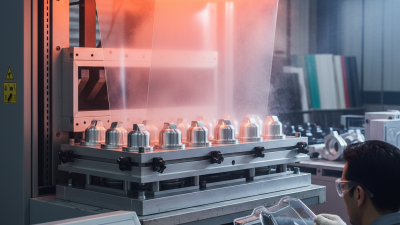
Vacuum forming uses heat, pressure, and a controlled cooling cycle to shape plastic sheets over a mould. Common sheet thickness ranges from 0.2 to 6 mm. Thin sheets suit trays, liners, and lightweight packaging. Thicker sheets support machine covers, vehicle interiors, and protective housings. According to PlasticsEurope’s Plastics – the Fast Facts 2023 report, global plastics production reached 400.3 million tonnes in 2022. This scale highlights the need for stable forming processes and responsible material selection.
A practical vacuum range is a 0.7–0.9 bar below atmospheric pressure. That difference pulls softened plastic tightly against mould details. At 0.9 bar, forming usually improves around corners and shallow ribs. Yet excessive draw speed can create thinning.
Experience matters here. Sheet temperature, plug assistance, vent placement, and mould texture all affect the final wall thickness. A 1 mm sheet may finish unevenly if heating zones are poorly balanced. It happens.
Grand View Research’s 2024 thermoformed plastics market analysis identifies packaging as the leading application area. This supports demand for repeatable cycles, clean trimming, and efficient material use. However, market reports often describe broad trends, not production-floor realities. Global buyers should request test samples, thickness maps, vacuum readings, and cooling records. A supplier’s stated 0.9-bar capability is useful, but it does not prove consistent forming across every geometry. Resin grade, moisture, mould design, and operator control still require verification.
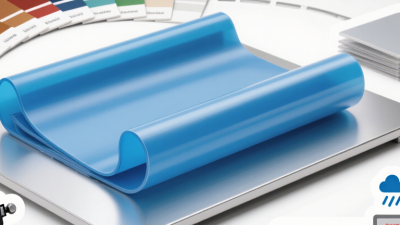
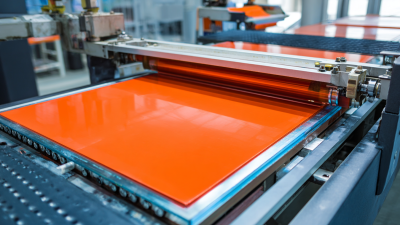
Global buyers should evaluate vacuum forming manufacturers by their process discipline, not only their equipment list. Reliable production begins with controlled sheet heating. Infrared zones warm the plastic evenly, while operators record temperature, heating time, and sheet thickness. A small temperature variation can create thin corners or uneven gloss.
During forming, vacuum pressure must match the mold design and material behavior. Skilled teams inspect plug assistance, webbing, and wall thickness after trial cycles. They also compare measurements against approved drawings. Cooling follows immediately. A stable fixture helps prevent warping, shrinkage, and stress marks. Parts should cool evenly before removal. Rushing this stage often causes problems that appear only during assembly.
Trimming requires equal attention.
CNC routing, die cutting, or manual finishing can produce clean edges when tools remain sharp and properly aligned. Inspectors check hole positions, edge dimensions, surface defects, and fit samples. Batch records improve traceability from raw sheet to packed component.
First-article approval is useful, but it should not replace routine checks.
No process is flawless. I have seen attractive parts fail because one hidden corner became too thin.
Manufacturers should review that mistake, adjust heating or mold support, and verify the correction with fresh samples. Clear inspection reports and honest communication make quality claims more credible.
Reliable vacuum forming suppliers begin with controlled materials, not attractive samples. Ask for the polymer grade, batch traceability, and declared recycled content before approving tooling. These details affect color, impact strength, shrinkage, and forming consistency.
ISO 20457 helps buyers evaluate dimensional tolerances for moulded plastic parts. It does not automatically certify a manufacturer. Request a tolerance drawing with measurable points, such as flange width, wall thickness, and hole position. A production sample should match those limits under agreed inspection conditions. Small deviations can become costly during assembly.
RoHS documentation should address restricted substances in the finished part and relevant components. REACH checks substance concerns, including SVHC communication duties. For food-contact applications, FDA compliance depends on the exact resin, additives, processing conditions, and intended use. A general “FDA approved” statement is too vague. Request supplier declarations, test reports, and migration evidence where applicable.
Compliance files must be current. Laws and customer requirements change. A certificate alone can mislead. Material substitutions may occur quietly between batches, especially during shortages. Include change-notification terms in the purchase agreement. Keep retained samples and review test dates. This process is not perfect, but it exposes weak controls before containers leave the factory.
Top Vacuum Forming Plastic Manufacturers for Global Buyers
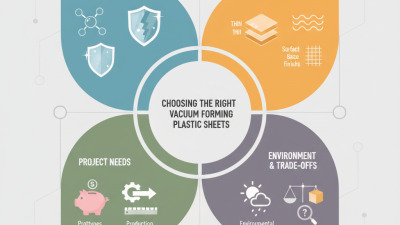
Global buyers should evaluate more than sample appearance. Tolerances, tooling, minimum order quantity, and lead time reveal manufacturing discipline. A stated tolerance means little without material and measurement details. For thin ABS parts, a practical dimensional tolerance may differ from a rigid engineering target. Ask for inspection reports and first-article measurements. Numbers need context.
Tooling choice affects cost, repeatability, and production speed. Aluminum tools usually support longer runs and sharper detail. Epoxy or composite tools may suit prototypes and limited volumes. Tooling is not decoration. Request information about draft angles, cooling channels, tool life, and ownership. Confirm whether revisions include new tooling charges. One overlooked shrinkage allowance can distort a mounting hole.
MOQ deserves careful negotiation. A low MOQ may hide setup fees, material surcharges, or unused sheet inventory. Ask for pricing at several volume levels, including pilot quantities. Lead time should separate design approval, tooling, sampling, and mass production. Require a written schedule with inspection milestones. Promises need evidence. A supplier that reports delays early is often more reliable than one offering unrealistic speed. A perfect forecast is rare. Build modest buffer time for drawing changes, shipping disruption, and corrective samples. I would also verify packaging details, because scratched surfaces can erase the value of good forming work.
| Evaluation Dimension | Typical Industry Range | Suitable Requirement | What Global Buyers Should Verify | Commercial Impact |
|---|---|---|---|---|
| Dimensional Tolerance | Approximately ±0.25–1.00 mm, depending on part size, geometry, material, and tooling | General housings, trays, covers, packaging, and non-sealing components | Request a tolerance chart by feature size and confirm the inspection method, datum scheme, and temperature conditions | Tighter tolerances may require better tooling, process controls, secondary machining, or higher unit cost |
| Wall Thickness Control | Commonly specified by nominal thickness with local variation influenced by draw depth and radius design | Parts requiring consistent stiffness, appearance, or fit | Ask for minimum wall-thickness capability, thickness mapping, and process limits for deep-draw areas | Improved distribution can reduce warpage, cracking, material waste, and assembly problems |
| Tooling Material | Prototype tooling may use wood, epoxy, or composite materials; production tooling commonly uses aluminum or other durable metals | Prototype validation, low-volume production, or repeated high-volume runs | Confirm expected tool life, cooling provisions, surface finish, repair policy, and ownership of tooling files | Lower-cost prototype tools shorten development time, while production tools support repeatability and longer service life |
| Tooling Cost | Often ranges from several hundred to several thousand U.S. dollars, depending on size, complexity, material, and cooling requirements | Projects requiring dedicated molds or repeatable part geometry | Request a separate quotation for design, machining, sampling, revisions, and shipping | A transparent tooling quotation makes supplier comparisons more accurate and reduces hidden setup costs |
| Minimum Order Quantity (MOQ) | Prototype orders may start at 1–20 pieces; production MOQs commonly range from 100 to 1,000+ pieces | Product development, market testing, pilot production, or regular replenishment | Clarify whether MOQ applies per part number, color, material, thickness, or shipment | Flexible MOQs reduce inventory exposure but may result in higher unit pricing at lower volumes |
| Prototype Lead Time | Approximately 5–15 business days after receiving approved drawings and material information | Design verification, fit checks, and functional testing | Confirm whether the quoted period includes tool design, tool fabrication, first-off production, and inspection | Shorter prototype cycles help identify design problems before production tooling is finalized |
| Production Lead Time | Typically 2–6 weeks after approval of samples, materials, packaging, and purchase order details | Scheduled commercial production and recurring supply programs | Ask for capacity planning, production calendar, quality-release timing, and contingency procedures | Reliable lead-time control supports launch schedules and prevents costly production interruptions |
| Material Options | Common sheet materials include ABS, HIPS, PETG, PVC, acrylic, polycarbonate, and polypropylene | Applications requiring different levels of impact resistance, clarity, chemical resistance, or food-contact suitability | Verify resin grade, thickness availability, recycled content, color consistency, and compliance documentation | Material selection affects performance, appearance, regulatory compliance, and total part cost |
| Maximum Part Size | Machine capability varies widely; many industrial systems support forming areas from approximately 600 × 600 mm to more than 2,000 × 1,000 mm | Large covers, vehicle interiors, equipment housings, display components, and industrial liners | Confirm usable forming area, sheet thickness range, draw depth, trimming envelope, and transport limitations | Machine size can determine whether the design requires one-piece forming, segmentation, or assembly |
| Secondary Operations | CNC routing, drilling, trimming, bending, assembly, printing, coating, and insert installation are commonly available | Finished components requiring holes, cut-outs, decoration, or assembly before shipment | Request process capability data, edge-quality samples, dimensional inspection records, and operation-specific pricing | Integrated services can simplify logistics and reduce the number of external suppliers |
| Quality Documentation | Typical documents include inspection reports, material certificates, control plans, and certificates of conformity when applicable | Regulated, safety-critical, export-controlled, or customer-audited applications | Confirm document format, sampling plan, traceability, nonconformance process, and retention period | Strong documentation improves traceability and supports international customer audits |
| Packaging and Export Readiness | Export packaging may include protective film, separators, cartons, pallets, moisture control, and customized labeling | Long-distance ocean, air, rail, or multimodal transportation | Review packaging drawings, carton limits, pallet configuration, shipping marks, Incoterms, and export documents | Appropriate packaging lowers transit damage, dimensional distortion, and customs delays |
Note: The values shown are general industry benchmarks for supplier comparison. Actual capability, MOQ, tooling cost, and lead time depend on part geometry, material, quantity, inspection requirements, and shipping destination.
A strong supplier profile begins with production capacity, not polished photographs. Buyers should examine machine size, mold-change time, shift patterns, and monthly output. A manufacturer handling small medical trays may not suit large automotive covers. Capacity must match the part, material, tolerance, and delivery schedule. Ask for recent production examples and measurable lead times. Numbers need context.
Certifications reveal operating discipline, but they do not replace technical review. ISO 9001 can indicate controlled quality processes, while sector-specific certifications may support medical, food-contact, or industrial applications. Buyers should verify certificate scope, expiry dates, and issuing bodies. Material traceability, inspection records, and corrective-action reports add practical evidence. A certificate alone is not enough.
Export reach also deserves close attention. Experienced exporters usually provide clear packing specifications, customs documents, Incoterms, and shipment tracking procedures. They understand how humidity, stacking pressure, and long transit times affect formed plastic parts. Ask whether the supplier serves your region regularly or only claims global coverage. References can help, though they may present an incomplete picture. No manufacturer performs perfectly across every material and market. A realistic profile should mention limitations, backup capacity, communication hours, and recovery plans when production slips. That honesty often matters more than impressive output claims.