Why Choose a Wind Turbine System for Your Business?
A Wind Turbine System can help a business generate electricity on-site when local wind conditions and site design support it. It is not a plug-and-play solution. Before investing, owners should review wind measurements, available space, grid connections, and expected electricity use. An open field may look promising, but nearby buildings, trees, and changing wind patterns can affect turbine output. Small details matter. A site assessment helps replace assumptions with practical estimates.
For businesses with suitable sites, wind generation may reduce reliance on purchased electricity and support long-term energy planning. The actual savings depend on equipment costs, maintenance, financing, and how much power the turbine produces. Wind also varies by season and hour. That means a turbine may not meet every demand, especially during calm periods, so businesses should consider how it fits with existing power supplies. Ask qualified installers for documented performance estimates, maintenance schedules, and clear cost assumptions. Their answers should be specific to the site, not just based on a brochure. A careful review can show whether the system fits the business—or whether another option deserves a closer look. There is no universal answer. A sound decision balances potential benefits with operating limits, site conditions, and the owner’s priorities.
What a Wind Turbine System Includes
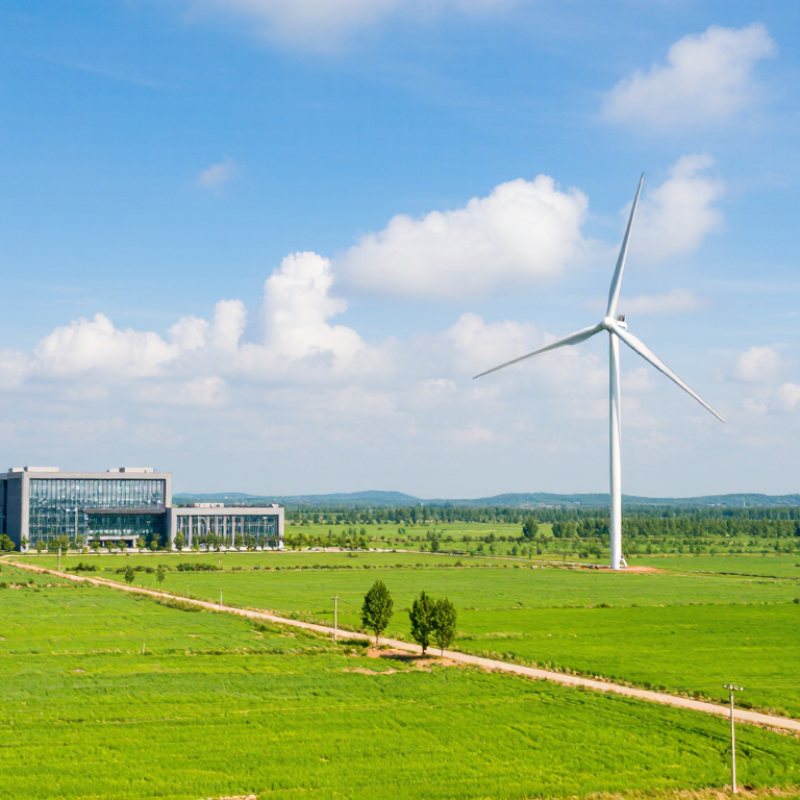
A business wind turbine system includes the turbine, tower, foundation, electrical equipment, and monitoring controls. The rotor captures wind and turns a generator. The tower raises the rotor above nearby obstacles, while the foundation transfers its loads into the ground. Soil conditions matter. A site assessment helps determine whether the ground can support the proposed structure.
Electrical components connect the generator to a building, battery storage, or the utility grid, depending on the system design. Inverters and control equipment manage power conversion and help protect connected equipment. Sensors can track wind speed, output, and operating conditions. These readings help maintenance teams spot changes early, though they do not replace regular inspections. Wind is variable. A realistic design accounts for seasonal patterns, turbulence, access for repairs, and the business’s actual energy use.
Tips: Ask for a site-specific wind assessment and a clear breakdown of every component. Check how maintenance access, monitoring, and grid connection are handled. Small details matter. Estimates can still miss local quirks, so review assumptions before making a decision.
How Wind Turbines Generate Electricity for a Business
A business wind turbine converts moving air into electricity through a chain of mechanical steps. Wind pushes the blades, making the rotor spin. The rotor turns a shaft, which drives a generator inside the nacelle. The generator converts rotation into electrical current. Small details matter. Sensors monitor wind speed and direction, while the control system turns the nacelle toward stronger, safer airflow.
The electricity passes through power electronics that regulate its voltage and frequency. It can then supply nearby equipment, charge a battery, or connect to the utility network through suitable electrical equipment. A meter records output, helping a business compare generation with demand. On a windy afternoon, a workshop might use turbine power for lighting and machinery. When wind drops, grid electricity or stored energy can fill the gap. Output is not constant.
Before installation, engineers assess wind records, obstacles, tower height, site access, and the facility’s electricity use. A turbine cannot promise a fixed amount every hour. That part is easy to underestimate. Maintenance matters too: blades, bearings, and electrical connections need inspection. Even a well-designed system may produce less than expected if nearby buildings or trees disturb airflow. Businesses should review measured site data and realistic production estimates, not just rated capacity.
Why Choose a Wind Turbine System for Your Business? — How Wind Turbines Generate Electricity for a Business
Wind turbines convert the kinetic energy of moving air into electricity. The figures below show illustrative annual generation for different system sizes using a 30% capacity factor; actual output depends on the site’s wind resource, turbine design, and operating conditions.
Note: Annual generation figures are arithmetic examples, not performance guarantees. A site assessment should account for measured wind speeds, hub height, terrain, turbine power curve, maintenance, electrical losses, permitting, and local grid requirements.
Business Benefits of On-Site Wind Power
On-site wind power can turn a steady local resource into electricity used across a business. A turbine may help reduce grid purchases, especially at sites with consistent wind and substantial daytime demand. The benefit depends on the match between generation and use, not just the turbine’s rated capacity.
Picture a rural processing facility tracking its meter through a windy afternoon. If production equipment is running, much of that power may be used immediately. If demand is low, output may flow elsewhere or require a suitable storage and grid arrangement. That detail matters. A careful wind assessment should consider seasonal patterns, nearby obstacles, site access, and expected maintenance—not just average wind speed.
Businesses may also gain more predictable energy costs over time, though the upfront investment and ongoing service needs are real. A practical evaluation compares estimated production with hourly consumption and includes downtime, repairs, and financing assumptions. The spreadsheet can look reassuring; the wind does not always cooperate. Not every site fits. Measuring actual conditions before committing can reveal whether on-site generation is a useful operating asset or an expensive distraction.
Key Factors for Assessing Wind Power Potential
A credible wind assessment starts at hub height, not from a weather app or a nearby airport. The U.S. Department of Energy notes that small turbines generally need average annual wind speeds of at least 4.5 m/s at hub height. Treat this as an initial screen, not a guarantee: nearby buildings, trees, and terrain can slow or disrupt airflow. A year of on-site measurements using a meteorological tower or LiDAR can reveal seasonal dips and turbulence. Twelve months is better. Longer records help check whether that year was unusual.
Match the resource to the business. Compare hourly wind estimates with electricity bills, operating hours, and critical loads; a windy night has limited value if the site’s main demand comes at midday. Check setbacks, available land, turbine access, grid connection capacity, and noise-sensitive areas early. These practical constraints can change a project’s economics as much as wind speed does. They are easy to underestimate.
Cost benchmarks need local context. IRENA’s Renewable Power Generation Costs in 2023 reported a global weighted-average levelized cost of electricity of USD 0.033/kWh for newly commissioned onshore wind projects. That figure is not a forecast for an individual business: financing, construction, maintenance, and grid upgrades vary by site. Be candid about the gaps. A preliminary estimate can look precise while missing a costly connection study.
Steps to Plan and Install a Business Wind Turbine System
Planning a business wind turbine begins with the site, not the machine. Review at least a year of electricity bills and, if available, hourly load data. When does your building use the most power? Measure wind conditions at the proposed turbine height, and note trees, buildings, and seasonal changes. A windy afternoon can mislead. Start with the numbers.
Ask a qualified wind professional to assess the resource, soil, access, and distance from nearby structures. Compare estimated generation with your actual demand; a turbine that is too large may produce power when your business needs little. Check local planning, electrical, and grid-connection requirements early, since approvals and timelines vary. Get realistic estimates for engineering, foundations, cabling, equipment, and ongoing maintenance. Include downtime in the financial forecast.
Before installation, confirm crane access and the foundation design with the project team. The foundation must suit local ground conditions, not just a standard drawing. Plan how electricity will connect to your building and who will inspect the system after construction. During commissioning, record baseline output and verify safety controls. Then monitor generation against wind conditions and electricity use. The data may reveal an awkward mismatch between production and demand; that is worth addressing before expanding the system.