Why Choose Non Woven Fabric Rolls for Your Business?
Non Woven Fabric Rolls give manufacturers a flexible starting point for products that need consistent coverage, controlled strength, and efficient converting. Grand View Research valued the global nonwoven fabrics market at USD 53.10 billion in 2023 and forecast a 5.4% compound annual growth rate from 2024 to 2030. This growth reflects demand across hygiene, healthcare, filtration, agriculture, and packaging. Market growth alone, however, does not prove a particular roll is right for your business.
The choice comes down to performance at the point of use. A converter may need a soft, breathable web for wipes, or a tougher roll that resists tearing during cutting and packing. Fiber type, bonding method, basis weight, width, and roll diameter all affect handling and final-product consistency. Professor Behnam Pourdeyhimi, a leading nonwovens researcher and executive director of The Nonwovens Institute, has emphasized the importance of designing material properties around end-use needs. This is a paraphrase of his research perspective, not a verbatim quotation. That distinction matters. A supplier’s sample should be tested on your actual equipment, not judged by a specification sheet alone. Check unwind behavior, dust, edge quality, and performance after storage. Small variations can become costly at scale. Not every roll fits. A careful comparison of requirements, sample results, and supply reliability can help you choose Non Woven Fabric Rolls that support production without paying for properties your product does not need.
What Are Non-Woven Fabric Rolls?
Why Choose Non Woven Fabric Rolls for Your Business?
What Are Non-Woven Fabric Rolls?
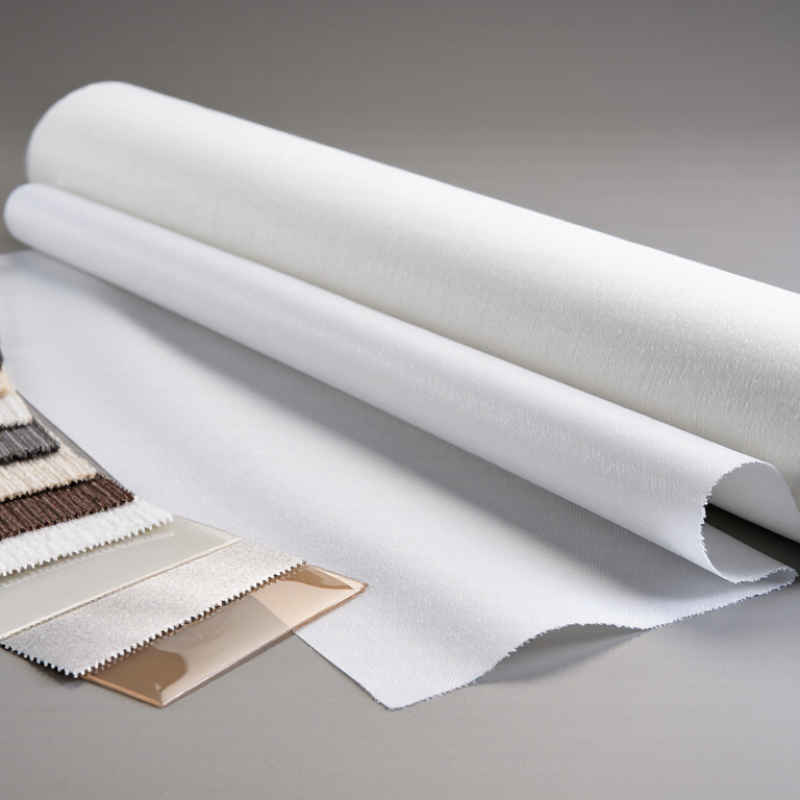
Non-woven fabric rolls are continuous sheets made by bonding fibers, rather than weaving or knitting them. Manufacturers may use heat, pressure, water jets, or mechanical needling to hold fibers together. The process shapes the fabric’s strength, softness, porosity, and absorbency. Some rolls feel smooth and light; others have a fibrous, textured surface. They are used in packaging, hygiene products, filtration, upholstery, and medical supplies.
Market demand gives this material wider context. Grand View Research estimated the global nonwoven fabric market at USD 47.3 billion in 2023, with projected annual growth of 7.4% from 2024 to 2030. These figures describe the market, not a guarantee that every roll suits every production line. For buyers, compare fiber type, basis weight, roll width, length, tensile strength, and performance in the intended use. A roll can look right and still tear during converting. That small mismatch is easy to overlook.
Tips: Request a sample roll and test it on your actual equipment. Check edge quality, winding, and consistency across the roll—not just one neat swatch. Some variation may remain, so agree on acceptable tolerances before ordering.
Why Choose Non-Woven Fabric Rolls for Your Business?
Typical basis-weight ranges across common non-woven applications
Basis weight, measured in grams per square metre (gsm), helps businesses compare material weight when selecting fabric rolls. These are indicative ranges, not fixed specifications; actual requirements vary by product design, material, and manufacturing process.
How Are Non-Woven Fabric Rolls Made?
How Are Non-Woven Fabric Rolls Made?
Non-woven fabric rolls are made by forming fibers into a continuous sheet, without weaving or knitting. Many producers melt polymer pellets, such as polypropylene or polyester, and push the material through fine spinneret openings. The filaments cool onto a moving belt and form a loose web. Some processes instead arrange short fibers into a layer. Small differences matter.
The web is then bonded. Heat and pressure can fuse fibers, while needle punching tangles them mechanically. Some products use a binder, depending on the intended performance and process. Bonding affects softness, strength, and airflow. The finished sheet is inspected for weight, width, and consistency, then wound into rolls. A smooth surface can still conceal weak spots, so visual checks alone may not reveal uneven bonding.
Tips: Ask how the web is formed and bonded before selecting a roll. Match those details to your product’s needs, and request samples to test handling and strength. Check roll width and weight, too. Specifications can vary, and a small mismatch may complicate converting or production.
Why Choose Non Woven Fabric Rolls for Your Business? - How Are Non-Woven Fabric Rolls Made?
| Category | Dimension | Details | Business Relevance |
| Product Structure | How the fabric is formed | Non-woven fabrics are made by forming fibers or filaments into a web and bonding them. Unlike woven or knitted textiles, they are not made by interlacing yarns. | The production route and fiber choices can be tailored to the requirements of a particular application. |
| Raw Materials | Common fiber and polymer options | Depending on the product, manufacturers may use polypropylene, polyester, cellulose-based fibers, or blends. Material availability and suitability vary by grade and intended use. | Material selection affects characteristics such as strength, absorbency, softness, and resistance to moisture. |
| Web Formation | Drylaid, wetlaid, and spunmelt methods | Drylaid processes arrange staple fibers into a web; wetlaid processes disperse fibers in water before forming a web; spunmelt processes form continuous polymer filaments directly into a web. | Different methods produce different web structures and are suited to different product specifications. |
| Web Bonding | Ways fibers are held together | Common bonding methods include mechanical bonding, such as needle punching or hydroentanglement; thermal bonding; and chemical bonding. | The bonding method influences properties such as drape, surface feel, durability, and permeability. |
| Roll Conversion | Finishing and winding | After bonding, fabric may be finished, inspected, slit to specified widths, and wound into rolls. Available roll dimensions depend on the product and production equipment. | Roll format can support storage, transport, and feeding into downstream converting or manufacturing processes. |
| Application Fit | Potential uses | Depending on material and construction, non-woven fabrics are used in areas such as hygiene products, filtration, medical applications, wipes, packaging, and automotive components. | Choose a grade based on the end-use requirements rather than assuming one fabric is suitable for every application. |
| Specification | Key purchasing considerations | Common specification points include fiber composition, basis weight, thickness, roll width, tensile properties, absorbency, and any required regulatory or performance criteria. | Clear specifications help buyers compare products and check suitability for their equipment and end use. |
| Business Consideration | Potential advantages and trade-offs | Rolls can provide a continuous material format for production, while performance, cost, and environmental impact depend on the fibers, manufacturing process, finishing, and disposal route. | Assess the full product specification and supply requirements before selecting a roll for a production line. |
What Properties Make Them Useful for Businesses?
Why Choose Non Woven Fabric Rolls for Your Business?
What Properties Make Them Useful for Businesses?
Nonwoven fabric rolls are practical when a business needs broad material coverage and consistent handling. Unlike woven cloth, their fibers are bonded through mechanical, thermal, or chemical processes. The resulting structure can be adjusted for softness, stiffness, absorbency, or barrier performance. No single roll offers every quality.
A packaging business may value a light, flexible sheet that wraps irregular items without adding much bulk. A cleaning-products maker may need absorbency and enough wet strength to hold up during use. In production, continuous rolls can feed cutting or converting equipment, reducing frequent material changes. Roll width, basis weight, and bonding method still need checking against the machine. Small mismatch, big nuisance.
The material can also be cut, laminated, printed, or sewn, depending on its composition. This flexibility supports products such as disposable covers, shopping bags, protective liners, and acoustic panels. But “nonwoven” describes a family, not a fixed specification. Request test data on tensile strength, air permeability, and linting when these affect performance. A sample run is wise. It may reveal issues a datasheet misses, such as curled edges or uneven feeding. That extra check takes time, yet can help prevent costly rework.
Which Industries Use Non-Woven Fabric Rolls?
Why Choose Non Woven Fabric Rolls for Your Business?
Which Industries Use Non-Woven Fabric Rolls?
Non-woven fabric rolls serve industries that need lightweight, adaptable sheet materials. Healthcare facilities use them for disposable gowns, caps, masks, and bed covers, where softness and barrier performance matter. Agriculture businesses use breathable crop covers to limit wind exposure and manage moisture around plants. Automotive manufacturers may use non-wovens in trunk liners, insulation, and interior panels. Construction teams place geotextiles beneath paths or drainage layers to separate soil from aggregate. Packaging and furniture makers also value rolls for consistent cutting and easier storage. Not every roll works.
Fit matters. A fabric suited to crop protection may not meet filtration or upholstery needs. Material weight, fiber type, bonding method, and tensile strength can all affect performance. Results also depend on how the fabric is cut, stored, and used.
Tips: Request a sample and test it on your equipment before ordering a full roll. Check whether it stretches, frays, or tears when pulled across a frame or edge. Ask for relevant test data, and confirm roll width matches your cutting setup. A roll can feel sturdy yet perform poorly under tension. Small checks help reduce waste.
How Can Businesses Choose the Right Fabric Roll?
Choosing a nonwoven fabric roll starts with the job it must do. Write down the required strength, softness, absorbency, and air permeability before comparing options. Then match the material weight, usually measured in grams per square metre, to the product. A lightweight roll may suit disposable covers, while a heavier one may hold up better in bags or protective liners. Check the roll width and core size, too. Small details matter.
Ask suppliers for consistent specifications, including fiber type, bonding method, and stated tolerances. Request a sample and test it on your own equipment; a roll that looks right may feed poorly or shed fibers during cutting. Measure several points across the width, and inspect the edges for uneven bonding.
Test before scaling.
Also confirm packaging and storage requirements, since moisture or compression can affect handling. There is no perfect roll for every application. A lower-cost option may work, but only if its performance stays steady from roll to roll. Record what passes and what fails, even if the first trial seems obvious.