Discover Exciting Plastic Manufacturing Jobs at Allied Plastics

Why Choose the Right Extrusion Machine for Your Business?

Choosing an extrusion machine is not a catalog exercise. It is a production decision shaped by material, product dimensions, output targets, and the realities of daily operation. A line that runs one polymer well may struggle with another. A machine can look impressive on a showroom floor and still be wrong for your product.

The scale of plastics manufacturing makes that choice consequential. The OECD’s Global Plastics Outlook (2022) reports that global plastics production reached 460 million tonnes in 2019, twice its 2000 level. The same report estimates that 353 million tonnes of plastic waste were generated in 2019, with only 9% recycled. These figures do not predict demand for any one extrusion line. They do show why manufacturers need to consider material efficiency, process stability, and scrap alongside production speed.

Start with the product: a thin film, a rigid pipe, and a complex profile place different demands on screws, dies, cooling, and calibration. Then examine the operating details. Can the line hold dimensions during a long run? How quickly can operators change materials or tooling? What maintenance access is available beside the line? These questions matter more than a headline output rate. Ask suppliers for test data using your material and product specifications, and compare energy use, changeover time, and expected upkeep. Details can be missed. Even a careful selection deserves review after real production begins. A well-matched extrusion machine supports consistent output; the right choice is the one your team can operate, maintain, and justify over time.
Why Choose the Right Extrusion Machine for Your Business?

What Is an Extrusion Machine and How Does It Work?

Why Choose the Right Extrusion Machine for Your Business?

What Is an Extrusion Machine and How Does It Work?

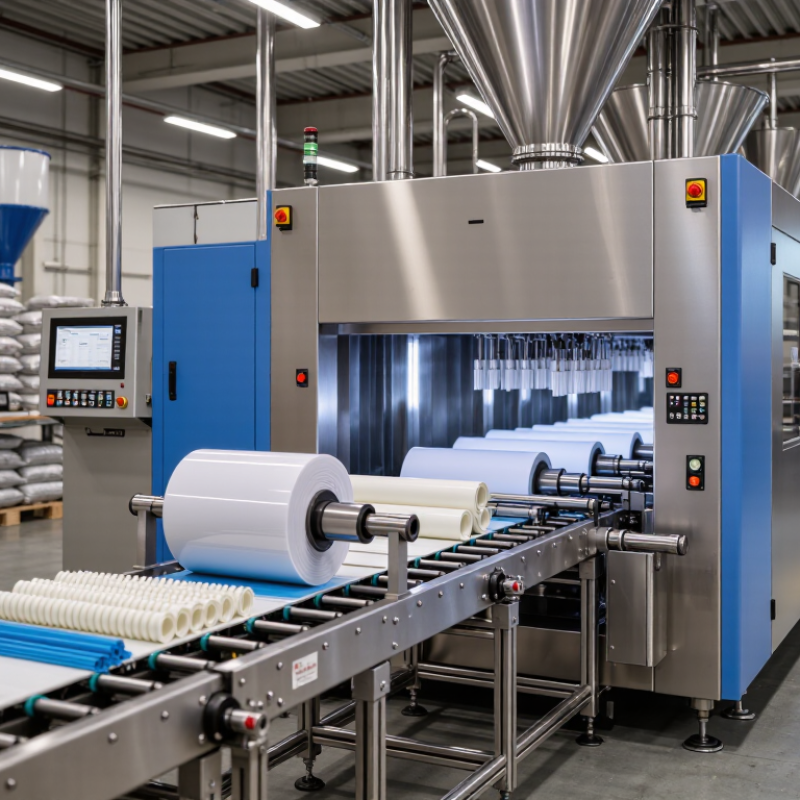
An extrusion machine shapes material by pushing it continuously through a formed opening, called a die. In plastic processing, pellets drop from a hopper into a heated barrel. A rotating screw carries them forward, mixes the softened resin, and builds pressure. The material then passes through the die, which gives it a profile such as a pipe, sheet, or film. Cooling equipment sets the shape; haul-off rollers and cutters control the finished length. It is a steady process. But steady does not mean simple.

PlasticsEurope’s Plastics—The Fast Facts 2023 report estimated global plastics production at 400.3 million tonnes in 2022. That figure describes the industry’s scale, not extrusion alone. Actual machine performance depends on resin type, output targets, die design, and temperature control. A small temperature drift can affect thickness or surface finish. A basic diagram makes the process look tidy; real production often is not. That is worth remembering when comparing machines.

Tips: Match screw design and output capacity to your material and product dimensions. Ask for a trial using your actual resin, if possible. Check how quickly operators can adjust temperature, speed, and pressure. Small details matter. Inspect sample output for consistent dimensions and finish before committing.
What Types of Extrusion Machines Are Used in Industry?

Why Choose the Right Extrusion Machine for Your Business?
What Types of Extrusion Machines Are Used in Industry?

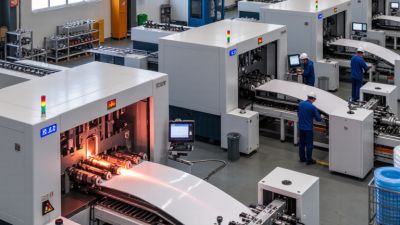
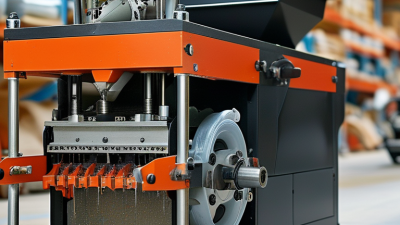
Industry uses several extrusion machine types, each suited to particular materials and products. Single-screw machines are common for steady processing of many thermoplastics. Twin-screw machines offer stronger mixing, which can help when materials need blending or additives. Ram extruders push material through a die without a rotating screw. They are used for some high-viscosity materials. Sheet and film lines use flat dies and rollers, while profile lines form items such as pipes, seals, or window frames. Small differences matter.

Choosing among them means matching the machine to the material, output, and product dimensions. Check screw design, heating zones, motor capacity, and die requirements. A line making thin film needs stable output and precise temperature control. A pipe line needs consistent wall thickness and suitable cooling equipment. In practical assessments, operators also consider cleaning time and maintenance access. These details can be overlooked, even in a careful plan. A machine with greater capacity is not always the better fit if demand is modest or the material is sensitive to heat.

Tips: Ask for a material trial when possible. Record melt temperature, pressure, and output rate, then compare results with the product specification. Leave room in the plan for adjustments; initial settings may not hold perfectly across every production run.

Which Factors Determine the Right Extrusion Machine for a Business?

Choosing the right extrusion machine depends on what you make, how much you need, and how consistently it must perform. Start with the resin or compound, including fillers, moisture sensitivity, and melt-temperature limits. A screw suited to one polymer may mix another poorly or cause overheating. Then define the product: profiles, sheets, pipes, and films place different demands on the die, cooling, and take-off equipment. Small details matter. Thin walls and tight dimensions can reveal process variation quickly.

Capacity is more than the machine’s rated output. Compare expected production with shift patterns, changeovers, scrap, and planned growth. Check screw diameter, L/D ratio, drive power, temperature zones, and control accuracy against process data. Inspect the downstream line, too; a fast extruder cannot compensate for undersized cooling or haul-off equipment. Ask for a trial using your material and die, then record stable output, dimensions, and energy use. Test evidence beats a brochure. Even careful estimates can miss real production constraints.

Tips: Bring a material datasheet and target dimensions to supplier discussions. Ask how quickly the machine handles a material change or restart. Keep it practical. You may still need to revise your choice after a production trial, especially when your process has unusual blends or frequent changeovers.

How Does Machine Selection Affect Production Costs and Product Quality?

Choosing an extrusion machine affects more than output volume. It shapes energy use, labor needs, scrap rates, and the consistency of each finished profile. A line that runs too slowly can delay orders, while an oversized machine may consume power without earning its keep. That cost adds up.

The right choice depends on the material, product dimensions, and expected production schedule. Screw design and barrel temperature control influence how evenly material melts. If temperatures fluctuate, a pipe may show uneven walls or a sheet may develop a rough surface. Small details count. A suitable die and stable haul-off system can reduce trimming and rejected pieces.

Compare machines using realistic production trials, not only advertised capacity. Ask operators to check melt quality, dimensional tolerances, changeover time, and energy use during a full run. Maintenance access matters too; a hard-to-reach filter can turn a brief stoppage into lost production. I have seen teams focus heavily on purchase price, then overlook setup waste. That is easy to do. Still, one trial may not represent every material or shift, so keep room for adjustment when choosing specifications.

How Can Businesses Compare Extrusion Machines Before Purchasing?

Comparing extrusion machines starts with the product, not the headline output rate. List the materials, target dimensions, tolerances, and expected production hours. A line designed for one polymer or profile may struggle when your product mix changes. Ask suppliers to explain screw design, temperature zones, drive capacity, and cooling requirements in terms of your actual process.

Test the machine with your own material, if possible. Watch how steadily it feeds, how quickly it reaches operating temperature, and whether the finished profile stays within tolerance. Small details matter. Check changeover time, cleaning access, control readability, noise, and the space needed around the line. Compare power use and routine maintenance, not just purchase price. Request service intervals, spare-parts availability, and clear warranty terms in writing. Then test it.

A specification sheet is useful, but it cannot show every production headache. A short trial may reveal surging, inconsistent dimensions, or a setup that takes longer than expected. Record results under repeatable conditions, including material temperature and line speed. Compare total operating costs over a realistic period, while leaving room for changing orders and staffing. It is easy to overvalue maximum capacity; a slower, stable machine may fit your daily schedule better. Still, estimates are estimates, and your own trial data may challenge the assumptions.

Compare the processing temperature ranges of materials your business plans to extrude when evaluating machine temperature capacity. These are typical ranges in °C; exact settings vary by material grade, screw design, and process conditions.