What Are Industrial Plastics Used For?
Industrial plastics appear in places we touch every day, though often unseen. They form water pipes behind walls, protective housings around electrical equipment, and lightweight parts inside vehicles. Their usefulness comes from varied properties: some resist chemicals, some insulate against electricity, and others tolerate repeated impact. No single plastic does every job well.
Plastics engineer John Beaumont, known for his work on injection-molding design, stresses matching part design to material and manufacturing process. A concise paraphrase of that guidance is: “Choose the plastic and process to suit the part’s job.” This is a paraphrase, not a verified verbatim quotation. The distinction matters. Material selection should rest on specifications and testing, not a catchy line.
Industrial plastics serve manufacturing, construction, transportation, healthcare, agriculture, and packaging. In a factory, a nylon gear may run quietly under load; outdoors, a polyethylene pipe can carry water without rusting. These examples are practical, not universal. Temperature, sunlight, chemicals, wear, and cleaning requirements can change which material is suitable. Small details matter.
The trade-offs deserve attention, too. A lightweight component may save fuel in use, but its production and end-of-life impacts still count. Recycling can be difficult when parts combine several polymers or contain additives. Sometimes, the material choice is imperfect. A reliable overview should explain both performance and limits, then ask how a product will be made, used, maintained, and responsibly managed after service.
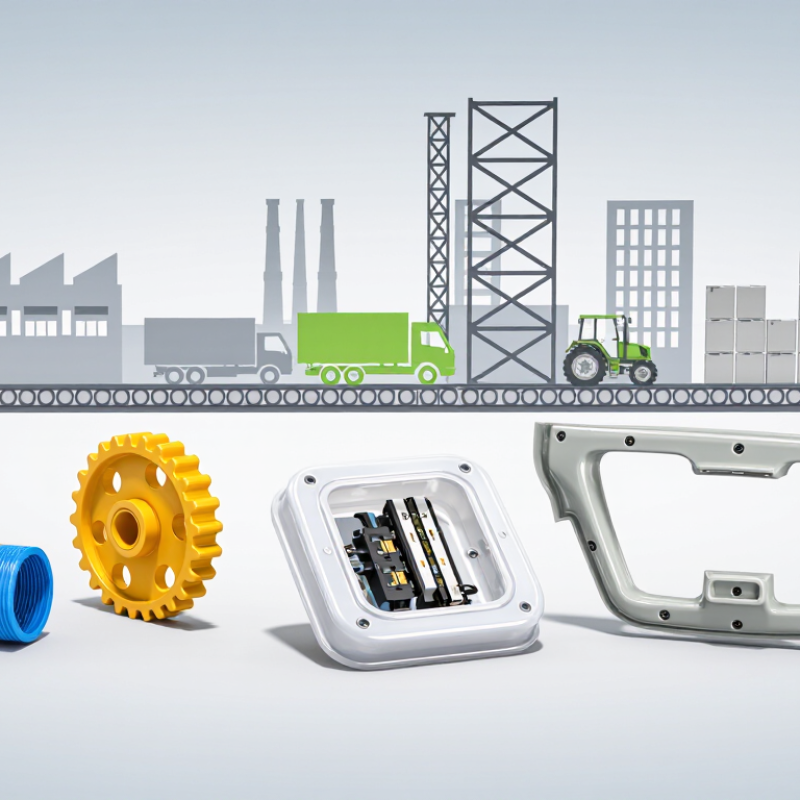
What Industrial Plastics Are and How They Differ from Common Plastics
Industrial plastics are materials selected for demanding service, not a single chemical family. The term can include polyethylene, nylon, polycarbonate, and specialty polymers. Their value lies in specified properties: heat resistance, stiffness, impact strength, chemical tolerance, or low friction. A pump housing may need to resist hot fluid, while a conveyor guide needs a smooth, wear-resistant surface. Common plastics can serve these roles too. The real difference is usually the performance target and how carefully the material is specified.
Selection involves more than strength. Engineers consider operating temperature, repeated loads, cleaning agents, moisture, and the shape of the part. They may also check test results and supplier documentation for consistency between production batches. Some industrial grades include reinforcing fibers or additives, which can improve stiffness but complicate recycling. “Industrial” is not a guarantee of durability; a poorly matched polymer can crack or deform. That distinction is easy to overlook.
The scale makes end-of-life choices important. The OECD’s 2022 Global Plastics Outlook estimated that the world generated 353 million tonnes of plastic waste in 2019, with only 9% recycled. This figure covers plastics broadly, not industrial parts alone. It still highlights a practical design question: can a component be repaired, reused, or separated from other materials? Engineers do not always have a perfect answer. That uncertainty belongs in material decisions.
How Industrial Plastics Support Manufacturing and Machinery
What Are Industrial Plastics Used For?
Industrial plastics support manufacturing and machinery by reducing weight, resisting corrosion, and shaping precise components. Nylon gears can run quietly inside conveyors, while polyethylene guides help products move across production lines. Polycarbonate guards allow operators to see moving parts while keeping a physical barrier in place. These materials are useful. But no plastic suits every job.
In machinery, plastics also become bearings, seals, rollers, housings, and cable insulation. Some grades handle repeated contact or exposure to oils; others may soften under heat or wear quickly against rough surfaces. A part’s performance depends on its grade, design, load, temperature, and maintenance. Even a sturdy-looking component can crack when fitted poorly. Small details matter, especially around moving equipment.
Tips: Check the material’s temperature and chemical limits before specifying a part. Match its strength to the actual load, not just the expected average. Inspect for wear, discoloration, or cracking during routine maintenance. One point is easy to miss: a plastic component may need replacement sooner in a hot or abrasive setting.
What Are Industrial Plastics Used For?
How industrial plastics support manufacturing and machinery
Tensile strength helps manufacturers compare materials for parts such as pipes, gears, bearings, and machine components. Values shown are approximate representative figures for unfilled grades; actual properties vary by grade, test method, and conditions.
Applications in Construction, Transportation, and Infrastructure
Industrial plastics are used where materials must manage moisture, impact, weight, or repeated handling. In construction, plastic pipes carry water and protect cables inside walls and underground. Insulation boards help limit heat loss, while plastic membranes can shield foundations from damp soil. These components are often hidden, but a cracked pipe or poorly sealed joint can cause expensive repairs. Small details matter.
On roads and bridges, polymer-based materials appear in drainage systems, protective barriers, cable conduits, and bearing components. Their resistance to corrosion can be useful in wet or salty environments. In transportation, lightweight plastic panels, interior trim, and fluid lines help reduce vehicle weight. Reinforced plastic composites also serve in some rail and marine structures, where stiffness and low weight are important. Not every application suits plastic.
Performance depends on the specific resin, additives, temperature, load, and exposure to sunlight or chemicals. Engineers need to check creep, fire behavior, joining methods, and maintenance needs before selecting a material. A pipe that performs well underground may not suit an exposed, hot installation. There is a trade-off, and it is easy to underestimate. Reuse and end-of-life handling should also be considered, since mixed materials can be difficult to separate.
How Industries Select, Maintain, and Recycle Plastic Materials
What Are Industrial Plastics Used For?
Industrial plastics are used in pipes, machine guards, electrical housings, tanks, and packaging. Their low weight and resistance to corrosion can reduce handling and maintenance demands. But no material suits every job.
Selection begins with the operating environment. Engineers compare temperature, pressure, chemical exposure, impact risk, and expected service life. A pipe carrying warm process water may need different properties from a clear inspection cover. Cost matters, but so do fabrication methods and repair options. Real conditions can expose trade-offs that a specification sheet misses.
Maintenance plans should match the part and its use. Operators can check for discoloration, warping, loose fasteners, and surface cracks during routine inspections. Small cracks matter. Cleaning agents and heat can also weaken some plastics over time, so maintenance instructions should name compatible products and practical limits. At replacement, teams can record the resin type and keep parts separated by material. Clean, well-sorted thermoplastics are generally easier to recycle mechanically than mixed or contaminated items. Some plastics are difficult to recycle through local programs, and recycling should not be assumed without checking available facilities. Designing parts for disassembly can help, though it may add time or cost.