Discover Exciting Plastic Manufacturing Jobs at Allied Plastics

7 Best Plastic Sheet Manufacturers for Global Buyers

Selecting the right plastic sheet manufacturer is rarely a simple price comparison. Global buyers must examine material grade, thickness tolerance, surface finish, production capacity, and delivery reliability. A low quotation may become expensive when sheets arrive warped, poorly protected, or outside specification.

Industry demand remains substantial. PlasticsEurope reported global plastics production of approximately 414 million tonnes in 2023. The OECD’s Global Plastics Outlook also recorded 353 million tonnes of plastic waste in 2019. These figures show both the scale of the sector and the growing pressure for responsible sourcing. A credible supplier should explain its resin sources, quality controls, recycling options, and environmental documentation clearly.

This guide reviews seven plastic sheet manufacturers serving international buyers. The comparison considers engineering experience, product range, customization, certifications, export capability, and application support. Typical materials include acrylic, polycarbonate, HDPE, PVC, polypropylene, and UHMW-PE. Each material behaves differently under heat, impact, chemicals, and outdoor exposure.

Details matter.

For example, a 3 mm polycarbonate sheet may suit machine guarding, while a similar-looking acrylic sheet may perform better for display clarity. Buyers should request test reports, sample pieces, dimensional tolerances, and packaging photographs before approving a bulk order. Reports from Grand View Research and Smithers indicate continued growth in advanced plastics and specialty applications, but market forecasts can differ by methodology. That limitation deserves attention.

No ranking is universally perfect. Supplier performance may change by region, order size, lead time, and technical requirements. This shortlist offers a practical starting point for evaluating dependable plastic sheet partners with greater confidence.
7 Best Plastic Sheet Manufacturers for Global Buyers

What Defines a Leading Plastic Sheet Manufacturer

A leading plastic sheet manufacturer proves its value through consistent performance, not impressive promises. Experienced buyers examine production records, material traceability, and test results before approving a supplier. The factory should identify resin types, additives, thickness tolerances, and surface treatments clearly. Small details matter. A one-millimeter variation can disrupt forming, sealing, or installation.

Technical expertise appears in practical support. Skilled engineers can recommend suitable grades for outdoor exposure, chemical contact, food-related environments, or high-impact applications. They should explain limitations without hiding behind complicated language. Reliable manufacturers test tensile strength, impact resistance, dimensional stability, and weathering performance under controlled conditions. Independent reports add credibility, especially when results include test methods and dates.

Quality control must continue beyond the laboratory. Production teams should inspect sheet surfaces for bubbles, scratches, warping, and uneven color. Packaging also deserves attention because poorly protected edges may arrive damaged after a long shipment. Clear batch coding makes complaints easier to investigate. No supplier gets every decision right. A serious manufacturer records defects, studies recurring causes, and changes its process instead of blaming transport or customers. Buyers should request samples, review replacement policies, and compare actual delivery consistency with stated capacity.

The best partnership feels measurable: stable sheets, responsive communication, honest documentation, and fewer surprises during real production.
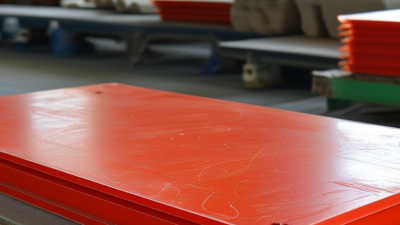
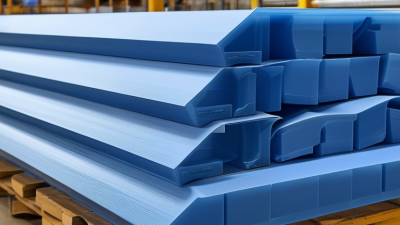
How the Seven Manufacturers Compare by Product Range

The seven leading plastic sheet manufacturers differ more by product range than by headline capacity. Supplier One focuses on clear PET and general-purpose PP sheets. Supplier Two offers thicker HDPE and chemical-resistant PVC grades. Supplier Three covers engineering plastics, including polycarbonate, ABS, and nylon. Supplier Four combines standard sheets with textured, embossed, and colored options. Supplier Five emphasizes recycled-content sheets. Supplier Six serves hygienic and food-contact applications. Supplier Seven provides custom dimensions, laminated structures, and low-volume prototypes. Plastics Europe reported 413.8 million tonnes of global plastics production in 2023, showing the scale behind this crowded market.

Range depth matters during procurement. A supplier with ten polymers may still lack stable thickness control or export packaging. Check technical datasheets, tolerance tables, and recent test reports. The ASTM D638 tensile test and ASTM D792 density test can support practical comparisons. Smithers has also identified growing demand for lightweight, recyclable polymer formats, but sustainability claims need evidence. Ask for recycled-content percentages, chain-of-custody records, and batch-level certificates. My ranking is not absolute. A narrow specialist can outperform a broad supplier when surface finish or heat resistance is critical.

Tips: Request three samples in different thicknesses. Test them under real humidity and temperature conditions. Compare minimum order quantities, lead times, and pallet protection. Do not judge quality from one polished sample. Human error happens.

7 Best Plastic Sheet Manufacturers for Global Buyers — How the Seven Product Ranges Compare

This chart compares seven widely used plastic sheet material categories by their typical commercially available thickness ranges. The comparison focuses on product range rather than company or brand names.

Thickness ranges are representative industry ranges and may vary by supplier, grade, manufacturing process, and market.

Materials, Sheet Types, and Customization Capabilities

Choosing among the 7 best plastic sheet manufacturers for global buyers requires more than comparing prices. Material selection affects strength, chemical resistance, weight, and service life. Common options include polyethylene, polypropylene, PVC, PET, acrylic, polycarbonate, and ABS. Each performs differently under heat, impact, moisture, and repeated cleaning.

Sheet type also matters. Extruded sheets suit steady production and standard thicknesses. Cast sheets often provide better optical clarity and surface consistency. Corrugated, textured, laminated, and fire-rated sheets serve more specialized applications. During factory evaluations, buyers should request thickness tolerances, density data, impact results, and temperature ranges. A reliable manufacturer should explain testing methods clearly. Vague answers are a warning sign.

Customization can include cutting, drilling, bending, embossing, surface polishing, and color matching. Some manufacturers also provide protective films, printed markings, and pre-assembled parts. Ask for a sample before approving a large order. A 2-millimeter variation may seem minor, yet it can affect a fitted panel or sealing system. Packaging deserves attention too. Thin sheets need corner protection, moisture control, and stable pallets during long-distance shipping.

Real production rarely stays perfect. Minor color differences can appear between batches. Tolerances may also change with temperature. Buyers should confirm acceptable limits in writing, not rely on informal promises. Technical drawings, inspection records, and clear replacement terms improve accountability. The strongest supplier is not always the largest. It is the one that communicates limitations honestly and delivers consistent evidence.

7 Best Plastic Sheet Manufacturers for Global Buyers - Materials, Sheet Types, and Customization Capabilities
Supplier Profile Primary Material Focus Common Sheet Types Typical Thickness Range Typical Sheet Size Capability Customization Capabilities Key Performance Characteristics Best-Fit Applications
Manufacturer Profile 1 HDPE
High-density polyethylene
Smooth sheet Textured sheet Cut-to-size panel Approximately 0.5–100 mm Standard panels up to approximately 2,000 × 6,000 mm, subject to production equipment Custom colors, CNC routing, drilling, chamfering, welding preparation, protective masking Low moisture absorption, strong chemical resistance, good impact resistance, easy fabrication Tank liners, wear strips, cutting boards, industrial fabrications, water-treatment equipment
Manufacturer Profile 2 PP
Polypropylene
Homopolymer sheet Copolymer sheet Flame-retardant sheet Approximately 0.5–80 mm Standard panels commonly available up to approximately 2,000 × 6,000 mm Custom thickness, color matching, surface texturing, CNC cutting, thermoforming blanks, welded assemblies Low density, excellent resistance to many acids and alkalis, fatigue resistance, good weldability Chemical tanks, laboratory equipment, ventilation systems, packaging, food-processing components
Manufacturer Profile 3 PVC
Rigid polyvinyl chloride
Rigid PVC sheet Foamed PVC sheet Clear PVC sheet Approximately 0.5–50 mm Common sheet formats range from approximately 1,000 × 2,000 mm to 2,050 × 4,050 mm Custom colors, gloss or matte surfaces, printing, CNC machining, edge finishing, cut-to-size service Good chemical and weather resistance, flame-retardant grades available, easy bonding and machining Signage, cleanroom interiors, ducting, cladding, display fixtures, electrical enclosures
Manufacturer Profile 4 ABS
Acrylonitrile butadiene styrene
General-purpose sheet Impact-grade sheet Textured sheet Approximately 0.8–12 mm Typical panels up to approximately 2,000 × 4,000 mm, with larger sizes available from selected lines Custom colors, hair-cell or embossed texture, thermoforming grade selection, CNC trimming, drilling and routing High impact strength, good dimensional stability, attractive surface finish, suitable for thermoforming Automotive trim, machine covers, luggage components, appliance housings, protective enclosures
Manufacturer Profile 5 PC
Polycarbonate
Clear sheet Solid sheet Multiwall sheet UV-protected sheet Approximately 0.75–20 mm for solid sheet; thicker multiwall formats also available Common solid-sheet formats include approximately 1,220 × 2,440 mm and larger architectural panels UV coating, abrasion-resistant coating, tinting, diffusion, cut-to-size processing, bending and drilling Very high impact resistance, high light transmission in clear grades, broad service-temperature range Safety glazing, machine guards, skylights, protective screens, architectural roofing and partitions
Manufacturer Profile 6 PETG
Glycol-modified polyethylene terephthalate
Clear sheet Display sheet Printable sheet Thermoforming sheet Approximately 0.5–12 mm Typical panels range from approximately 1,220 × 2,440 mm to 2,050 × 3,050 mm Custom transparency, color, anti-glare surface, printing, laser cutting, die cutting and thermoforming High clarity, good impact resistance, easy forming, low forming temperature and good printability Point-of-sale displays, medical trays, packaging, guards, signage and retail fixtures
Manufacturer Profile 7 UHMW-PE
Ultra-high-molecular-weight polyethylene
Wear-resistant sheet Liner sheet Anti-static sheet Food-contact grade Approximately 3–200 mm Common industrial panels up to approximately 2,000 × 6,000 mm, depending on thickness and pressing method Custom colors, machined profiles, countersunk holes, grooves, beveled edges, cut-to-size and assembly kits Extremely high abrasion resistance, low friction, impact resistance, non-stick surface, low water absorption Conveyor guides, hopper liners, chute liners, marine components, bulk-material handling equipment
Typical ranges are industry reference values and may vary by resin grade, production process, tooling, certification requirements, and order quantity.

Quality Standards, Certifications, and Production Capacity

7 Best Plastic Sheet Manufacturers for Global Buyers: Quality Standards, Certifications, and Production Capacity

The best plastic sheet manufacturers prove quality with records, not polished websites. PlasticsEurope reported global plastics production at 400.3 million tonnes in 2022. That scale makes process control essential. Buyers should request ISO 9001 certification, current audit dates, and batch-level inspection reports. ISO 14001 also indicates structured environmental management. Still, certification is not proof of perfect sheets.

400.3 million tonnes Global plastics production in 2022
ISO 9001 Certification and audit records
ISO 14001 Structured environmental management

Look for testing against relevant ASTM or ISO methods. Tensile strength, impact resistance, thickness tolerance, and light transmission should match the product specification. For food-contact or medical applications, ask for applicable regulatory declarations and migration test results. The OECD estimated 353 million tonnes of plastic waste in 2019, with only 9% recycled. Recycled content claims therefore need traceable input records. Details matter.

353 million tonnes The OECD estimated plastic waste in 2019, with only 9% recycled.

Production capacity deserves equal attention. Ask for monthly output, extrusion line numbers, maximum sheet dimensions, and average order lead times. A reliable factory can show equipment maintenance logs and contingency plans. Request samples from several production batches. One sample can mislead. I would also compare promised capacity with actual delivery history, because unused capacity is only a sales figure. Some suppliers provide impressive numbers, yet struggle with color consistency or edge quality during peak seasons. Independent inspection before shipment remains sensible, especially for large orders.

Monthly output Extrusion line numbers Maximum sheet dimensions Average order lead times

Key Factors for Global Buyers When Choosing a Supplier

Choosing among the seven best plastic sheet manufacturers requires more than comparing prices. Global buyers should examine material consistency, production capacity, and communication quality. A reliable supplier can provide clear technical data, recent test reports, and traceable batch information.

Request samples before placing a large order. Check thickness with a micrometer, inspect the surface under strong light, and test cutting or forming performance. Ask about minimum order quantities, lead times, packaging, and replacement procedures. Export experience also matters. Accurate documents can prevent delays at customs and warehouses. A supplier with modern equipment is useful, but equipment alone does not guarantee stable output.

Tips: Compare at least three quotations using the same specifications. Ask for a video tour or independent inspection when possible. Confirm whether recycled content, color tolerance, and flame performance are documented. Read the contract carefully.

Do not choose the cheapest offer too quickly. Low prices may reflect thinner sheets, inconsistent batches, or weak after-sales support. However, expensive pricing is not automatic proof of quality. This is where many buyers misjudge the market. Review several orders, not just one successful sample. No checklist is perfect. Keep written records of every technical promise, because verbal assurances can become difficult to verify later.