Why Choose Plastic Roll for Packaging?
Why Choose Plastic Roll for Packaging?
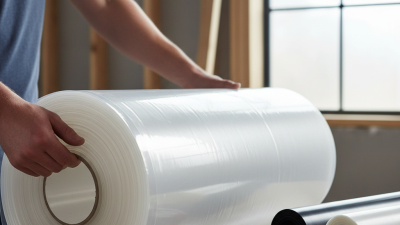
Choosing the right packaging material affects product protection, production speed, and customer experience. Plastic roll remains a practical option for manufacturers handling food, household goods, medical supplies, and industrial components. It arrives in continuous rolls, allowing machines to form, seal, wrap, or laminate packaging with consistent results.
Packaging expert Walter Soroka defines packaging as “the science, art, and technology of enclosing and protecting products for distribution, storage, sale, and use.” His statement explains why plastic roll deserves careful evaluation. A well-selected film can resist moisture, dust, punctures, and handling pressure. It can also create a clear viewing window for products on crowded shelves. At a packing line, the difference is visible: fewer film breaks, cleaner seals, and smoother roll changes can reduce wasted time.
Performance depends on the film structure. Polyethylene may suit flexible wrapping and durable transport covers. Polypropylene can provide clarity and stiffness. Laminated plastic roll may combine barrier properties with stronger sealing performance. Thickness, width, core size, and sealing temperature must match the equipment. Small mismatches cause large problems.
Plastic roll is not automatically the best choice. That deserves honesty. Poor material selection can increase waste, create weak seals, or complicate recycling. Responsible buyers should review supplier testing, batch consistency, storage conditions, and end-of-life options. Ask practical questions.
Where will the package travel?
Will it face heat, moisture, sharp edges, or compression?
A reliable decision balances protection, efficiency, appearance, and environmental responsibility. The best plastic roll is not simply the cheapest roll. It is the one that performs consistently from production floor to final customer.
What Plastic Roll Packaging Is and How Its Film Structure Works
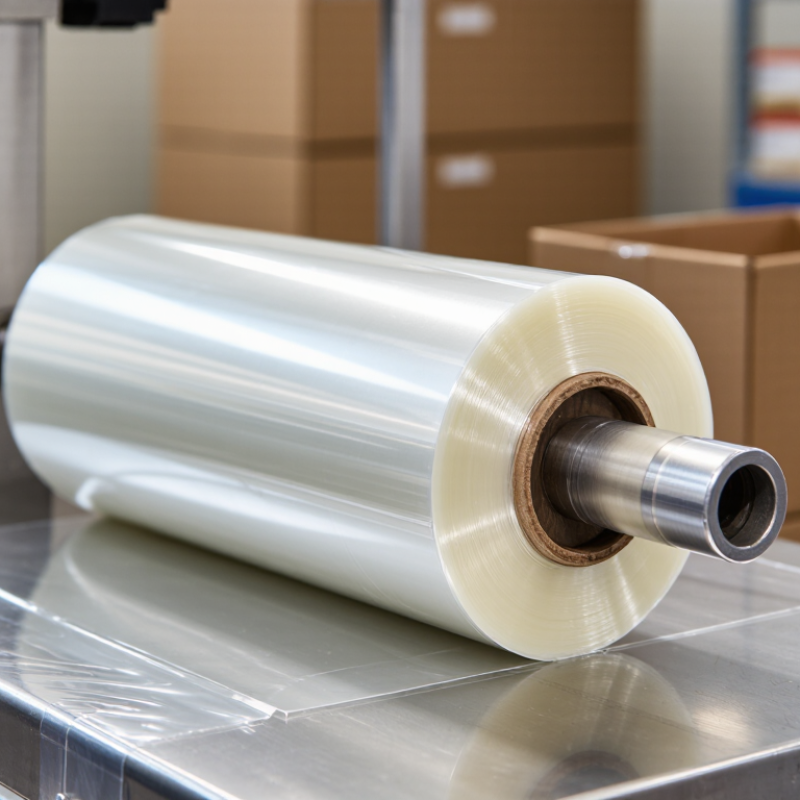
Plastic roll packaging is a continuous film wound around a cardboard or plastic core. It is supplied as a flat roll, then formed, filled, and sealed by packaging equipment. This format suits snacks, powders, household goods, and many other products.
Its film structure usually contains several functional layers.
The outer layer supports printing and resists scuffing during transport. A middle layer can add stiffness, light protection, or a barrier against oxygen and moisture. The inner sealant layer softens under heat and bonds around the product.
Common materials include PET, PE, PP, and specialty barrier films.
Each layer has a specific job.
In packaging trials, technicians check seal strength, puncture resistance, film thickness, and sealing temperature.
A clear film may display the product well, while a metallized layer can protect light-sensitive contents. The best structure depends on shelf life, filling speed, storage conditions, and recycling goals. Thicker is not always better. It may improve durability but increase material use and machine adjustment time.
Poor alignment can also cause weak seals or uneven edges. Small details matter.
A practical review should compare laboratory results with real production conditions. Packaging can look reliable on a sample roll, yet behave differently after heat, pressure, or long storage.
No structure is perfect. The design deserves testing, adjustment, and honest reconsideration.
PE, PP, PET, and Barrier Layers: Choosing the Right Material
Why Choose Plastic Roll for Packaging?
Plastic roll gives converters control over thickness, sealing, printing, and pack size. The material choice should follow the product’s real exposure, not habit. According to the OECD’s Global Plastics Outlook, packaging generated about 142 million tonnes of plastic waste in 2019. That figure makes material efficiency and end-of-life planning important.
PE is flexible and seals reliably, making it suitable for pouches, liners, and frozen products. PP offers higher stiffness and better heat resistance, although it can feel less forgiving during fast forming. PET provides dimensional stability, a smooth print surface, and useful strength. It often supports the outer layer of laminated structures. Barrier layers protect sensitive contents from oxygen, moisture, light, or aroma loss. EVOH, metallized films, and aluminum foil can perform well, but each changes cost, processing, and recycling conditions.
Small details decide performance. A humid warehouse can weaken sealing consistency. Sharp product edges may puncture an otherwise strong film. In plant trials, teams should check seal strength, drop resistance, oxygen transmission, and moisture transmission. ASTM and ISO test methods help make comparisons more reliable. Still, laboratory results are not the whole story. A perfect barrier can become unnecessary overengineering for a dry, fast-moving product. A lighter film may also fail if the filling line runs aggressively. The honest specification may need revision after real transport testing.
Resource Efficiency: Up to 60% Less Plastic Than Rigid Formats (FPA)
Why Choose Plastic Roll for Packaging?
Resource Efficiency: Up to 60% Less Plastic Than Rigid Formats (FPA)
Rigid tubs and bottles often carry more structure than the product needs. Plastic roll packaging uses a thin, continuous web that forms the pack during filling. According to the Flexible Packaging Association’s Flexible Packaging Fact Sheet, flexible packaging can use up to 60% less plastic than comparable rigid formats. That reduction can lower material purchasing, transport weight, and warehouse volume. On a busy filling line, fewer resin kilograms can also mean fewer pallets arriving each week. Those savings are practical, not theoretical.
However, “up to” matters. Actual performance depends on barrier layers, seal design, filling speed, and shelf-life targets. FPA data should guide a comparison, not replace one. A thinner film may fail if it punctures during loading. That waste can erase part of the material benefit. Packaging teams should test drop resistance, seal integrity, and oxygen or moisture transmission before scaling. Recyclability also depends on local collection and sorting infrastructure. These details are easy to overlook.
Tips: Compare the complete pack, not film weight alone. Record material use, product loss, transport loads, and line efficiency. Ask suppliers for documented test results and a clear material specification. Then challenge the design again. The lightest package is not always the most resource-efficient choice.
Product Protection and Shelf Life: Barrier Performance in Practice
Why Choose Plastic Roll for Packaging?
Product Protection and Shelf Life: Barrier Performance in Practice
Plastic roll packaging earns its place when it protects product quality beyond the filling line. In practice, barrier performance controls oxygen, moisture, light, aromas, and outside odors. A dry snack may lose crispness when water vapor passes through the film. An oxygen-sensitive food may develop stale notes before the pack looks damaged. The risk is quiet. Customers notice it later.
During packaging trials, I would measure oxygen transmission rate and water vapor transmission rate under expected temperature and humidity. I would also inspect seals, because a strong film cannot rescue a weak closure. Small wrinkles, dust, or uneven heat can create leak paths. Keep the test realistic. A roll that performs well in a laboratory may behave differently on a fast production line. Film thickness, tension, and forming temperature all matter. So does storage.
Good selection matches the barrier to the product, pack size, filling method, and distribution route. Layers can combine strength, sealability, and resistance to moisture or oxygen. Yet more layers do not automatically mean better protection. They may add cost, stiffness, or recycling challenges. That trade-off deserves honest review. I have seen teams focus on headline barrier numbers and overlook seal aging. Retesting after transport simulation can expose that mistake. No film is perfect. Reliable packaging comes from measured performance, careful handling, and questioning attractive test results.
Why Choose Plastic Roll for Packaging?
Product Protection and Shelf Life: Barrier Performance in Practice
Lower oxygen transmission helps reduce oxidation, aroma loss, and quality deterioration. The chart shows representative midpoint values for commonly used flexible packaging films and structures. Metallized and multilayer plastic rolls can provide substantially stronger oxygen protection than standard single-layer films, supporting longer shelf life when seals and storage conditions are properly controlled.
Oxygen transmission rate (OTR) is expressed in cc/m²/day at approximately 23°C and 0% relative humidity. Values are indicative industry ranges; actual performance varies with film thickness, humidity, temperature, coating quality, and seal integrity. Testing references include ASTM D3985.
Recycling Challenges: EU Plastic-Packaging Recycling Reached 41% in 2022 (Eurostat)
Why Choose Plastic Roll for Packaging?
Recycling Challenges: EU Plastic-Packaging Recycling Reached
41%
in 2022 (Eurostat)
Plastic roll remains popular because it is light, flexible, and easy to store. It can wrap products with less empty space than rigid packaging. This may reduce transport volume and handling effort. A roll also supports controlled cutting on packing lines. In a busy workspace, that matters. Yet convenience does not guarantee recyclability. Eurostat reported a 41% recycling rate for plastic packaging in the EU in 2022. The figure shows progress, but also a clear gap. More than half of this packaging was not recycled.
The material design often decides what happens after use. Clean, single-material film is usually easier to sort and process. Mixed layers can improve barrier performance, but they may complicate recycling. They should not be selected automatically. Packaging teams need to check local collection systems, sorting technology, and accepted material categories. A small production trial can reveal sealing waste, ink coverage, and contamination risks. Clear labeling helps, but labels cannot fix poor material choices. The uncomfortable truth is that a recyclable design may still be lost in an unsuitable waste system. Better decisions require data from suppliers, recyclers, and real packing conditions. Some assumptions will fail. That is worth discovering early.