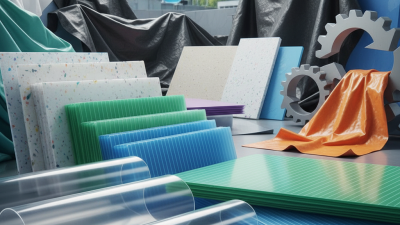
China’s large plastic sheets market serves construction, packaging, agriculture, machinery, and industrial fabrication. Its supplier base includes established extrusion plants, specialized fabricators, and export-focused manufacturers. This variety makes comparison useful, but ranking suppliers is not simple.
Dr. John Scheirs, a recognized polymer consultant and author, states, “The best material is the one that meets the application requirements.” This principle matters when evaluating large plastic sheets. A warehouse roof panel may need UV resistance, while a machine guard may require impact strength and clear visibility. Thickness alone proves very little.
This guide reviews ten notable Chinese suppliers through practical purchasing factors. These include resin quality, sheet flatness, thickness tolerance, production capacity, customization, and quality control. Certifications, testing records, packaging methods, and export experience also deserve attention. Ask for samples.
Small details often expose performance differences. Check whether a 10-millimeter sheet actually stays near specification across its full width. Inspect edges for warping. Compare surface finish under direct light. Request technical data for temperature resistance, chemical exposure, and outdoor aging.
The “top” supplier may not be the largest company. A smaller factory could offer better communication or faster custom tooling. However, it may have weaker testing resources or limited backup capacity. That trade-off is easy to overlook.
Supplier rankings can also change with resin prices, machinery upgrades, and customer reviews. Therefore, this overview should support due diligence, not replace it. Buyers should verify current certificates, factory capabilities, and sample results before signing a purchase agreement. Mistakes happen. A careful comparison reduces expensive surprises.
What Are Large Plastic Sheets and Where Are They Used?
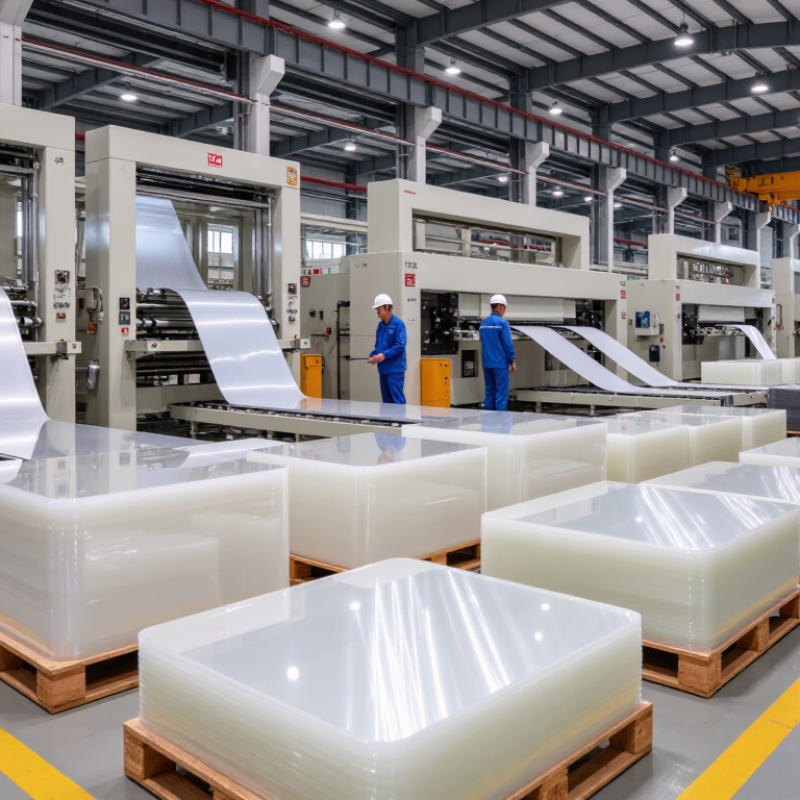
Large plastic sheets are flat panels supplied in wide, custom-cut dimensions. Their thickness may range from thin protective film to rigid industrial boards over 20 millimeters thick. Common materials include HDPE, polypropylene, PVC, acrylic, and polycarbonate. Each behaves differently under heat, impact, sunlight, and chemical exposure. Size alone does not define performance.
According to Grand View Research, the global plastic sheets market was valued at approximately USD 78 billion in 2023. PlasticsEurope reported global plastics production of about 414 million tonnes in the same year. These figures show the material’s industrial scale, but they do not prove that every sheet is suitable for heavy use. That assumption needs questioning.
In construction, large sheets protect floors, walls, and equipment during installation. Transparent panels serve as machine guards, partitions, and roofing elements. Farms use durable sheets for liners, greenhouse components, and water-management structures. Fabricators also machine them into tanks, ducts, signs, and transport panels. In practice, buyers should check thickness tolerance, surface finish, UV stability, and fire classification. A low-cost sheet can warp beside a hot machine. That mistake is common. Good suppliers should provide technical datasheets, test methods, and traceable quality records before production.
| Rank | Supplier Category | Main Sheet Material | Typical Sheet Size Availability | Common Thickness Range | Key Properties | Typical Industries | Common Applications | Relevant Standards or Grades |
|---|---|---|---|---|---|---|---|---|
| 1 | Industrial thermoplastic sheet manufacturer | HDPE | Up to approximately 2,000 × 4,000 mm; larger welded panels can be fabricated | 1–100 mm | High chemical resistance, low moisture absorption, good impact resistance, easy machining | Chemical processing, water treatment, mining, food processing | Tank linings, storage bins, cutting boards, wear liners, fabricated process equipment | PE 300 / PE 500 / PE 1000 grades |
| 2 | Engineering plastic sheet manufacturer | PP | Commonly available up to approximately 2,000 × 4,000 mm | 2–100 mm | Low density, excellent resistance to many acids and alkalis, weldable, suitable for warm environments | Electroplating, chemical handling, water treatment, semiconductor support systems | Plating tanks, ductwork, pump components, laboratory surfaces, protective linings | Homopolymer and copolymer PP |
| 3 | Rigid construction plastic sheet manufacturer | PVC | Commonly supplied in 1,220 × 2,440 mm and larger custom formats | 0.5–50 mm | Flame-retardant options, good weatherability, chemical resistance, easy forming and fabrication | Construction, advertising, electrical, chemical processing | Wall cladding, partitions, signage panels, electrical insulation, tank fabrication | Rigid PVC; PVC-U |
| 4 | Transparent impact-resistant sheet manufacturer | Polycarbonate (PC) | Typical standard formats include 1,220 × 2,440 mm and 2,100 × 6,000 mm | 0.8–20 mm | High impact strength, optical transparency, lower weight than glass, suitable for cold bending | Architecture, transportation, safety equipment, industrial manufacturing | Machine guards, protective screens, skylights, barriers, transparent enclosures | Solid PC; UV-stabilized PC |
| 5 | Decorative and optical sheet manufacturer | Acrylic (PMMA) | Commonly available in 1,220 × 2,440 mm; custom sizes are widely processed | 1–50 mm | High light transmission, good surface appearance, weather resistance, easy laser cutting and thermoforming | Retail display, lighting, architecture, furniture, interior design | Display panels, light covers, signs, windows, partitions, decorative components | Cast PMMA and extruded PMMA |
| 6 | Heavy-duty wear-resistant sheet manufacturer | UHMW-PE | Typical formats range from approximately 1,000 × 2,000 mm to 2,000 × 4,000 mm | 5–100 mm | Very low friction, outstanding abrasion resistance, high impact strength, non-stick surface | Material handling, mining, agriculture, food processing, logistics | Hopper liners, chute liners, conveyor components, guide rails, wear strips | PE 1000 / virgin UHMW-PE |
| 7 | High-temperature engineering sheet manufacturer | PTFE | Standard molded or skived formats vary; large custom sheets are produced to order | 0.5–100 mm | Extremely low friction, excellent chemical resistance, non-stick behavior, continuous service near 260°C | Chemical processing, sealing, electrical, pharmaceutical equipment | Gaskets, slide plates, electrical insulation, corrosion-resistant linings, seals | Virgin PTFE and filled PTFE |
| 8 | High-performance chemical-resistant sheet manufacturer | PVDF | Commonly supplied in widths around 1,000–2,000 mm, with custom lengths available | 1–50 mm | Strong resistance to acids, halogens and solvents, good UV stability, high purity options | Semiconductor, chemical processing, water treatment, pharmaceutical manufacturing | Tank linings, piping components, cleanroom fabrication, pump and valve parts | Natural PVDF; industrial PVDF grades |
| 9 | Impact-modified fabrication sheet manufacturer | ABS | Typical sheet formats include approximately 1,220 × 2,440 mm and custom cut panels | 1–12 mm | Good impact resistance, easy thermoforming, attractive surface finish, economical fabrication | Automotive, appliance, luggage, signage, equipment enclosures | Machine covers, formed housings, interior panels, trays, protective shells | General-purpose and flame-retardant ABS |
| 10 | Food-contact and display sheet manufacturer | PETG | Commonly available in approximately 1,220 × 2,440 mm and custom fabrication sizes | 0.5–12 mm | Good clarity, strong impact resistance, easy thermoforming, suitable for many display applications | Retail, medical packaging, food display, electronics, interior design | Point-of-sale displays, protective covers, formed trays, guards, transparent partitions | Transparent PETG; thermoforming grades |