Choosing a China-based supplier for thermoplastic sheets involves more than comparing unit prices. Global buyers need materials that match their application, processing method, and delivery schedule. A clear evaluation starts with the polymer type, sheet thickness, width, color, and required tolerances. Small variations can affect cutting, forming, and the final fit. Details matter.
Ask suppliers for current technical data sheets, sample pieces, and documented quality checks. Confirm whether they can provide consistent specifications across repeat orders, not just one attractive sample. Buyers should also clarify minimum order quantities, packaging, lead times, and how damage or dimensional issues are handled. These details help turn a quotation into a realistic purchasing plan. A low price alone proves little.
China has manufacturers with different equipment, materials, and levels of export experience, so no single supplier is automatically the best choice for every buyer. Compare evidence rather than broad claims: inspect sample quality, review test information, and ask specific questions about production controls. If a requirement is unclear, request written confirmation before approving an order. That judgment is not always tidy.
This guide explains how global buyers can assess a thermoplastic sheets supplier in China, from material selection to communication and shipment planning. It focuses on practical checks that support informed decisions, while recognizing that supplier performance can vary. A careful review takes time. So does correcting a poor match.
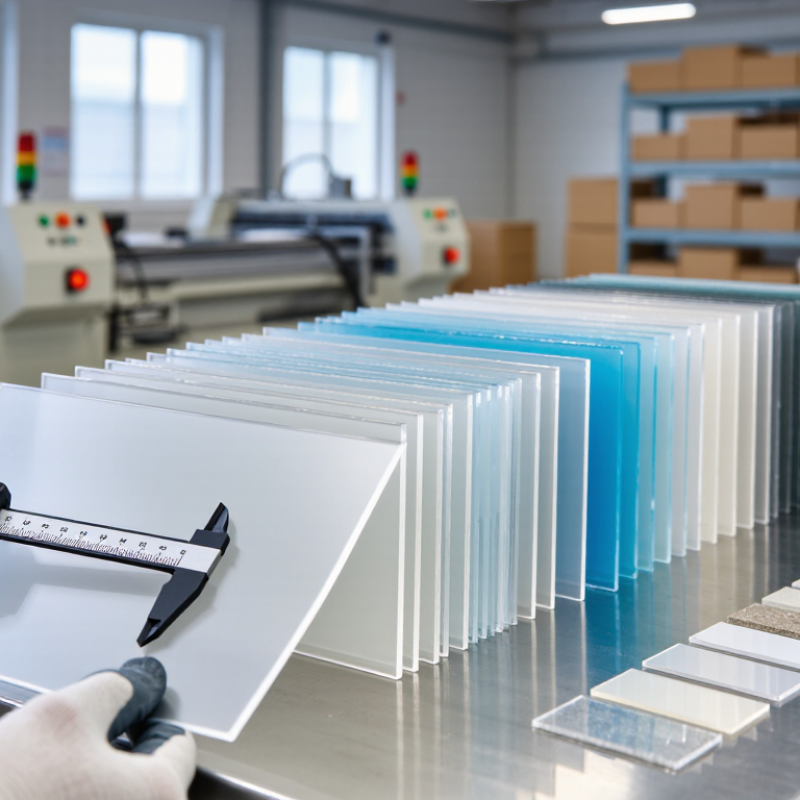
Thermoplastic sheets are flat plastic panels that soften when heated and become firm again as they cool. This allows them to be shaped or thermoformed, though repeated heating can gradually affect performance. A 2024 PlasticsEurope report estimates global plastics production reached 413.8 million tonnes in 2023; the figure covers all plastics, not sheets alone. That scale matters.
Common choices include polyethylene (PE), polypropylene (PP), PVC, PET, polycarbonate (PC), acrylic (PMMA), and ABS. PE resists moisture and many chemicals, while PP is light and useful for fabricated components. PVC is often selected for chemical resistance; PC offers high impact strength and transparency. Acrylic provides clear, weather-resistant panels, while ABS is valued for toughness and easy forming.
Trade-offs are real. A clear sheet may scratch; a tough one may be harder to machine.
For selection, compare thickness, service temperature, impact needs, chemical exposure, and forming method. Specific grades can behave differently, so request a technical data sheet and test a sample in the intended application.
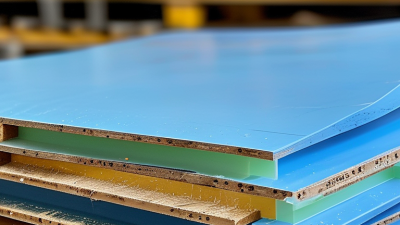
Selecting thermoplastic sheets starts with the job they must do, not a product label. Check the service temperature, chemical exposure, load, and expected impact. A sheet near a warm motor may soften, while one used around cleaning fluids may swell or craze. Ask for operating limits and test data under conditions close to your application.
Mechanical properties deserve close attention. Tensile strength describes resistance to pulling, but stiffness and impact resistance can matter more in a panel that may flex or receive knocks. Thickness also changes performance. A two-millimeter sheet and a six-millimeter sheet can behave very differently, even when made from the same polymer. For a real comparison, review the datasheet and inspect a sample for flatness, surface defects, and consistent thickness. Small variations can complicate cutting and assembly.
Transparency, color, UV resistance, and ease of fabrication are practical considerations too. If a sheet will sit outdoors, ask how its appearance and strength may change after prolonged exposure. If it needs drilling or thermoforming, confirm suitable processing guidance before ordering. I have found that buyers sometimes focus heavily on price and overlook machining waste or installation constraints. That matters. No single property tells the whole story, and supplier data should be checked against the actual design rather than treated as a guarantee.
| Sheet Material | Typical Density (g/cm³) |
Typical Tensile Strength (MPa) |
Typical Continuous-Use Temperature | Impact Performance | Chemical Resistance | Weathering / UV Considerations | Common Selection Considerations |
|---|---|---|---|---|---|---|---|
| ABS Acrylonitrile butadiene styrene |
1.03–1.07 | 35–50 | About 70–85°C | Good at room temperature; varies by grade and temperature | Resists many aqueous solutions; some solvents can attack it | Unmodified grades can discolor or degrade with prolonged outdoor UV exposure | Often selected for its balance of stiffness, impact resistance, machinability, and thermoformability. |
| HDPE High-density polyethylene |
0.94–0.97 | 20–37 | About 80–100°C | High impact resistance; low-temperature performance is generally good | Excellent resistance to many acids, alkalis, and aqueous chemicals; solvent compatibility should be checked | Standard grades may need UV stabilization for sustained outdoor use | Low density and moisture absorption, with good chemical resistance; comparatively low stiffness and difficult bonding. |
| PP Polypropylene |
0.90–0.91 | 25–40 | About 90–100°C | Good at moderate temperatures; impact resistance can fall at low temperatures | Excellent resistance to many acids, alkalis, and aqueous chemicals | Outdoor exposure generally calls for a UV-stabilized grade | Very low density and good chemical resistance; consider creep, low-temperature impact, and joining requirements. |
| PVC-U Unplasticized polyvinyl chloride |
1.35–1.45 | 40–55 | About 55–60°C | Moderate; can become more brittle as temperature decreases | Good resistance to many acids, alkalis, and salts; check compatibility with specific chemicals | Formulation and exposure conditions affect long-term outdoor performance | Offers rigidity and chemical resistance; verify temperature, impact, and fire-performance requirements for the application. |
| Polycarbonate (PC) | About 1.20 | 55–75 | About 110–130°C | Very high impact resistance compared with many common transparent plastics | Some solvents and cleaners can cause stress cracking; test under actual conditions | UV-protected grades are commonly used where outdoor exposure is expected | Useful where impact resistance and transparency matter; check chemical exposure, scratch resistance, and UV grade. |
| PETG Glycol-modified PET |
About 1.27 | 45–55 | About 65–80°C | Good impact resistance for a clear, easily fabricated sheet | Resistance varies; some solvents and cleaners may cause damage or stress cracking | Outdoor suitability depends on grade and UV exposure requirements | Often considered for clear, thermoformed parts; compare temperature limits and chemical compatibility with PC or acrylic. |
| PMMA Acrylic |
1.17–1.20 | 60–75 | About 70–90°C | Lower impact resistance than PC; can crack under impact or notching | Many solvents can cause crazing or cracking; confirm cleaner compatibility | Generally has good clarity and weathering performance in suitable grades | Selected for optical clarity and surface appearance; consider impact risk, thickness, and fabrication method. |
| PA6 Nylon 6 |
1.12–1.15 | 60–85 | About 80–100°C | Good toughness; performance depends on moisture content and grade | Good resistance to many oils and fuels; strong acids and some other chemicals may affect it | Outdoor use may require UV protection or a suitable stabilized grade | Offers strength and wear resistance, but absorbs moisture, which can change dimensions and mechanical properties. |
Selection note: Values shown are typical indicative ranges, not guaranteed design limits. Actual properties vary with formulation, sheet thickness, manufacturing process, conditioning, test method, and supplier grade. Before ordering, confirm the applicable datasheet, tolerances, certifications, operating temperature, chemical exposure, UV requirements, and forming or joining method.
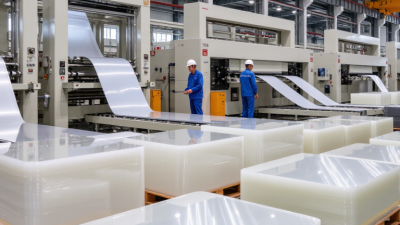
Thermoplastic sheets in China are commonly made by extrusion. Resin pellets are dried when required, melted in a heated barrel, and pushed through a flat die. Cooling rolls set the sheet’s thickness and surface, while cutters trim its edges. Some materials use calendering instead. The route depends on resin type, sheet dimensions, and intended use. PlasticsEurope’s Plastics – the Fast Facts 2023 reports global plastics production of 413.8 million tonnes in 2022. That figure shows the scale of the supply chain, not the quality of any individual sheet.
Quality checks should follow the material and application. Operators may measure thickness at several points across the width, inspect for bubbles or scratches, and test samples for tensile strength or impact resistance. ISO 527 and ISO 179 provide recognized methods for tensile and impact testing. Heat exposure and dimensional checks can reveal warping that a quick visual inspection misses. No single test catches every weakness. Results also depend on sampling and calibrated equipment, so buyers should request dated test records and agreed acceptance limits.
Tips: Ask for a sample cut from the actual production run, not only a showroom piece. Check its edges, thickness variation, and surface under bright light. A useful question: how are failed batches handled? Some suppliers may not explain this clearly at first; clarify it before placing a repeat order.
Typical melt-processing temperature ranges for common thermoplastics (°C)
Sheet is commonly made by extrusion or calendaring, then cooled and cut to size. The ranges shown are indicative; the exact processing window depends on resin grade, additives, and equipment. Quality checks can include thickness and width measurements, visual inspection, and material tests such as tensile strength (ASTM D638) and impact resistance (ASTM D256).
A Chinese thermoplastic sheet supplier should be evaluated on more than price and a polished catalogue. Start with the exact resin grade, sheet thickness, width, and intended use. Ask for a current technical data sheet and batch-specific inspection records. Then compare those figures with a sample cut from the production sheet, not a hand-picked display piece. Small details matter: uneven edges, surface marks, or thickness changes across the sheet may affect forming and assembly.
Request details about quality checks, production capacity, and typical lead times. A capable supplier should explain how thickness is measured, how batches are identified, and what happens when a lot fails inspection. Ask whether samples and mass-production material follow the same process. They may not. That is worth checking. Clarify packaging, moisture protection, and export handling too; sheets can arrive scratched or warped even when production was consistent.
Communication is practical evidence. Send a drawing or a short specification and see whether the supplier asks useful questions about temperature, forming method, or impact needs. Vague promises are not proof. A factory visit or independent inspection can help verify equipment and records, but neither guarantees every shipment. I would also compare several suppliers using the same checklist. It is a little tedious, and the checklist itself can miss things, but it makes price differences easier to understand before placing a larger order.
When comparing thermoplastic sheet costs, look beyond the price per kilogram. Confirm resin grade, thickness tolerance, sheet dimensions, protective film, packaging, and freight terms. A low quote can become expensive if sheets arrive warped or require extra machining.
The OECD’s Global Plastics Outlook (2022) estimates that 9% of plastic waste was ultimately recycled in 2019. For buyers considering recycled content, ask for traceable batch documentation; a claim without records is hard to assess.
Compliance depends on the material, end use, and destination market. Request current technical data sheets, batch certificates, and relevant test reports, then check that they match the exact grade and thickness quoted. Do not assume one certificate covers every application.
Delivery deserves equal scrutiny: confirm production lead time, stock status, packing method, and how transit damage is handled. A supplier’s estimate is not a guarantee. Even careful plans sometimes slip.
Tips: Compare written quotes line by line. Ask for sample sheets and measure thickness at several points. Confirm documents before placing a large order, and leave time for inspection. It may feel cautious, but one overlooked detail can cost more than a small price difference.